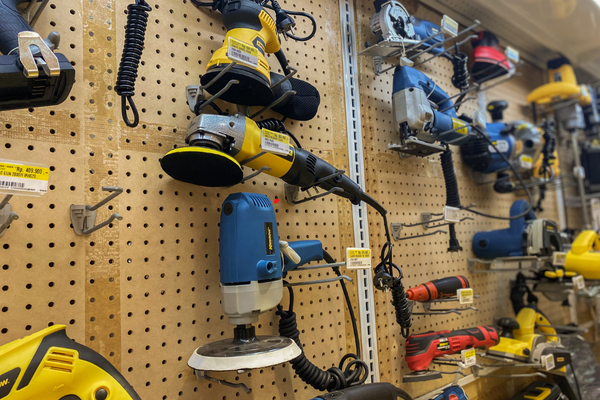
A garage can be a convenient place to store drills, impact drivers, sanders, saws, grinders, and other power tools. It keeps equipment close to the workspace and avoids taking up valuable room inside the house.
The problem is that garages can also expose power tools to humidity, condensation, temperature changes, and moisture from vehicles, floors, walls, and weather.
For metal hand tools, humidity mainly raises concerns about corrosion. With power tools, the situation is more complicated because a cordless or corded machine combines metal, electrical components, plastics, switches, batteries, bearings, and mechanical parts.
A humid environment can therefore affect more than the appearance of the tool.
Protecting power tools from humidity does not mean sealing everything inside a plastic bag or covering every metal component with oil. Those approaches can sometimes trap moisture or create new problems.
A better system combines appropriate storage, moisture control, clean and dry tools, suitable cases or cabinets, regular inspection, and sensible protection for exposed metal.
This guide explains how to protect power tools in a humid garage while avoiding common storage mistakes.
Why Humidity Is a Problem for Power Tools
Power tools contain different materials that respond differently to moisture.
Exposed steel can corrode.
Electrical contacts can develop contamination or oxidation.
Bearings and other mechanical components can be affected by corrosion.
Battery connections can become dirty or corroded.
Storage cases can retain moisture.
Condensation can form when temperature changes rapidly.
Not every humid garage will damage tools immediately.
The bigger concern is prolonged or repeated exposure.
A power tool stored for months in a damp environment may gradually develop problems that are not obvious until the next time it is used.
This is why prevention is more useful than waiting for visible corrosion.
Humidity and Condensation Are Related but Different
Humidity refers to moisture present in the air.
Condensation happens when moisture from humid air changes into liquid water on a surface that becomes sufficiently cool.
A garage can therefore have a humidity problem without visible water droplets.
Likewise, a condensation event can occur after a rapid temperature change even when the space did not appear particularly wet beforehand.
For power-tool storage, both conditions matter.
High humidity increases the amount of moisture available.
Temperature changes can turn that moisture into liquid on cool surfaces.
Why Garages Are Especially Challenging
Garages often experience larger environmental fluctuations than interior rooms.
They may have:
- Large doors
- Concrete floors
- Exterior walls
- Limited climate control
- Wet vehicles
- Outdoor air entering frequently
- Seasonal temperature changes
A garage can become hot during the day and cool rapidly at night.
When humid air encounters cooler tools, cabinets, or cases, condensation may form.
This is one reason tools can develop corrosion even when they are never directly exposed to rain.
Start With the Storage Location
The location of the power tools matters.
Inspect the area where they are stored.
Ask whether the tools are:
- Near a garage door
- Against a damp wall
- Close to a sink
- Near plumbing
- Directly on the floor
- Under a potential leak
- In a poorly ventilated corner
- Exposed to direct sunlight
Moving the tools to a better location can sometimes make more difference than applying another protective product.
Choose a dry, protected area that does not experience unnecessary moisture exposure.
Keep Power Tools Off the Garage Floor
The floor is often one of the least desirable locations for long-term power-tool storage.
Water can enter the garage during storms.
Vehicles can bring in moisture.
Concrete surfaces can remain damp.
Cleaning activities can leave water behind.
Storing valuable equipment on a shelf, cabinet, or suitable elevated surface reduces exposure to these conditions.
The exact storage system should remain stable and capable of supporting the equipment safely.
Avoid Damp Walls
If a wall shows signs of moisture, do not place power-tool cases directly against it.
Look for:
- Damp patches
- Discoloration
- Efflorescence
- Mold
- Peeling finishes
- Water marks
A wall can transfer moisture into objects stored against it.
If the wall is persistently damp, solve the building problem rather than relying on tool protection products.
Power tools should not be used as a test of whether a garage wall is dry enough.
Measure Humidity
When power tools repeatedly develop corrosion or electrical-contact problems, a hygrometer can provide useful information.
Instead of guessing how humid the garage is, measure it.
Check conditions at different times.
For example:
Morning
Afternoon
Evening
After rainfall
After opening the garage door
This can reveal patterns.
You may discover that humidity rises sharply during certain weather conditions.
That information can help you determine whether ventilation, dehumidification, relocation, or better enclosure is appropriate.
Do Not Rely on How the Garage Feels
Human comfort is not an accurate humidity measurement.
A garage may feel comfortable while still having enough moisture to create corrosion problems for sensitive equipment.
The opposite can also occur.
A space can feel humid without causing significant problems if tools are well protected and environmental conditions remain stable.
Measurement gives you information that your senses cannot provide reliably.
Control Obvious Moisture Sources First
Before buying dehumidifiers or storage products, look for direct water sources.
Check for:
- Roof leaks
- Plumbing leaks
- Water entering under doors
- Damp walls
- Standing water
- Poor drainage
- Wet cleaning equipment
If the source is direct water intrusion, solve that problem first.
There is little value in repeatedly drying a power-tool cabinet while a leak continues feeding moisture into the area.
Be Careful With Wet Vehicles
Cars and motorcycles can introduce surprising amounts of moisture into a garage.
Rainwater, snow, mud, and wet surfaces can evaporate after the vehicle is parked.
That raises humidity inside the space.
Power tools stored nearby may then experience more moisture than expected.
You do not necessarily need to change how you park the vehicle.
But when humidity problems are persistent, remember that the vehicle itself can be part of the environment.
Use a Suitable Tool Cabinet
A closed cabinet can reduce exposure to workshop dust and direct environmental moisture.
However, it does not automatically create a dry environment.
If humid air enters the cabinet or damp tools are stored inside, the moisture can remain trapped.
Choose a cabinet that is appropriate for the equipment and storage conditions.
Keep the interior clean and dry.
Inspect the bottom, corners, hinges, and other areas where moisture may accumulate.
Use Original Tool Cases When Appropriate
Manufacturer-supplied cases can provide useful protection from dust and accidental impact.
They can also keep the tool, battery, charger, and accessories together.
However, the case should only be closed around equipment that is already dry.
A wet drill placed into a closed case can create a humid microenvironment.
Before closing the case after outdoor or wet work, inspect the tool and interior for moisture.
Never Seal a Damp Tool in Plastic
Plastic bags and containers can provide environmental isolation, but they also have a major limitation.
They can trap whatever moisture is already present.
A damp tool sealed in plastic may remain exposed to that moisture much longer than it would in an open, dry environment.
This is particularly undesirable for steel components and electrical contacts.
If enclosed storage is used, start with clean, dry equipment.
Dry Tools Before Storage
This should become a standard habit.
After using a power tool in wet or humid conditions:
- Remove the battery or disconnect the tool according to the manufacturer’s procedure.
- Inspect the exterior.
- Remove visible moisture.
- Allow the tool to dry completely.
- Clean contamination if necessary.
- Store it only when dry.
Pay attention to:
- Battery interfaces
- Accessory holders
- Chucks
- Housing seams
- Switches
- Metal components
A tool can appear dry while moisture remains in a small recess.
Be Careful With Cleaning After Wet Work
Water-based cleaning can introduce moisture into the tool.
Use controlled cleaning rather than soaking.
Do not rinse a power tool simply because it has mud or dirt on the housing.
For most equipment, a cloth or soft brush is safer than large amounts of water.
Follow the manufacturer’s cleaning instructions.
After any damp cleaning process, allow the tool to dry completely before returning it to storage.
Keep Battery Compartments Dry
Cordless power tools need additional attention because their battery interface is an electrical connection.
Inspect the compartment after humid or wet work.
Look for:
- Moisture
- Dust
- Corrosion
- Dirt
- Damaged contacts
Do not apply oil to electrical contacts unless the manufacturer specifically recommends a suitable product.
Do not scrape contacts aggressively.
If corrosion or physical damage is present, follow the manufacturer’s service guidance.
Store Batteries Separately When Appropriate
Batteries have their own storage requirements.
If your manufacturer recommends removing the battery between uses or during long-term storage, follow that instruction.
A separate storage location can also reduce exposure to workshop moisture and prevent accidental contact with loose metal objects.
The battery should remain:
- Dry
- Protected
- Away from extreme conditions
- Free from unnecessary physical impact
Always follow the specific battery manufacturer’s instructions regarding temperature and storage state.
Keep Chargers Dry Too
A charger is also electrical equipment.
Do not store it on the floor in a damp area.
Protect its cable, plug, housing, and connectors.
Inspect for:
- Cracks
- Damaged insulation
- Corrosion
- Burn marks
- Moisture
Do not use damaged charging equipment merely because it still appears functional.
Use Desiccants in Small Enclosed Storage
Silica gel and other suitable desiccants can help reduce moisture inside smaller enclosed spaces.
They can be useful in:
- Tool cases
- Small storage boxes
- Specialty equipment containers
- Individual drawers
However, they have limited capacity.
A few packets cannot control the humidity of an entire garage.
Use them as supplemental protection for tools that are already clean and dry.
Monitor Desiccants
If a desiccant product has a moisture indicator, follow the manufacturer’s instructions for interpreting it.
Replace or regenerate the product according to its specified procedure.
Do not assume that every silica gel packet can safely be heated.
Some products are disposable.
Others are designed for controlled regeneration.
Follow the instructions for the exact product.
Consider Dehumidification for Persistent Humidity
If garage humidity remains consistently high, a suitable dehumidifier can help.
However, dehumidification should follow investigation of direct moisture sources.
A dehumidifier cannot repair:
- A leaking roof
- A plumbing problem
- Standing water
- A serious drainage issue
Once those problems are addressed, moisture control can become much more practical.
Choose equipment appropriate for the space and maintain it according to the manufacturer’s instructions.
Ventilation Depends on Outdoor Conditions
Opening the garage door can help remove moisture under some conditions.
It can also introduce additional humidity.
For example, if the outside air is warm and humid, prolonged ventilation may increase moisture inside the garage rather than reduce it.
Do not treat ventilation as universally beneficial.
Use humidity measurements and observation to determine whether it is helping.
Improve Air Circulation Around Stored Tools
Even when the garage is reasonably dry, stagnant areas can experience different moisture conditions.
Do not pack tool cases into a tight corner where air cannot circulate at all.
Leave practical clearance around cabinets when the building and storage arrangement allow it.
Avoid creating unsafe gaps simply for airflow.
The purpose is to make the storage area easier to inspect and less prone to hidden dampness.
Avoid Large Temperature Swings When Practical
Temperature changes can contribute to condensation.
You may not be able to maintain a constant garage temperature, but some measures can reduce extreme changes.
Depending on the building, these can include:
- Insulation
- Weather sealing
- Shade from direct sunlight
- More controlled ventilation
- Appropriate climate control
The goal is not to create a perfectly conditioned room.
It is to reduce recurring environmental conditions that cause moisture to form on equipment.
Use Corrosion Protection on Exposed Metal
Some power tools contain exposed steel or other corrosion-sensitive components.
A suitable corrosion inhibitor may provide additional protection.
Examples can include:
- Chuck surfaces
- Shafts
- Fasteners
- Exposed metal mounts
Use a product compatible with the material and intended application.
Do not spray electrical components, switches, battery contacts, or internal mechanisms indiscriminately.
The goal is targeted protection rather than coating the entire machine.
Avoid Heavy Oil Coatings
A thick layer of oil is not a complete humidity-control strategy.
Excess oil can attract:
- Dust
- Metal particles
- Wood fibers
- Dirt
It can also spread onto grips and storage surfaces.
A clean, dry tool with targeted corrosion protection is generally easier to maintain than a heavily oily tool.
Use only the amount recommended for the product and application.
Protect the Original Finish
Many power tools use coatings or finishes to protect metal components.
Avoid aggressive cleaning methods that can remove or damage these protective layers.
A scratch in a metal housing can expose underlying material.
A damaged coating may become a corrosion starting point.
When cleaning, choose a method appropriate for the specific tool’s materials.
Inspect the Tool’s Housing
During humidity-related maintenance, inspect the housing for:
- Cracks
- Corrosion
- Discoloration
- Water marks
- Damaged seals
- Missing components
A housing crack can create a path for moisture or expose internal components.
A damaged seal can allow additional contamination into areas that were previously protected.
If structural housing damage is significant, follow the manufacturer’s service instructions.
Look for Early Corrosion
Check exposed metal surfaces for:
- Orange spots
- Brown discoloration
- Roughness
- Pitting
- Flaking
Pay particular attention to tools that are stored near garage doors or in locations with recurring condensation.
Early corrosion may be manageable.
Deep corrosion can affect mechanical components and require service or replacement.
Inspect Electrical Contacts for Corrosion
Visible corrosion around electrical contacts deserves attention.
Look at:
- Battery terminals
- Charger contacts
- Tool connectors
- Accessible electrical interfaces
Do not aggressively scrape or sand electrical contacts without an appropriate manufacturer-supported procedure.
A contact that is bent, burned, severely corroded, or physically damaged may need service.
Keep Wet Cleaning Materials Out of Storage
A damp rag inside a tool cabinet can contribute to humidity.
So can:
- Wet sponges
- Damp gloves
- Water containers
- Recently washed accessories
Allow cleaning materials to dry outside the storage area.
Do not use the tool cabinet as a drying cabinet unless it is specifically designed for that purpose.
Store Accessories Clean and Dry
Power-tool accessories can retain moisture and transfer it back to the tool.
Inspect:
- Drill bits
- Saw blades
- Sanding accessories
- Driver bits
- Cutting discs
- Adapters
Remove contamination.
Dry accessories appropriately.
Store them in suitable containers.
Do not put wet metal accessories into a sealed case beside the power tool.
Keep Dust and Humidity Under Control Together
Dust and moisture can create a worse environment than either alone.
Dust can settle on damp surfaces.
Moisture can make certain residues more difficult to remove.
Oily contamination can capture both.
This is why clean storage is so valuable.
Keeping the toolbox and accessories clean reduces the number of places where moisture and contaminants can accumulate.
Do Not Assume Cordless Tools Are Waterproof
A power tool may have some degree of environmental resistance without being designed for immersion or direct water exposure.
Do not interpret splash resistance or durability claims as permission to wash the tool.
Use the manufacturer’s stated limitations.
When a tool has been exposed to significant water, follow the manufacturer’s guidance before returning it to service.
What to Do After Accidental Water Exposure
If a power tool gets unexpectedly wet:
Stop normal use.
Disconnect the battery or power source according to the manufacturer’s procedure.
Remove visible moisture.
Do not immediately switch the tool back on to see whether it works.
Do not assume external dryness means the inside is dry.
Follow the manufacturer’s instructions for water exposure.
If moisture may have entered the housing, professional assessment may be appropriate.
Avoid DIY Internal Repairs
Humidity-related electrical problems can be tempting to investigate by opening the housing.
Do not dismantle a power tool casually.
Internal components may include:
- Motor assemblies
- Electronic controls
- Switches
- Wiring
- Bearings
- Gears
- Seals
Use manufacturer-supported procedures or qualified service.
Routine exterior cleaning is very different from internal electrical repair.
How to Store Power Tools During the Rainy Season
When prolonged wet weather is expected, increase attention to storage.
Before storage:
Clean tools.
Dry them completely.
Inspect exposed metal.
Check battery condition.
Clean the cases.
Confirm that the storage location is dry.
Use additional moisture-control measures where appropriate.
During the wet period, inspect corrosion-prone equipment more frequently.
The goal is to prevent repeated moisture exposure from becoming unnoticed corrosion.
A Five-Minute Humidity Check
You can quickly inspect the storage system without emptying the entire workshop.
Step 1
Check the floor for moisture.
Step 2
Inspect around the tool cabinet or case.
Step 3
Look for condensation.
Step 4
Open one representative case or drawer.
Step 5
Inspect exposed metal.
Step 6
Check a battery compartment.
Step 7
Look for early corrosion.
Step 8
Check the humidity reading if you use a hygrometer.
This simple routine can reveal developing problems early.
A Complete Humid-Garage Storage Routine
For more demanding environments, use a layered strategy:
Control moisture at the source.
Repair leaks and manage water intrusion.
Monitor humidity.
Use a hygrometer to understand conditions.
Keep equipment dry.
Never intentionally store wet tools.
Use suitable enclosed storage.
Protect equipment from direct exposure.
Use supplemental desiccants where useful.
Especially in smaller enclosed cases.
Protect exposed metal.
Use suitable corrosion inhibitors when necessary.
Inspect periodically.
Look for condensation, corrosion, and electrical-contact problems.
This is more effective than relying on one product.
Common Mistakes
Leaving power tools on a damp floor
This increases exposure to moisture.
Sealing damp tools in plastic
It can trap moisture against the equipment.
Assuming a closed case is always dry
Humidity can enter or become trapped inside.
Oiling electrical contacts
This can create an inappropriate residue and is not a general-purpose maintenance method.
Over-oiling metal components
Excess product attracts dust.
Relying only on silica gel
Small desiccant packs cannot control a humid garage.
Opening the garage door regardless of weather
Humid outdoor air can increase indoor moisture.
Washing a power tool under running water
Water can enter sensitive components.
Ignoring early corrosion
Small problems are easier to address than severe corrosion.
Assuming every cordless tool is waterproof
Environmental resistance varies by model.
Final Thoughts
Protecting power tools from humidity in a garage is primarily an exercise in moisture management.
The most effective strategy starts with the environment. Identify leaks, standing water, damp walls, condensation, and other moisture sources. Measure humidity when recurring corrosion suggests that environmental conditions are part of the problem.
Then protect the equipment itself.
Keep power tools clean and completely dry before storage. Use suitable cabinets or cases, keep equipment away from damp floors and walls, protect batteries according to their manufacturer’s instructions, and use desiccants or corrosion inhibitors as supplemental measures when appropriate.
Avoid the temptation to solve humidity with heavy oil or sealed plastic bags.
A thick oily coating can attract dust, while a sealed bag can trap moisture that was already present.
Likewise, do not assume that opening the garage door always dries the environment. Outdoor air can be more humid than indoor air.
Good humidity protection is therefore layered:
dry tools + suitable storage + moisture control + appropriate corrosion protection + regular inspection.
When a power tool becomes visibly corroded, develops electrical-contact problems, or shows abnormal operation after moisture exposure, do not rely on increasingly aggressive cleaning. Follow the manufacturer’s service guidance or seek qualified assistance when necessary.
The goal is not to make a garage perfectly climate-controlled.
It is to prevent repeated moisture exposure from becoming normal.
A well-maintained power tool stored in a reasonably controlled environment is far more likely to be ready when the next project begins.
Related Guides
- How to Clean a Cordless Drill After Working in Dust
- How to Store Cordless Power Tools Between Projects
- How to Keep Dust From Building Up Inside Power Tools
- Why Power Tools Overheat and What You Should Check First
- How to Care for Power Tool Batteries During Long-Term Storage
FAQ
Can power tools rust in a humid garage?
Yes. Exposed metal components can corrode when tools are repeatedly exposed to moisture, humidity, or condensation. The rate depends on the tool, materials, storage environment, and level of protection.
Should I store power tools in plastic bags?
Only when the tool is completely dry and the storage method is appropriate. Sealing a damp tool in plastic can trap moisture and create a poor storage environment.
Is a toolbox enough to protect power tools from humidity?
A toolbox or case can reduce direct environmental exposure, but it does not automatically control humidity. Wet tools or humid air inside a closed container can still create corrosion problems.
Where is the best place to store power tools in a garage?
Choose a clean, dry location away from standing water, damp walls, obvious leaks, direct sunlight, and unnecessary environmental exposure. Elevated cabinets or suitable shelving are often preferable to floor-level storage.
Can silica gel protect cordless power tools?
Silica gel can provide supplemental moisture control inside small enclosed storage spaces such as tool cases and drawers. It cannot control the humidity of an entire garage.
Should I use oil on power tools to prevent rust?
A suitable corrosion inhibitor may help protect compatible exposed metal, but excessive oil can attract dust. Do not apply oil indiscriminately to electrical components, switches, battery contacts, or internal mechanisms.
Does opening the garage door reduce humidity?
It depends on the outdoor conditions. If outside air is drier, ventilation may help. If the outside air is warmer and more humid, opening the door can increase moisture inside the garage.
What should I do if a power tool gets wet?
Disconnect the battery or power source according to the manufacturer’s procedure, remove visible moisture, and do not immediately turn the tool back on to test it. Follow the manufacturer’s instructions for water exposure.
Can a dehumidifier help protect power tools?
A suitable dehumidifier can help control excessive humidity, particularly when direct moisture sources have already been addressed. Use equipment appropriate for the space and maintain it according to the manufacturer’s instructions.
How often should I check power tools for humidity damage?
There is no universal schedule. Tools stored in a humid garage should be inspected more frequently, particularly during prolonged wet weather or periods of large temperature changes.
How can I tell if humidity is damaging my tools?
Watch for recurring rust, corrosion around metal contacts, condensation inside cases, damp storage surfaces, and corrosion that returns after cleaning. A hygrometer can help determine whether environmental humidity is contributing.
Should I keep batteries in the garage?
It depends on the garage conditions and the battery manufacturer’s storage requirements. If the garage experiences extreme heat, cold, moisture, or condensation, a more stable storage environment may be appropriate for sensitive battery packs.