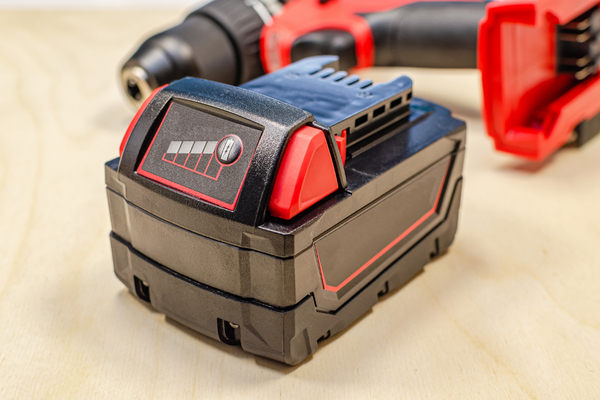
Cordless power tools are only as useful as the batteries that power them. A drill can remain mechanically sound, a saw can be perfectly clean, and a charger can work normally, yet a poorly stored battery can leave the entire system unreliable when the next project begins.
Battery care is therefore an important part of power-tool maintenance, especially when tools will remain unused for several weeks or months.
There is no single storage rule that applies to every battery. Different manufacturers, battery chemistries, charging systems, and tool platforms can have different requirements. Modern cordless tools commonly use lithium-ion battery packs, but the correct storage procedure still depends on the specific product.
The safest approach is to follow the battery and tool manufacturer’s instructions while applying a few general principles: keep batteries dry, protect them from physical damage and excessive temperatures, avoid storing damaged packs, use compatible chargers, and inspect them before returning them to service.
This guide explains how to prepare cordless-tool batteries for long-term storage and how to avoid common mistakes that can shorten battery life or create unnecessary safety risks.
Why Battery Storage Matters
A battery continues to age even when it is not being used.
Storage conditions can affect:
- Available capacity
- Battery health
- Charging behavior
- Physical condition
- Reliability
- Service life
Temperature is particularly important.
A battery stored for months in a very hot garage can experience conditions very different from a battery stored in a relatively stable indoor environment.
Physical damage is also important. A battery pack that has been dropped, crushed, cracked, swollen, or exposed to water should not automatically be returned to normal use.
Long-term storage is therefore an opportunity to separate healthy batteries from packs that need further attention.
Identify the Battery Type
Before preparing a battery for storage, determine what type it is.
Many current cordless power-tool platforms use lithium-ion batteries.
Older equipment may use other battery technologies.
The chemistry matters because charging, storage, and maintenance recommendations can differ.
Look for information on:
- Battery label
- Manufacturer documentation
- Model number
- Tool manual
- Charger instructions
Do not assume that a storage procedure designed for one battery chemistry applies to another.
When manufacturer instructions are available, they should take priority over generic advice.
Start With a Physical Inspection
Before storing a battery, look carefully at the housing.
Check for:
- Cracks
- Swelling
- Deformation
- Leakage
- Burn marks
- Damaged terminals
- Missing components
- Signs of overheating
The battery should not be treated as ordinary plastic packaging.
A battery pack contains cells and electrical components that can be damaged internally even when external damage is limited.
If the pack appears significantly damaged, stop and follow the manufacturer’s safety instructions.
Do not place a questionable battery back into long-term storage with normal batteries simply to deal with it later.
Never Ignore Swelling
A visibly swollen battery should be treated as a damaged battery.
Do not attempt to compress it back into shape.
Do not puncture the housing.
Do not disassemble the pack.
Do not continue charging it simply to see whether it returns to normal.
Follow the manufacturer’s instructions for handling and disposal of a damaged battery.
Keep damaged battery packs away from normal equipment until the appropriate next step has been determined.
Check for Cracks and Impact Damage
A battery can suffer damage from being dropped onto concrete, crushed under tools, or struck by other equipment.
Inspect the housing carefully.
A cosmetic mark is not necessarily serious, but cracks, deformation, or loose components deserve attention.
A battery pack that no longer fits correctly into the tool or charger should not be forced into place.
Mechanical fit is part of safe operation.
Keep Batteries Dry
Moisture and electrical components are not a good combination.
Store batteries in a dry environment.
Avoid:
- Damp garages
- Wet toolboxes
- Outdoor storage
- Areas exposed to leaks
- Storage beside wet materials
Do not store a recently wet battery as though wiping the outside made the entire pack dry.
If a battery has been exposed to substantial moisture, follow the manufacturer’s instructions before attempting to charge or use it.
Avoid Extreme Heat
Heat is one of the most important environmental factors to consider during battery storage.
Do not intentionally store batteries:
- In direct sunlight
- Inside a hot vehicle
- Beside heaters
- Near furnaces
- In extremely hot storage areas
Garage temperatures can become significantly higher than the indoor temperature of a home.
If the manufacturer’s recommended storage temperature range is available, follow it.
A cool, stable environment is generally preferable to an area that experiences large temperature swings.
Avoid Extreme Cold Too
Excessively cold conditions can also affect battery performance.
A battery that has been stored in a very cold environment may not behave normally when immediately placed under heavy load or charged.
Follow the battery manufacturer’s recommendations regarding temperature.
If the battery has been exposed to unusually low temperatures, allow it to return to the manufacturer’s recommended operating range before use or charging when required by the instructions.
Do not deliberately heat a cold battery with a heater or other uncontrolled source.
Temperature Stability Matters
A storage environment does not need to maintain a laboratory-perfect temperature.
However, large temperature fluctuations can be undesirable, particularly when they contribute to condensation.
For example, moving a very cold battery into a warm, humid environment can create moisture on its exterior.
Before storage, think about where the battery will spend the next several weeks.
A stable, dry environment is generally preferable to a location that cycles between extreme heat, cold, and humidity.
How Much Charge Should a Battery Have?
This is one area where generic advice can be misleading.
The appropriate storage charge level depends on the battery chemistry, manufacturer, and specific system.
Many lithium-ion tool manufacturers provide guidance for long-term storage, but the recommended state of charge is not identical across all products.
Do not assume that every battery should be stored completely full or completely empty.
Check the manufacturer’s instructions for the exact battery platform.
Following those instructions is more reliable than applying a universal percentage to every cordless tool.
Do Not Store a Battery Fully Depleted Without Checking the Instructions
A battery that has been left deeply discharged can become difficult or impossible to recharge.
This is one reason long-term storage procedures matter.
If the manufacturer’s instructions specify a particular storage state of charge, use it.
Do not deliberately run a battery completely empty before putting it away simply because the tool will not be used for several months.
Battery systems can respond differently to deep discharge.
Do Not Keep Charging Batteries Indefinitely
Different modern chargers have different charging-control systems.
Still, long-term storage should follow the specific manufacturer’s recommendations.
Do not assume that leaving every battery connected to its charger for months is the ideal storage method.
If a battery is being prepared for extended storage, use the charging procedure recommended by its manufacturer.
The charger itself should also be stored properly.
Use the Correct Charger
Always use the charger intended for the particular battery platform unless the manufacturer explicitly states that another charging system is compatible.
Physical compatibility does not necessarily mean electrical compatibility.
Using an incorrect charger can damage the battery or create a dangerous condition.
Keep compatible batteries and chargers clearly organized, particularly if you own tools from several manufacturers.
Inspect the Charging Contacts
Before storing the battery, look at the electrical contacts.
Check for:
- Dust
- Dirt
- Corrosion
- Deformation
- Burn marks
Loose debris can sometimes be removed using an appropriate dry-cleaning method.
Do not aggressively sand electrical contacts.
Do not coat them with random oils or household chemicals.
If the contacts are damaged, follow the manufacturer’s service instructions.
Keep Battery Terminals From Contacting Metal Objects
Loose battery packs should not be stored together with keys, screws, coins, wrenches, or other conductive objects that can contact the terminals.
A battery placed in a toolbox drawer containing loose metal hardware may create an unnecessary short-circuit risk.
Use the original protective cover, case, terminal protection, or another manufacturer-approved storage method when provided.
Keep batteries organized and separated from loose conductive materials.
Store Batteries in Their Cases When Appropriate
Many cordless-tool systems provide cases or storage compartments.
These can protect the battery from:
- Impact
- Dust
- Moisture
- Accidental contact
- Disorganization
If a case is used, keep it clean and dry.
Do not store wet batteries inside a closed case.
Do not pack batteries underneath heavy tools where they can be damaged.
Do Not Cover a Battery With Materials That Trap Heat
Storage should protect the battery without creating a poorly ventilated or excessively warm environment.
Avoid placing a battery next to heat-producing equipment.
Do not surround it with materials that could retain unwanted heat under unsuitable conditions.
The battery manufacturer’s storage requirements should take priority.
The objective is a stable, dry, appropriate environment rather than maximum enclosure.
Keep Batteries Away From Chemicals
Chemical exposure can damage battery housings and nearby materials.
Do not store batteries directly beside leaking:
- Solvents
- Cleaners
- Paint
- Adhesives
- Automotive chemicals
- Fuel
- Other workshop products
If a chemical spills onto a battery, follow the manufacturer’s guidance for the product and battery system.
Do not assume that wiping the housing is enough if the battery has been exposed to an aggressive substance.
Do Not Store Batteries Near Water
The storage location should not be near:
- Sinks
- Damp floors
- Outdoor doors where rain enters
- Leaking pipes
- Wet cleaning equipment
A battery should be treated as electrical equipment even when its outer housing appears durable.
The simplest preventive measure is to keep water away from it.
What About Dust?
Dust is generally less immediately concerning than water, but it can accumulate around contacts and storage compartments.
Keep battery surfaces reasonably clean.
Use a dry cloth or other manufacturer-approved cleaning method.
Avoid flooding the battery with water or cleaning products.
Do not insert sharp objects around terminals.
The battery should remain clean enough that it can be inspected and fitted properly.
Do Not Open the Battery Pack
Cordless-tool battery packs can contain multiple cells, electronic control circuitry, protective systems, and other components.
Opening the case to “replace a bad cell” or perform a homemade repair can introduce significant risks.
Unless the manufacturer specifically provides a user-serviceable procedure, treat the battery as a sealed component.
If the battery fails or shows significant damage, use the manufacturer’s support, an appropriate repair service, or the recommended replacement and disposal process.
Why Homemade Battery Repairs Are Risky
A battery pack may look simple from the outside.
Internally, however, cells need to work together within the design’s electrical and thermal requirements.
Improper repair can create:
- Cell imbalance
- Damaged insulation
- Short circuits
- Excessive heat
- Charging problems
- Mechanical damage
This is why replacing individual internal cells should not be treated as an ordinary household maintenance task unless the system is specifically designed and supported for that type of service.
Store Batteries Away From Direct Sunlight
Direct sunlight can heat a battery far beyond the surrounding room temperature.
Avoid leaving batteries on:
- Windowsills with direct sun
- Open shelves exposed to sunlight
- Vehicle dashboards
- Outdoor work surfaces
A shaded, stable storage location is preferable.
This is especially important during hot weather.
Avoid Leaving Batteries in Vehicles
Cars and vans can become extremely hot or cold compared with their surrounding environment.
A battery left inside a vehicle can experience conditions very different from those recommended for storage.
When tools are transported, follow the manufacturer’s guidance and avoid leaving batteries unnecessarily exposed to extreme temperatures.
After transport in challenging weather, allow the equipment to return to appropriate conditions before use or charging according to the manufacturer’s instructions.
Inspect Batteries After Long Storage
Before using a battery that has been stored for several months, inspect it again.
Look for:
- Swelling
- Cracks
- Corrosion
- Damage
- Unusual odor
- Deformation
- Contaminated contacts
If anything appears abnormal, do not automatically install the battery into a tool.
Follow the manufacturer’s guidance for the specific condition.
Check the Battery’s Fit
A battery should slide into the compatible tool normally.
Do not force it.
If the battery suddenly fits differently than before, investigate.
Possible causes include:
- Housing deformation
- Damaged rails
- Dirt
- Tool damage
- Battery damage
Physical fit is part of the connection between the battery and tool.
Forcing a damaged pack into place can create additional problems.
Inspect the Charger Too
Before charging a stored battery, inspect the charger.
Check the:
- Cable
- Plug
- Housing
- Charging contacts
- Ventilation openings
Look for:
- Cuts
- Exposed conductors
- Cracks
- Burn marks
- Damaged connectors
Use only a compatible charger.
Do not charge a battery with damaged charging equipment.
Do Not Charge a Clearly Damaged Battery
A battery showing swelling, leakage, severe cracking, burn marks, or other obvious damage should not simply be placed on the charger for testing.
Follow the manufacturer’s safety instructions.
Charging a damaged battery can create additional hazards.
When there is uncertainty about the condition of a battery, professional or manufacturer-supported assessment is preferable.
Test the Battery Carefully After Storage
A battery that passes visual inspection can be returned to service according to the manufacturer’s instructions.
Start with a normal, appropriate use rather than immediately subjecting the tool to the most demanding task possible.
Watch for:
- Unexpected loss of power
- Excessive heat
- Unusual smell
- Intermittent operation
- Abnormal charging behavior
These symptoms can indicate a battery or tool problem.
Stop and investigate rather than continuing until the battery is completely depleted.
Battery Runtime Can Change With Age
Even correctly stored batteries eventually age.
Reduced runtime does not necessarily mean that the battery was stored incorrectly.
Battery performance depends on:
- Age
- Number of cycles
- Storage history
- Temperature exposure
- Charging history
- Battery chemistry
A battery may gradually lose capacity while still functioning normally.
The objective of proper storage is to avoid unnecessary additional deterioration.
How to Organize Multiple Batteries
If you have several batteries, organization becomes more important.
Group them by compatible tool platform.
Keep damaged or questionable packs separate from healthy equipment.
Labeling can help if you have several batteries that look similar.
Avoid stacking heavy equipment on top of loose batteries.
A simple rack, cabinet, or manufacturer’s storage case can keep packs organized without requiring a complicated system.
Do Not Mix Different Battery Platforms
Battery packs from different systems may look similar but have different electrical specifications.
Do not try to force a battery into a tool for which it was not designed.
Use batteries and chargers intended for the specific platform.
The storage area should make it obvious which battery belongs to which tool system.
Long-Term Storage in a Humid Garage
If your storage area is a garage, humidity deserves special attention.
Keep batteries:
- Dry
- Elevated from damp floors
- Away from water
- Protected from condensation
- Out of direct sunlight
If the garage experiences large temperature changes, pay particular attention to condensation.
A stable indoor location may be preferable for particularly valuable or sensitive battery packs when the garage environment is difficult to control.
Long-Term Storage in a Workshop
A workshop can introduce different problems.
Dust from sanding, grinding, and cutting can settle around battery contacts and tool cases.
Keep batteries away from active dust-generating operations when possible.
Clean storage containers periodically.
Do not leave batteries on a workbench while producing large amounts of dust.
Dust control benefits both batteries and the tools they power.
What About Silica Gel?
Silica gel can provide supplemental moisture control in suitable enclosed storage.
It may be useful inside a tool case or storage container when the battery is already clean and dry.
However, the desiccant should not be treated as a substitute for keeping the battery dry.
Do not store a wet battery in an enclosed box and expect silica gel to make the situation safe.
Prepare the battery correctly first.
What About Storing Batteries in a Refrigerator?
Refrigerators are not a universal battery-storage solution.
They introduce their own temperature and condensation considerations and are unnecessary for ordinary household tool-battery storage unless the manufacturer specifically recommends otherwise.
Follow the battery manufacturer’s storage temperature guidance instead.
A stable, appropriate environment is generally more practical than experimenting with specialized storage methods.
How Long Can a Battery Remain Stored?
There is no single storage duration that applies to every cordless-tool battery.
The battery can remain unused for different periods depending on its chemistry, condition, manufacturer, and storage environment.
For extended periods, follow the manufacturer’s long-term storage recommendations and inspect the battery periodically when appropriate.
A battery stored for a few weeks and a battery forgotten for several years are very different situations.
Should Stored Batteries Be Checked Periodically?
For extended storage, periodic inspection can be useful, especially in challenging environments.
Look for:
- Physical damage
- Swelling
- Corrosion
- Moisture
- Unusual odor
- Storage-condition changes
Do not repeatedly charge or discharge a battery merely as a maintenance ritual unless the manufacturer specifically recommends it.
Unnecessary cycling can contribute to wear.
What to Do With an Old Battery
An old battery should not automatically be thrown into ordinary household waste.
Battery disposal requirements vary by location and battery type.
Follow the manufacturer’s recycling or disposal instructions and local regulations.
Keep batteries intended for disposal separated from normal working batteries.
A damaged battery may require special handling.
Do Not Throw Batteries Into a General Metal Scrap Bin
Battery packs contain electrical components and cells.
They should be handled according to appropriate recycling and disposal guidance.
Do not place them loose in a scrap-metal container where terminals can contact other metal objects.
Use the manufacturer’s recommended recycling route or an appropriate battery collection program.
A Practical Long-Term Storage Routine
Before storing a battery for an extended period:
Inspect it.
Look for damage or abnormal appearance.
Clean it.
Remove dust and dirt from the exterior and contacts using an appropriate method.
Prepare the charge level.
Follow the manufacturer’s storage instructions.
Protect the terminals.
Prevent contact with loose conductive objects.
Choose a suitable location.
Keep the battery dry and away from extreme conditions.
Store it securely.
Avoid crushing, dropping, or stacking heavy objects on it.
Inspect periodically.
Pay closer attention when the storage environment is humid or temperature-variable.
This routine provides a practical foundation without requiring complicated equipment.
Common Battery-Storage Mistakes
Storing batteries in a hot garage
High temperatures can be harmful to battery longevity.
Leaving batteries in a vehicle
Vehicles can experience extreme temperatures.
Storing a battery at an inappropriate charge level
Follow the specific manufacturer’s storage recommendation.
Charging a visibly damaged battery
This can create unnecessary risk.
Allowing terminals to contact loose metal
This creates an avoidable electrical hazard.
Storing batteries with wet tools
Moisture can affect electrical components.
Mixing battery platforms
Different systems may use incompatible electrical specifications.
Opening a battery case
Internal repairs require appropriate knowledge and equipment.
Using an incorrect charger
Physical fit is not enough to establish electrical compatibility.
Forgetting batteries for years
Long-term storage still requires appropriate inspection and environmental control.
Final Thoughts
Power-tool batteries deserve their own storage routine because they are more than simple accessories.
A battery can deteriorate through age, temperature exposure, physical damage, unsuitable charging practices, and poor storage conditions. The safest approach is to follow the manufacturer’s instructions for your specific battery platform while maintaining a clean, dry, and reasonably stable storage environment.
Before long-term storage, inspect the battery for cracks, swelling, deformation, leakage, burn marks, damaged terminals, or other abnormalities. Do not store a visibly damaged pack with healthy batteries.
Keep batteries away from extreme heat, direct sunlight, water, damp floors, chemicals, and loose conductive objects such as keys or screws.
Use the correct charger and follow the manufacturer’s guidance for preparing the battery’s charge level before extended storage. There is no universal storage percentage that should be applied to every battery.
When the storage period ends, inspect the battery again before charging or installing it in a tool. Watch for abnormal heat, smell, physical changes, charging problems, or unusual performance.
Most importantly, do not attempt casual internal battery repairs. A battery pack contains components that require appropriate handling, and an improvised repair can create risks that are difficult to see from the outside.
Good battery storage is ultimately simple:
Keep it dry. Keep it cool enough. Protect it from damage. Use the correct charger. Follow the manufacturer’s instructions.
Those habits can help preserve battery reliability and reduce unnecessary deterioration between projects.
Related Guides
- How to Clean a Cordless Drill After Working in Dust
- How to Store Cordless Power Tools Between Projects
- How to Keep Dust From Building Up Inside Power Tools
- Why Power Tools Overheat and What You Should Check First
- How to Protect Power Tools From Humidity in a Garage
FAQ
How should I store cordless-tool batteries for several months?
Follow the manufacturer’s storage instructions for the specific battery. In general, keep the battery clean, dry, protected from physical damage and extreme temperatures, and stored so its terminals cannot contact loose conductive objects.
Should a lithium-ion power-tool battery be stored fully charged?
Not necessarily. The correct storage charge depends on the battery manufacturer and product. Follow the specific storage recommendation rather than applying the same percentage to every battery.
Is it safe to store power-tool batteries in a hot garage?
A hot garage may expose batteries to temperatures outside the manufacturer’s recommended storage range. A more stable, suitable environment is preferable when the garage becomes extremely hot.
Can I leave a cordless-tool battery on its charger for months?
Do not assume this is appropriate for every system. Follow the manufacturer’s charging and long-term storage instructions for the specific battery and charger.
What should I do if a battery is swollen?
Treat a swollen battery as damaged. Do not puncture, compress, disassemble, or casually recharge it. Follow the manufacturer’s safety and disposal instructions.
Can I store batteries next to my tools?
Yes, when the storage arrangement keeps them protected and prevents battery terminals from contacting loose conductive objects. Avoid storing batteries where heavy tools can fall on them or where moisture is present.
Can I store power-tool batteries in a plastic box?
A suitable plastic storage box can protect batteries from dust and physical contact, provided the batteries are clean and dry and the storage conditions meet the manufacturer’s requirements. Do not seal a wet or damaged battery inside a container.
Should I use silica gel with stored batteries?
Silica gel can provide supplemental moisture control in a suitable enclosed storage space. It should not be used as a substitute for storing batteries in a dry environment.
Can I repair a cordless-tool battery myself?
Do not open or modify a battery pack unless the manufacturer specifically provides an appropriate user-service procedure. Internal battery repairs can involve electrical and thermal hazards.
How do I know if a stored battery is still good?
Inspect it for damage, swelling, corrosion, or other abnormalities, then follow the manufacturer’s recommended charging and testing procedure. During use, watch for unusual heat, smell, intermittent operation, or significantly abnormal performance.
Can old batteries go in the regular trash?
Disposal rules depend on the battery type and local regulations. Follow the manufacturer’s recycling or disposal guidance and use an appropriate battery collection program rather than assuming ordinary household waste is suitable.
Should I periodically charge a battery that is in long-term storage?
Only do so when the manufacturer recommends periodic charging or maintenance. Unnecessary charge cycles can add wear, so follow the specific battery system’s instructions.