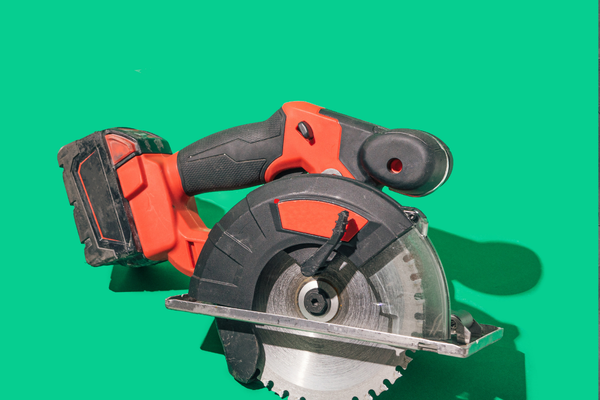
A cordless circular saw is one of the most useful power tools for cutting wood and other approved materials, but it can also accumulate a surprising amount of dust and debris during normal use. Sawdust can collect around the blade guard, base plate, battery compartment, ventilation openings, and housing, while resin and other residues may stick to the blade and surrounding components.
Because the saw combines a rotating blade, motor, electrical components, and protective mechanisms, proper maintenance is about more than keeping the tool looking clean. The blade needs to remain in suitable condition, the guard needs to move correctly, the base needs to remain free of excessive contamination, and the ventilation openings should not become heavily obstructed.
Storage is equally important. A cordless circular saw that is clean and dry when put away is much easier to inspect before the next project than one that has been left covered in dust.
The good news is that routine care does not require complete disassembly. In most cases, careful external cleaning, inspection, correct blade handling, battery care, and appropriate storage are enough to keep the saw in good condition.
This guide focuses on routine cleaning, inspection, and storage. Manufacturer-specific instructions should always take priority, particularly for blade removal, internal servicing, battery handling, and components with specialized adjustment procedures.
Why Circular Saw Maintenance Matters
A circular saw works under considerable mechanical load.
The blade rotates at high speed, the motor generates heat, and dust is produced directly at the cutting area.
As a result, several parts of the tool can become contaminated.
Common areas include:
- Blade
- Blade guard
- Base plate
- Cutting-depth mechanism
- Bevel-adjustment mechanism
- Ventilation openings
- Trigger and controls
- Battery compartment
- Housing
- Storage case
Routine maintenance helps prevent contamination from interfering with normal operation and makes it easier to identify damage before the tool is used again.
The objective is not to make the saw spotless.
It is to keep important components clean enough to inspect and operate correctly.
Remove the Battery Before Cleaning
Before performing routine cleaning, remove the battery according to the manufacturer’s procedure.
This should become an automatic part of your maintenance routine.
Removing the battery:
- Prevents unintended operation
- Allows access to the battery compartment
- Makes cleaning easier
- Separates the power source from the tool
Never clean around the trigger or blade area while the battery remains installed simply because you do not intend to press the trigger.
Routine maintenance is safer when the power source has been removed first.
Let the Saw Cool After Use
If the saw has just completed a demanding cut, allow it to cool appropriately before beginning maintenance.
Do not attempt to accelerate cooling by pouring water on the tool.
The motor and other components may be warm after normal use.
The appropriate cooling period depends on the tool, workload, and manufacturer’s instructions.
Once the equipment can be safely handled, begin the inspection.
Start With Dry Cleaning
The first cleaning step should normally be dry.
Use a soft brush, cloth, or suitable vacuum to remove loose sawdust and debris.
Pay particular attention to:
- Blade area
- Guard
- Base
- Battery compartment
- Ventilation openings
- Housing seams
- Controls
Removing loose dust before using any damp cloth prevents the particles from becoming a sticky paste.
It also gives you a clearer view of the tool’s actual condition.
Clean the Base Plate
The base plate slides across the workpiece during cutting.
Dust and resin can accumulate on its surface and around adjustment points.
Keep the base reasonably clean so that it can contact the workpiece as intended.
Inspect for:
- Heavy residue
- Dents
- Bends
- Corrosion
- Scratches that interfere with movement
- Damaged adjustment hardware
A small cosmetic scratch is not necessarily a problem.
A severely bent base can affect how the saw sits against the material and may affect the accuracy of the cut.
Do not attempt to straighten a significantly damaged base by force.
Inspect the Blade Guard
The blade guard is one of the most important components to inspect.
It should move according to the design of the particular saw and return to its intended protective position.
Remove visible dust and resin from accessible areas.
Operate the guard only as described by the manufacturer.
Do not force it through its movement range.
Look for:
- Sticking
- Damage
- Cracks
- Heavy contamination
- Unusual resistance
- Misalignment
A guard that does not behave normally should not be treated as a simple cleaning problem.
Do not use the saw until the issue has been addressed appropriately.
Never Clean the Blade With the Battery Installed
The blade area requires additional caution because the blade is sharp and the tool is capable of powered rotation.
Remove the battery before inspection and cleaning.
Use appropriate hand protection when handling the blade, but do not rely solely on gloves as protection against accidental movement.
Follow the manufacturer’s procedure for blade handling and removal.
Do not place your fingers near the teeth while attempting to clean debris from the blade.
Clean the Blade Carefully
Circular-saw blades can accumulate:
- Sawdust
- Resin
- Adhesive residue
- Dirt
- Surface corrosion
Dry brushing can remove loose material.
For heavier residue, use a cleaning product only when it is compatible with the blade and approved for the application.
Do not assume that every solvent is safe for coated or carbide-tipped blades.
The cutting teeth are working surfaces.
Avoid aggressive scrubbing that could damage their geometry.
Inspect the Teeth
While cleaning the blade, inspect the teeth carefully.
Look for:
- Chipped teeth
- Missing teeth
- Cracks
- Excessive wear
- Resin buildup
- Corrosion
- Deformation
A dirty blade can often be cleaned.
A damaged blade may need replacement.
Do not continue using a blade simply because it still spins.
Its teeth need to remain in appropriate condition for the material and cutting application.
Check the Blade for Warping
Inspect the blade for obvious deformation.
A circular-saw blade should remain suitable for the tool and intended cutting operation.
Do not attempt to straighten a significantly warped blade.
A distorted blade can affect cutting behavior and may create additional vibration.
If the blade has been damaged through impact, overheating, or improper use, replacement may be more appropriate than attempting an improvised repair.
Do Not Sharpen Every Circular-Saw Blade Yourself
Some circular-saw blades can be professionally sharpened, particularly higher-quality blades designed for repeated service.
Others are economical enough that replacement is more practical.
The presence of carbide teeth or specialized geometry can also affect the appropriate maintenance procedure.
Do not file or grind the teeth casually.
Cutting geometry matters.
A blade that has been improperly sharpened may not perform as intended.
Inspect the Blade Attachment Area
The blade mounting area deserves attention during maintenance.
Look for:
- Dust
- Resin
- Corrosion
- Damage
- Foreign material
Follow the manufacturer’s blade-changing procedure.
Do not improvise around the arbor, washer, or fastener.
The blade needs to be installed correctly and securely.
If mounting components appear damaged, stop and consult the manufacturer’s instructions or qualified service.
Clean the Cutting-Depth Adjustment
Many cordless circular saws have a mechanism for changing cutting depth.
Dust and resin can accumulate around this mechanism.
Remove loose debris with a soft brush.
Operate the adjustment according to the manufacturer’s normal procedure.
Do not force a mechanism that has become stuck.
Inspect for:
- Dirt
- Corrosion
- Damaged levers
- Excessive play
- Unusual resistance
If the adjustment no longer holds securely, do not assume that lubrication alone will solve the problem.
A damaged locking mechanism may require service.
Clean the Bevel-Adjustment Mechanism
If the saw has bevel adjustment, inspect that area as well.
Dust can collect around the pivot and locking components.
Clean accessible areas carefully.
Check whether the mechanism:
- Locks securely
- Moves smoothly
- Maintains the selected setting
- Shows excessive play
Do not tighten adjustment hardware beyond the manufacturer’s recommended procedure.
A mechanism that can no longer hold its position reliably should be inspected before the saw is returned to use.
Inspect the Trigger and Safety Controls
The trigger and safety mechanism should move normally.
Use a soft brush to remove loose dust around the control area.
Avoid spraying cleaner directly into the trigger.
Do not insert sharp objects into narrow gaps.
Look for:
- Sticking
- Physical damage
- Unusual resistance
- Broken components
- Inconsistent operation
A control that behaves abnormally should be treated as a functional problem, not merely a cleaning issue.
Clean the Ventilation Openings
The motor and electronics may depend on airflow through the housing.
Inspect the vents after dusty work.
Use a soft brush or suitable vacuum to remove loose debris.
Avoid high-pressure air that forces dust deeper into the housing.
Do not insert tools through the vents.
The goal is to clear accessible contamination without disturbing internal components.
Why Dust Collection Helps
Dust management during cutting can reduce the amount of contamination that reaches the saw.
Depending on the model, an appropriate dust-extraction accessory may be available.
Use only compatible systems.
Reducing airborne dust around the cutting area can help keep the saw, work surface, and storage case cleaner.
It also makes cleanup easier after the project.
Dust control is therefore not only a workshop-cleanliness issue.
It is a tool-maintenance strategy.
Clean the Battery Compartment
Remove the battery and inspect its compartment.
Look for:
- Sawdust
- Fine particles
- Moisture
- Corrosion
- Foreign objects
- Damaged contacts
Use a controlled dry-cleaning method for loose dust.
Do not flood the compartment with water or cleaning chemicals.
Do not apply random lubricant to electrical contacts.
If the contacts are damaged, bent, burned, or severely corroded, follow the manufacturer’s service instructions.
Inspect the Battery Separately
The battery needs its own inspection.
Check for:
- Cracks
- Swelling
- Deformation
- Leakage
- Burn marks
- Damaged terminals
Do not use or charge a battery with significant physical damage simply to test it.
Follow the battery manufacturer’s guidance for abnormal conditions.
Battery maintenance should not be treated as ordinary metal-tool cleaning.
Clean the Housing
Once loose dust has been removed, wipe the housing with a suitable cloth.
A mildly damp cloth may be appropriate for some exterior surfaces when permitted by the manufacturer.
Do not soak the tool.
Do not spray cleaning liquid into the housing.
Power tools contain electrical components that should not be exposed unnecessarily to moisture.
After wiping the tool, make sure it is completely dry before storage.
Avoid Aggressive Solvents
The housing can contain:
- Plastic
- Rubber
- Paint
- Labels
- Other coatings
A strong solvent may damage these materials.
Use the mildest effective cleaning method.
If a specialized cleaner is required for a particular residue, verify compatibility before applying it broadly.
This is especially important around rubberized grips and printed markings.
Remove Resin Promptly
Resin can become harder to remove after it dries.
Circular-saw blades used on certain woods may develop sticky residue that captures additional dust.
If resin becomes noticeable, clean it using an appropriate blade-cleaning method.
Avoid grinding or scraping aggressively.
The objective is to preserve the blade rather than remove the residue at any cost.
Do Not Oil the Entire Saw
A circular saw does not need to be coated in oil simply because it contains metal parts.
Excess oil can attract sawdust and create sticky contamination.
Use lubrication only where the manufacturer specifies it.
For exposed metal components that need corrosion protection, use an appropriate product sparingly.
Keep oil away from:
- Electrical contacts
- Trigger mechanisms
- Battery interfaces
- Working surfaces where it could interfere with operation
Targeted protection is easier to maintain than excessive oiling.
Check for Rust
Inspect exposed metal for:
- Orange spots
- Brown discoloration
- Roughness
- Pitting
- Flaking
Pay particular attention after storing the saw in a humid garage.
Light surface corrosion may be treatable.
Deep corrosion around a mechanically important component deserves greater caution.
If corrosion has affected the blade, arbor components, adjustment mechanism, or other important parts, consider professional evaluation or replacement where appropriate.
Inspect the Power Tool After a Hard Impact
A circular saw can be damaged if it is dropped.
After a significant impact, inspect the:
- Housing
- Base plate
- Blade guard
- Blade
- Adjustment mechanisms
- Battery compartment
Look for cracks, deformation, looseness, and abnormal movement.
Do not continue using the tool simply because the motor still starts.
A structural component can be damaged without preventing the motor from running.
Check for Unusual Vibration
Excessive vibration deserves attention.
Possible causes include:
- Damaged blade
- Improperly installed blade
- Worn component
- Bent blade
- Mechanical problem
- Incorrect accessory
If vibration is noticeably different from normal operation, stop and inspect the tool.
Do not try to solve unusual vibration by tightening unrelated components.
Listen for Changes in Sound
The saw should have a familiar operating sound.
Listen for:
- Grinding
- Rattling
- Squealing
- Sudden changes in motor sound
An unusual sound combined with heat or vibration deserves particular attention.
A contaminated or damaged accessory can sometimes be the cause.
Mechanical problems are another possibility.
Do not continue operating the saw simply to see whether the noise becomes worse.
Watch for Overheating
Some warmth is normal during demanding cutting.
Excessive heat is not something to ignore.
Watch for:
- Abnormally hot housing
- Burning smell
- Smoke
- Sudden loss of power
- Repeated thermal shutdown
If these symptoms occur, stop using the tool and follow the manufacturer’s troubleshooting or service guidance.
Do not cool the saw with water.
Do not restart a smoking tool just to test whether the problem has disappeared.
Store the Saw With the Blade Protected
The blade should be protected during storage.
Keep the saw where the blade cannot easily strike other tools.
Avoid throwing the saw into a crowded toolbox where heavy equipment can hit the blade or guard.
A suitable case, shelf, cabinet, or manufacturer-designed storage system can help.
The storage arrangement should also prevent accidental contact with sharp teeth.
Remove the Battery for Long-Term Storage When Appropriate
Follow the manufacturer’s recommendations regarding battery removal.
For extended periods of non-use, many cordless systems are designed to have batteries stored separately from the tool.
Store the battery according to its own instructions.
Keep it away from extreme temperature, moisture, and loose conductive objects.
Do not assume that the tool and battery have identical storage requirements.
Keep the Storage Case Clean
If the circular saw has a case, clean the case too.
Remove:
- Sawdust
- Resin
- Dirt
- Metal particles
- Debris
Inspect foam or molded storage compartments.
Make sure everything is completely dry before closing the case.
A dirty case can quickly recontaminate a clean saw.
Avoid Storing the Saw on the Garage Floor
Floor-level storage can expose the equipment to:
- Moisture
- Dirt
- Vehicle fluids
- Condensation
- Accidental impact
Use a suitable shelf, cabinet, or case where practical.
Do not place the saw somewhere unstable simply to keep it off the floor.
Storage should remain secure and accessible.
Keep It Away From Humid Areas
Avoid storing the saw beside:
- Leaking pipes
- Damp walls
- Wet cleaning equipment
- Open doors during rain
- Standing water
If the garage is persistently humid, environmental control can be more valuable than repeatedly cleaning the tool.
A dry storage environment reduces corrosion risk across the entire collection of equipment.
Store Accessories Separately
Keep spare blades and other accessories organized.
Protect sharp teeth from impact.
Store blades in suitable containers or packaging when possible.
Do not pile different blades loosely on top of one another.
Separate blades used for different materials and applications so the correct accessory is easy to select.
Inspect the Blade Before the Next Project
Even when the saw has been stored correctly, inspect the blade before use.
Look for:
- Damage
- Corrosion
- Missing teeth
- Resin
- Deformation
- Excessive wear
Confirm that the blade is appropriate for the intended material and task.
Do not use a blade simply because it fits the tool physically.
Compatibility includes the tool, blade specifications, material, and application.
A Five-Minute Post-Project Routine
After finishing a cutting project:
1. Remove the battery.
Follow the manufacturer’s procedure.
2. Allow the tool to cool.
Do not use water to cool it.
3. Remove loose sawdust.
Use a brush or suitable vacuum.
4. Inspect the blade guard.
Make sure it moves as intended.
5. Clean the base plate.
Remove dust and resin.
6. Inspect the blade.
Look for damaged teeth and corrosion.
7. Check the vents.
Remove accessible dust.
8. Inspect the battery compartment.
Keep contacts clean and dry.
9. Clean the case.
Remove accumulated debris.
10. Store everything dry and securely.
This routine requires little time and can significantly reduce accumulated contamination.
A Deeper Periodic Maintenance Routine
Every so often, perform a more detailed inspection.
Clean the tool thoroughly.
Inspect the blade and guard.
Check the depth-adjustment mechanism.
Check the bevel mechanism.
Inspect the base plate.
Look over the housing for cracks.
Inspect the battery and charger.
Clean the storage case.
Check exposed metal for corrosion.
Pay attention to unusual sounds or vibration noted during previous projects.
This deeper inspection is particularly useful for a saw that is used frequently.
Common Mistakes
Cleaning while the battery is installed
Remove the power source before maintenance.
Washing the saw with water
Moisture can reach electrical components.
Blowing maximum-pressure air into the vents
This can push dust deeper into the housing.
Ignoring the blade guard
The guard is an important functional component.
Continuing to use a damaged blade
Cleaning does not repair chipped or cracked teeth.
Oiling the entire tool
Excess oil attracts sawdust.
Leaving the saw covered in dust between projects
Accumulated contamination becomes harder to remove.
Storing the saw with a dirty case
The case can immediately recontaminate the tool.
Ignoring vibration or unusual noise
These may indicate a blade or mechanical problem.
Using a damaged battery
A battery with swelling, leakage, or significant damage requires appropriate handling according to the manufacturer’s guidance.
Final Thoughts
A cordless circular saw does not need complicated maintenance to remain useful for years.
The most important habit is to clean it at the end of each project rather than allowing dust, resin, and debris to accumulate.
Start by removing the battery and allowing the tool to cool appropriately. Remove loose dust with a soft brush or suitable vacuum, then inspect the blade, guard, base plate, adjustment mechanisms, vents, battery compartment, and housing.
Keep the blade particularly clean and inspect its teeth for cracks, chips, missing sections, corrosion, or excessive wear. A clean blade is not necessarily a good blade; damaged cutting components should be replaced or appropriately serviced rather than hidden beneath a layer of cleaning.
The blade guard deserves special attention. If it does not move or return as intended, stop using the saw until the problem has been resolved according to the manufacturer’s guidance.
Avoid common maintenance mistakes such as washing the tool under running water, spraying solvents into the housing, forcing adjustment mechanisms, or blowing high-pressure air directly into the vents.
Storage matters just as much. Keep the saw clean, dry, protected from impact, and away from damp floors and humid areas. Store batteries according to their own manufacturer instructions and keep sharp spare blades protected from damage.
Finally, treat abnormal heat, vibration, noise, burning smell, smoke, or unusual operation as warning signs rather than ordinary maintenance issues.
The goal is simple:
Keep the saw clean, keep the blade and safety mechanisms in good condition, protect the battery, and store the entire system in a dry and organized environment.
A few minutes of maintenance after each project can prevent dust buildup, make problems easier to identify, and help ensure that your circular saw is ready when the next cutting job begins.
Related Guides
- How to Clean a Cordless Drill After Working in Dust
- How to Store Cordless Power Tools Between Projects
- How to Keep Dust From Building Up Inside Power Tools
- Why Power Tools Overheat and What You Should Check First
- How to Protect Power Tools From Humidity in a Garage
FAQ
How often should I clean a cordless circular saw?
Clean it after dusty or resin-producing projects and whenever visible contamination accumulates. Frequently used saws benefit from a more detailed inspection periodically.
Should I remove the battery before cleaning a circular saw?
Yes. Remove the battery according to the manufacturer’s procedure before cleaning or inspecting the tool.
Can I wash a circular saw with water?
Do not assume that it is safe to wash or rinse a circular saw. Water can reach electrical and mechanical components. Use controlled cleaning methods and follow the manufacturer’s instructions.
How do I clean sawdust from a circular saw?
Start with a soft brush or suitable vacuum to remove loose dust. Pay particular attention to the blade guard, base, vents, battery compartment, and housing seams.
How should I clean a circular-saw blade?
Remove the battery and follow the manufacturer’s blade-handling procedure. Remove loose debris carefully and use only cleaning products compatible with the specific blade and its coating.
Should I oil a circular-saw blade?
Do not automatically coat the blade with oil. Excess residue can attract sawdust and interfere with maintenance. Use appropriate corrosion protection only when needed and according to the product and blade manufacturer’s guidance.
What should I do if the blade guard sticks?
Stop using the saw. Remove the battery and inspect the accessible area for contamination or damage. Follow the manufacturer’s maintenance instructions. Do not force the guard or bypass its protective function.
Can a dirty circular saw overheat?
Heavy contamination around ventilation areas can contribute to restricted airflow on some designs. Dust control and routine cleaning can help, but persistent overheating may have other causes and should be investigated.
When should I replace a circular-saw blade?
Consider replacement when the blade has cracks, significant deformation, missing or severely damaged teeth, substantial corrosion, or other damage that prevents reliable cutting. Some blades can be professionally sharpened when their design permits it.
Why does my circular saw vibrate more than before?
Possible causes include a damaged or incorrectly installed blade, mechanical wear, or another problem. Stop and inspect the blade and tool rather than continuing to operate a saw with unusual vibration.
How should I store a cordless circular saw?
Clean and dry the saw, protect the blade and guard from impact, store it in a suitable case or cabinet, and follow the manufacturer’s recommendations for battery storage. Keep the equipment away from excessive humidity, standing water, and extreme temperatures.
Should I remove the blade before storing the saw?
That depends on the manufacturer’s storage recommendations and your storage system. When the blade remains installed, protect it from impacts and accidental contact. Follow the manufacturer’s instructions for blade handling and storage.