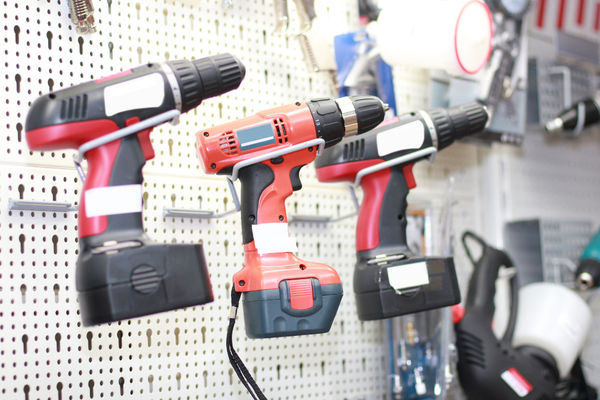
Cordless power tools are convenient because they can be used almost anywhere without a power cord getting in the way. Drills, impact drivers, circular saws, reciprocating saws, sanders, grinders, and other battery-powered tools have become common in home workshops and garages.
But convenience during use does not mean the tools can be stored without care.
The period between projects can have a significant effect on a cordless power tool’s condition. Dust can remain inside the housing, batteries can be exposed to unsuitable temperatures, metal components can develop corrosion, and tools can suffer unnecessary damage simply because they are thrown into a crowded storage area.
Good storage does not require a complicated workshop. The most important principles are to clean the tool before putting it away, remove the battery when appropriate, protect the equipment from moisture and extreme conditions, store batteries according to their manufacturer’s instructions, and keep tools organized enough that they can be inspected before the next project.
This guide explains how to store cordless power tools between projects while reducing unnecessary wear and making the next job easier to start.
Why Proper Storage Matters
A power tool spends much more time in storage than it does actually operating.
That makes the storage environment an important part of its overall maintenance.
During storage, a cordless power tool can be affected by:
- Dust
- Humidity
- Condensation
- Temperature extremes
- Impact
- Poor organization
- Contaminated accessories
- Battery deterioration
- Chemical exposure
A tool that is clean and dry when stored has a better starting point for its next use.
A tool that is dirty, damp, or stored with a damaged battery may develop problems while sitting unused.
The objective of storage is therefore not simply to put the tool somewhere out of the way.
It is to preserve the condition it already has.
Clean the Tool Before Storage
The first step should be a basic cleaning.
Remove the battery according to the manufacturer’s procedure.
Then remove loose dust and debris from the tool.
Pay particular attention to:
- Ventilation openings
- Trigger area
- Chuck or accessory holder
- Battery compartment
- Housing seams
- Handles
- Switches
A soft brush or suitable vacuum can remove loose contamination.
For external surfaces, use only a cleaning method compatible with the tool’s materials.
Avoid unnecessary water.
A cordless power tool should not be treated like a washable household object unless the manufacturer specifically states that the model is designed for such exposure.
Why Cleaning Before Storage Is Better Than Cleaning Later
It can be tempting to finish a project, place the tool directly into its case, and assume you will clean it before the next use.
That delay can create problems.
Dust mixed with grease can become harder to remove.
Moisture can remain trapped.
Contamination can settle around ventilation openings.
Rust can develop on exposed metal.
The next time you need the tool, you may also forget about the contamination entirely.
Cleaning immediately after use creates a simple boundary:
The project is finished, and the tool is ready for storage.
That habit reduces the chance of old residue becoming a larger maintenance problem.
Remove the Battery When Appropriate
Battery-powered tools should generally be stored according to the manufacturer’s instructions regarding battery removal.
For many tools, removing the battery before long periods of storage makes sense because it separates the power source from the tool and allows the battery and tool to be stored appropriately.
The exact procedure varies by manufacturer and product.
Do not force a battery out if its release mechanism is damaged.
Inspect the battery compartment for dust, debris, corrosion, or damage before storage.
Keep the battery itself separate from moisture and unsuitable temperatures.
Store Batteries Separately When Practical
The storage requirements of a battery are not identical to those of a metal hand tool.
A battery can be affected by:
- Extreme temperatures
- Physical damage
- Moisture
- Improper charging
- Long periods of unsuitable storage
Follow the battery manufacturer’s specific instructions.
Do not place loose batteries where metal objects can contact their terminals.
A toolbox drawer filled with keys, screws, wrenches, and loose battery packs can create unnecessary contact between conductive objects and battery terminals.
Use the original protective packaging, battery case, or another suitable storage method when provided.
Do Not Store Damaged Batteries
Before putting a battery away, inspect it.
Look for:
- Cracks
- Swelling
- Leakage
- Damaged terminals
- Burn marks
- Unusual discoloration
- Signs of overheating
A battery with significant physical damage should not simply be placed back into the toolbox.
Follow the manufacturer’s safety instructions for damaged batteries.
Do not attempt to repair a battery pack casually.
Battery packs contain electrical components that require appropriate handling.
Charge the Battery According to Manufacturer Guidance
Long-term battery storage does not have one universal charge level that applies to every chemistry and every manufacturer.
This is why the manufacturer’s instructions are more important than generic internet rules.
Some manufacturers provide specific recommendations for preparing batteries for extended storage.
Follow those instructions.
Avoid creating your own storage procedure based solely on the behavior of one battery brand.
If the battery manufacturer provides a recommended storage state, temperature range, or inspection schedule, use that information.
Keep Batteries Away From Extreme Heat
A hot garage can be a difficult environment for battery storage.
Avoid exposing batteries unnecessarily to excessive heat or direct sunlight.
Do not leave battery packs inside a vehicle where temperatures can become extreme.
The tool itself may tolerate environmental conditions that are less suitable for its battery.
For long-term storage, use the battery manufacturer’s recommended environment.
If your garage becomes extremely hot or cold, consider whether the batteries should be stored somewhere more controlled.
Protect Batteries From Moisture
Water and electrical components are a poor combination.
Keep batteries dry.
Do not store them with wet tools or damp cleaning materials.
Avoid placing them on a damp garage floor.
If a battery becomes wet, follow the manufacturer’s instructions before attempting to use or recharge it.
Do not assume that wiping the outside means the internal components are dry.
Store Tools in a Dry Location
The storage environment affects more than batteries.
Metal tool components can develop corrosion when exposed to moisture for extended periods.
Choose a storage area that is:
- Dry
- Protected from direct water
- Away from leaks
- Free from standing moisture
- Reasonably stable in temperature
- Easy to inspect
A closed tool case can help protect against dust, but it should not be used to trap dampness.
Make sure the tool is completely dry before placing it into the case.
Avoid Storing Tools on the Garage Floor
The garage floor is often one of the least desirable places for long-term power-tool storage.
It can be exposed to:
- Water
- Condensation
- Dirt
- Vehicle fluids
- Cleaning chemicals
- Temperature changes
A shelf, cabinet, or designated storage area can provide better protection.
The exact arrangement depends on your workshop.
The important point is to keep valuable electrical equipment away from obvious moisture and contamination sources.
Use the Original Case When Available
Many cordless power tools are supplied with protective cases.
A case can provide several advantages.
It can protect the tool from:
- Dust
- Accidental impacts
- Falling objects
- Contamination
- Disorganized storage
It can also keep batteries, chargers, and accessories together.
However, a case is only useful when the tool is dry before storage.
Putting a damp tool into a closed case can trap moisture against the equipment.
Clean the Case Before Storage
The case itself can accumulate dust.
Before storing the tool, remove loose debris from the case.
Check:
- Interior corners
- Foam inserts
- Accessory compartments
- Hinges
- Latches
- Underneath organizers
A dusty case can transfer contamination back onto a clean tool.
If the case is washed or wiped with water, allow it to dry completely before closing it around the tool.
Foam Inserts Need Special Attention
Foam can protect a power tool from impacts, but it can also hide moisture and dirt.
Inspect underneath the tool periodically.
If the foam becomes damp, allow it to dry completely according to the material’s requirements.
Do not assume that because the top surface feels dry, the foam is completely free of moisture.
Long-term storage requires the entire storage system to remain dry.
Store Accessories Cleaned and Separated
Drill bits, saw blades, sanding discs, driver bits, and other accessories can carry contamination back into a clean case.
Clean them appropriately before storage.
For cutting accessories, inspect for:
- Rust
- Damage
- Deformation
- Excessive wear
Store sharp or fragile accessories so they do not damage the power tool or one another.
Do not throw loose bits into the same compartment as the tool simply because there is space.
Separate Dirty Accessories
Accessories used with:
- Wood
- Metal
- Masonry
- Paint
- Adhesive
- Soil
can carry different kinds of contamination.
A dirty sanding disc or masonry-drilling bit can spread dust throughout a case.
Keeping accessories organized and separated makes maintenance easier.
It also means the power tool itself spends less time surrounded by contamination.
Inspect Ventilation Openings Before Storage
Ventilation openings should remain reasonably clear.
Use a soft brush or controlled vacuuming method to remove loose debris.
Do not insert sharp objects into vents.
Do not use unnecessarily high-pressure air to force contamination deeper into the housing.
If the vents appear heavily blocked internally, consult the manufacturer’s maintenance instructions or qualified service personnel.
Storage is the right time to notice a problem.
Do not wait until the tool overheats during the next project.
Check the Trigger and Switches
Operate the trigger or switch normally during inspection.
The control should behave consistently.
Look for:
- Sticky movement
- Unusual resistance
- Intermittent operation
- Physical damage
- Debris around the control
Do not flood switches with cleaner.
Do not insert objects into narrow openings around controls.
If the switch behaves abnormally, investigate the problem before returning the tool to long-term storage.
Check the Chuck or Accessory Holder
For cordless drills and impact drivers, inspect the chuck or accessory holder.
Remove visible dust and contamination.
Check for:
- Cracks
- Damage
- Corrosion
- Unusual movement
- Excessive wobble
A clean storage routine should include accessories as well as the main tool.
Do not leave a drill bit installed for long-term storage unless the manufacturer’s instructions support that arrangement and there is a specific reason to do so.
Removing accessories can make inspection and storage easier.
Protect Exposed Metal
Some power tools have exposed metal components that can develop corrosion in humid environments.
Examples may include:
- Chucks
- Shafts
- Fasteners
- Accessory mounts
- Saw components
A suitable corrosion-inhibiting product may be appropriate for compatible metal surfaces.
Use it sparingly.
Do not apply random oils to electrical components, switches, battery contacts, or internal mechanisms.
Corrosion protection should be targeted to the surfaces that actually need it.
Do Not Over-Oil a Stored Power Tool
Excess oil can create its own maintenance problem.
It can attract:
- Dust
- Wood particles
- Metal shavings
- Fibers
- Dirt
A heavily oily power tool can therefore become harder to clean the next time you use it.
If lubrication is required for a specific mechanical component, follow the manufacturer’s recommendations.
Do not assume that every exposed metal surface should be coated heavily.
Keep Chargers Organized
The charger is also part of the storage system.
Keep it:
- Dry
- Protected from impact
- Away from chemicals
- Free from excessive dust
- Stored according to manufacturer recommendations
Inspect the charging cable if the design includes one.
Look for:
- Cuts
- Damaged insulation
- Exposed conductors
- Bent connectors
Do not use damaged charging equipment simply because the tool itself looks fine.
Do Not Leave Batteries Permanently on Chargers
Charging practices vary by battery and charger design.
Some systems are specifically designed to manage charging automatically, but that does not mean every battery and charger combination should be treated identically.
Follow the manufacturer’s recommendations for charging and long-term storage.
When the tool is not being used for an extended period, use the manufacturer’s specified storage procedure instead of assuming that leaving every battery connected is appropriate.
Protect Tools From Dust During Storage
A clean case can provide excellent protection against workshop dust.
If a case is not available, a cabinet or enclosed shelf may provide similar benefits.
Open shelving leaves tools more exposed.
That is not necessarily a problem in a clean and dry workshop.
But in a dusty woodworking or construction environment, enclosed storage can reduce contamination.
Choose the storage method based on the environment.
Keep Tools Away From Chemicals
Do not store cordless power tools beside leaking bottles of:
- Degreaser
- Paint
- Solvents
- Adhesives
- Fuel
- Other workshop chemicals
A chemical leak can damage plastics, rubber, coatings, labels, and electrical components.
Follow the storage instructions on each chemical product.
Power tools should have a clean storage environment separate from unnecessary chemical exposure.
Be Careful With Fuel and Combustible Materials
Some workshops contain gasoline, solvents, paints, and other flammable products.
Power tools should be stored according to applicable safety practices and away from unnecessary exposure to such materials.
Do not use the tool’s case as a storage container for unrelated chemicals.
Keep equipment organized so that a leaking container cannot contaminate the tool.
Good storage is also about preventing avoidable hazards.
Avoid Extreme Temperature Changes
Temperature stability can be beneficial for stored equipment.
Rapid changes can contribute to condensation, particularly when cold metal surfaces encounter warm humid air.
A tool stored in a cool garage may develop condensation when warm moist air enters.
This can affect exposed metal and potentially create problems around electrical components.
Where practical, store power tools in an environment with reasonably stable conditions and away from obvious condensation sources.
Check for Condensation
Before returning a tool to its case after a humid day, inspect for moisture.
Look at:
- Metal surfaces
- Battery compartment
- Case interior
- Accessories
- Foam inserts
If you find condensation, dry everything completely before closing the storage system.
Do not assume that the water will simply disappear without consequences.
Keep Tools Out of Direct Sunlight
Direct sunlight can heat tool housings and batteries unnecessarily.
A storage shelf exposed to intense sunlight may experience much larger temperature fluctuations than an enclosed cabinet.
Choose a shaded storage location where practical.
This is especially important for batteries and plastic components.
Organize Tools by Frequency of Use
Not every power tool needs the same level of accessibility.
Frequently used tools should be easy to retrieve.
Seasonal or rarely used tools can be stored farther back.
Specialized equipment can remain in its dedicated case.
This reduces unnecessary movement and accidental dropping.
It also makes periodic inspections easier.
Do Not Stack Heavy Tools on Top of Cordless Equipment
Cordless power tools contain housings, switches, chucks, and other components that can be damaged by unnecessary weight.
Avoid placing heavy objects directly on them.
A well-organized cabinet should protect the tool rather than use it as a surface for storing unrelated equipment.
This is particularly important when the tool is kept in a case designed to support its own weight but not heavy equipment placed on top.
Label Cases When You Have Multiple Tools
If you own several similar cordless tools, labels can save time.
A simple label can identify:
- Tool type
- Model
- Battery platform
- Common accessories
The purpose is convenience.
You do not need to create complicated inventory systems unless your collection is large.
Knowing exactly where each tool belongs reduces the likelihood of tools being left on a workbench or stored incorrectly.
Store Batteries by Platform
If your tools use several battery platforms, organize the battery packs clearly.
Keep compatible batteries with their respective tools when practical.
Avoid mixing batteries in a way that makes accidental insertion likely.
Do not assume that batteries from different systems can be interchanged simply because their physical appearance is similar.
Use only batteries and chargers intended for the specific tool system.
Inspect Tools Before Long-Term Storage
If a cordless tool will not be used for several months, perform a more complete inspection.
Check:
- Housing
- Ventilation
- Trigger
- Chuck
- Battery compartment
- Accessories
- Case
- Exposed metal
- Signs of overheating
- Signs of moisture
This creates a clean starting point for storage.
You are much more likely to notice a change later if you know what condition the tool was in when you stored it.
What About Tools That Are Only Used Occasionally?
Occasionally used tools can be more vulnerable to unnoticed problems because nobody handles them regularly.
Do not assume that a tool is protected simply because it has not been used.
Inspect specialty drills, saws, sanders, impact drivers, and other equipment before seasonal or extended storage.
A clean, dry, organized case is particularly useful for these tools.
Periodically Inspect Stored Equipment
Long-term storage does not necessarily mean no maintenance at all.
If the storage environment is humid, inspect equipment periodically.
Look for:
- Rust
- Moisture
- Battery damage
- Case dampness
- Corrosion
- Dust accumulation
You do not need to operate every tool unnecessarily.
The purpose is simply to catch developing problems before they become significant.
What to Do Before Using the Tool Again
After storage, do not immediately start a demanding project.
Perform a quick inspection.
Check the housing.
Inspect the battery.
Look at the accessory holder.
Confirm that the vents are clear.
Install the appropriate battery.
Test the tool briefly under normal conditions.
Listen for unusual noise.
Watch for abnormal heat, smell, vibration, or intermittent operation.
If something seems wrong, stop and investigate before using the tool for demanding work.
Signs That the Tool Needs Service
Storage problems may reveal themselves during the first use.
Pay attention to:
- Burning smell
- Unusual noise
- Excessive heat
- Intermittent operation
- Trigger problems
- Battery connection issues
- Chuck wobble
- Electrical arcing
- Sudden loss of performance
These symptoms should not automatically be treated as simple maintenance issues.
If the tool behaves abnormally, consult the manufacturer’s service guidance or qualified service personnel.
A Five-Minute Storage Routine
For everyday storage between projects:
1. Finish the job and remove the battery.
Follow the manufacturer’s procedure.
2. Remove loose dust.
Use a soft brush or controlled vacuuming.
3. Inspect the tool.
Look for damage, moisture, and excessive contamination.
4. Clean the accessories.
Do not put dirty bits or blades into the case.
5. Inspect the battery.
Check for visible damage.
6. Clean the storage case.
Remove loose dust and debris.
7. Make sure everything is dry.
Do not trap moisture.
8. Store the tool securely.
Keep it away from impact, chemicals, and humidity.
This small routine can become part of the normal end-of-project process.
A Deeper Long-Term Storage Routine
For equipment that will remain unused for several months:
Clean the tool thoroughly.
Inspect the housing and mechanical components.
Clean accessories.
Inspect the battery and follow its storage instructions.
Clean and dry the case.
Protect suitable exposed metal against corrosion when appropriate.
Store the equipment in a suitable environment.
Check the tools periodically if the storage conditions are humid or otherwise challenging.
This takes more time than ordinary storage but can be worthwhile for expensive or infrequently used equipment.
Common Storage Mistakes
Storing the tool while dusty
Contamination remains inside the case for months.
Closing a damp case
Moisture becomes trapped.
Leaving wet accessories with the tool
The entire storage environment can become humid.
Ignoring the battery
Battery condition is part of power-tool maintenance.
Storing batteries beside loose metal objects
This can create unnecessary terminal contact risks.
Keeping tools in direct sunlight
Heat can be particularly undesirable for battery storage.
Storing tools beside chemicals
Leaks can damage housings, grips, and electrical components.
Never inspecting rarely used tools
Problems can develop unnoticed.
Over-oiling the tool
Excess oil attracts dust.
Packing tools too tightly
Crowded storage makes inspection and handling more difficult.
Final Thoughts
Storing cordless power tools properly between projects is mainly about preserving the condition they already have.
Start when the project ends.
Remove the battery according to the manufacturer’s procedure, clean away loose dust, inspect the housing and mechanical components, clean accessories, and make sure everything is completely dry before closing the case.
Treat batteries as a separate maintenance category. Follow the battery manufacturer’s instructions for storage, charging, temperature, and inspection. Keep damaged batteries out of normal service and avoid exposing battery packs to unnecessary heat, moisture, or contact with loose metal objects.
The storage environment matters just as much as the tool itself. A clean case will not protect a damp tool, and a well-maintained drill can still develop corrosion if it spends months in a humid garage.
Keep tools away from standing water, chemical leaks, excessive heat, and unnecessary impacts. Organize equipment so it is easy to retrieve and inspect.
For long-term storage, perform a deeper inspection and check the tools periodically when environmental conditions are challenging.
The goal is not to turn tool storage into a complicated ritual. A simple routine performed consistently is enough for most household users.
Clean it. Dry it. Inspect it. Protect it. Store it properly.
That sequence gives a cordless power tool a much better chance of being ready when the next project begins.
Related Guides
- How to Clean a Cordless Drill After Working in Dust
- How to Keep Dust From Building Up Inside Power Tools
- How to Care for Power Tool Batteries During Long-Term Storage
- Why Power Tools Overheat and What You Should Check First
- How to Protect Power Tools From Humidity in a Garage
FAQ
Should I remove the battery before storing a cordless power tool?
Follow the manufacturer’s instructions for the specific tool. For many systems, removing the battery during storage is a practical way to separate the power source from the tool, particularly when the equipment will remain unused for an extended period.
Should cordless tools be stored in their original cases?
When the original case is designed for the tool, it can provide useful protection from dust and accidental impacts. Make sure the tool and case are completely dry before closing them.
How should I store cordless-tool batteries?
Follow the battery manufacturer’s storage, temperature, charging, and inspection recommendations. Keep batteries dry, protect them from extreme conditions, and do not store damaged battery packs with normal equipment.
Can I leave the battery attached to the tool between projects?
Storage procedures vary between manufacturers and models. Follow the specific tool and battery instructions rather than applying one rule to every cordless system.
Can I store cordless tools in a humid garage?
You can, but humidity and condensation increase the need for proper preparation and inspection. Keep tools dry, use appropriate enclosed storage, control moisture where possible, and inspect corrosion-sensitive components periodically.
Should I oil a cordless power tool before storage?
Do not oil the entire tool automatically. Lubricate only components for which the manufacturer recommends lubrication, and use suitable corrosion protection on exposed metal when appropriate.
How do I prevent rust on cordless tools?
Keep them clean and dry, avoid storing them near moisture sources, inspect exposed metal, control garage humidity when necessary, and use suitable corrosion protection on compatible surfaces.
Can I use compressed air to clean cordless power tools?
Compressed air may remove loose dust in some situations, but excessive pressure can force contamination deeper into the tool and create airborne particles. Use a controlled method and follow the manufacturer’s recommendations.
How often should stored cordless tools be inspected?
There is no universal interval. Tools in dry indoor storage may require less attention, while equipment in humid garages or workshops should be checked more frequently, particularly during prolonged periods of high humidity.
What should I check before using a cordless tool after several months?
Inspect the tool housing, battery, vents, chuck or accessory holder, switches, and accessories. Look for damage, corrosion, moisture, and contamination. Then perform a brief normal test before using the tool for demanding work.
When should a cordless power tool be sent for service?
Seek qualified service or follow the manufacturer’s service procedure when the tool shows abnormal noise, burning smell, excessive heat, electrical problems, intermittent operation, significant physical damage, or other behavior that routine cleaning and storage cannot explain.