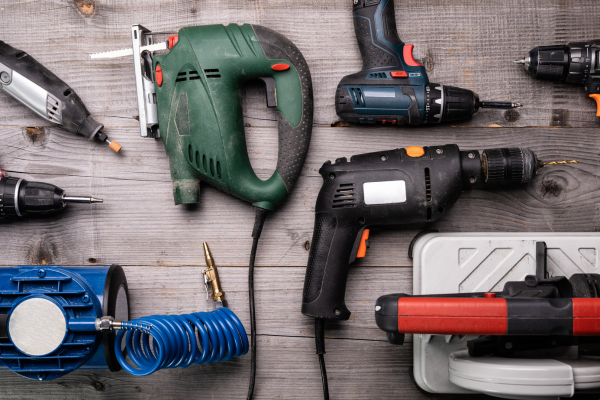
Power tools are designed to operate in demanding environments, but that does not mean they should be left exposed to dust when they are not being used. During long-term storage, dust can accumulate on housings, ventilation openings, switches, moving components, battery connections, and accessories. Fine particles can also combine with moisture, grease, and other contaminants, creating conditions that may contribute to corrosion or interfere with normal operation.
Protecting a power tool during storage is therefore different from simply putting it away after a job. A tool that will remain unused for several weeks or months should be cleaned, inspected, protected from unnecessary exposure, and stored in an environment that minimizes dust and moisture.
This is particularly important for tools used with wood, drywall, masonry, concrete, insulation, or other materials that generate fine particles. The smaller the particles, the easier they can be transported into openings and difficult-to-reach areas.
A good long-term storage routine does not have to be complicated. The key is to remove contamination before storage, protect the tool without trapping moisture, maintain clear ventilation openings, and inspect the equipment periodically.
Why Dust Can Damage Power Tools
Dust is not simply a cosmetic problem. Depending on the type of particle and where it accumulates, it can affect how a power tool operates.
Fine dust can enter through ventilation openings and accumulate around internal components. Some particles can retain moisture, while others may combine with lubricants to create abrasive contamination.
Dust can also interfere with switches, battery connections, adjustment mechanisms, chucks, blade mounts, and other exposed components.
Wood dust is particularly common in workshops and can accumulate quickly around power tools used for cutting, sanding, drilling, or routing. Masonry and concrete dust can be even more problematic because of the fine mineral particles involved.
During long-term storage, the main objective is to prevent accumulated dust from remaining on or inside the tool for extended periods.
Clean the Tool Before Putting It Away
The best time to protect a power tool from storage dust is before storage begins.
Start by removing loose debris from the exterior. Use a cleaning method appropriate for the tool and follow the manufacturer’s recommendations.
Pay particular attention to ventilation openings, battery mounting areas, switches, chucks, blade guards, and other locations where particles can accumulate.
Do not automatically use large amounts of liquid. Electrical and electronic components should not be exposed unnecessarily to moisture.
A dry cloth, soft brush, or suitable air-cleaning method may be appropriate depending on the tool.
The goal is to remove contamination without pushing particles deeper into the housing.
Clean Ventilation Openings Carefully
Ventilation openings deserve special attention because they allow air to move through the tool during operation.
If these openings become heavily blocked with dust, airflow can be restricted. During future use, this can contribute to increased operating temperatures.
Before long-term storage, inspect the openings under good lighting.
Remove accumulated dust using a method that does not force particles deeper into the tool.
If compressed air is used, follow the manufacturer’s recommendations and use appropriate pressure and technique. Directing excessive air into sensitive areas can move debris deeper into the equipment or cause small components to spin faster than intended.
For some tools, a vacuum cleaner with an appropriate attachment may be a better way to collect loose dust without distributing it throughout the workshop.
Do Not Seal a Dirty Tool in a Container
One common storage mistake is placing a dusty tool inside a sealed box and assuming that the box will protect it.
The container may prevent new dust from entering, but it does not remove the contamination already present.
If moisture is also trapped inside the container, the combination of dust and humidity can create a more problematic environment.
Always clean the tool before placing it inside a toolbox, cabinet, case, or storage bin.
If the tool was exposed to moisture, allow it to dry completely first.
The storage container should protect a clean and dry tool rather than hide contamination.
Choose the Right Storage Container
Different storage environments require different solutions.
A manufacturer’s hard case can provide excellent protection because it reduces exposure to dust and physical impacts while keeping accessories organized.
A toolbox or cabinet can also work well when it is clean, dry, and large enough to avoid placing unnecessary pressure on the tool.
Soft storage bags can protect against some dust but may not provide the same physical protection as a rigid case.
If a container is used for long-term storage, inspect its interior periodically. Dust, moisture, and debris can accumulate inside the container even when the tool itself appears protected.
The best container is not necessarily the most expensive one. It is the one that provides suitable protection while maintaining a clean and reasonably dry environment.
Avoid Plastic Bags as a Universal Solution
Wrapping every power tool tightly in plastic may seem like an easy way to prevent dust, but this approach can create problems when moisture is present.
A plastic bag can trap humidity against the tool. If the tool enters storage with even a small amount of moisture, the enclosed environment may slow evaporation.
Condensation can also occur when temperatures change.
If a protective cover is used, make sure the tool is clean and completely dry, and consider whether the storage environment requires ventilation or moisture control.
Dust protection should not come at the expense of moisture management.
Keep the Storage Area Clean
Protecting the tool itself is only part of the solution.
If the storage area contains large amounts of dust, the tool will eventually become contaminated again.
Clean shelves, cabinets, workbenches, and tool cases regularly.
Pay special attention to workshops where sanding or cutting occurs frequently. Fine dust can remain suspended in the air and settle on surfaces long after the equipment has been turned off.
If possible, perform dusty work away from the main storage area or use appropriate dust collection during the job.
Reducing airborne dust at the source is much more effective than repeatedly cleaning the tools after contamination occurs.
Separate Dust-Generating Work From Storage
If your workshop contains both a working area and a storage area, keep them separated when possible.
Power tools that are used for sanding, cutting, or grinding generate substantial quantities of fine particles.
Storing clean equipment directly beside these activities exposes it to unnecessary contamination.
A cabinet with doors can provide a physical barrier between stored tools and airborne dust.
Even a simple separation can make a noticeable difference over long storage periods.
The less dust that reaches the storage area, the less maintenance the tools require.
Pay Attention to Battery Compartments
Cordless tools have an additional area that should be kept clean: the battery interface.
Dust can accumulate around the battery mounting area and potentially interfere with the electrical connection.
Before long-term storage, remove the battery according to the manufacturer’s instructions and inspect the connection area.
Use a suitable cleaning method to remove loose debris.
Do not scrape electrical contacts aggressively or apply inappropriate liquids.
If the contacts show corrosion, discoloration, or physical damage, consult the manufacturer’s maintenance recommendations before continuing to use the tool.
A clean battery interface helps maintain a consistent connection when the tool returns to service.
Store Batteries Separately When Appropriate
If the manufacturer recommends removing the battery during long-term storage, follow that recommendation.
Storing the battery separately can also make it easier to inspect both the tool and battery connection.
Batteries should be kept in an appropriate environment according to the manufacturer’s instructions. Avoid excessive heat, extreme cold, direct sunlight, and moisture.
Do not store damaged or swollen batteries with normal equipment.
A battery that has visible physical damage, leakage, swelling, or unusual behavior should be removed from normal use and handled according to the manufacturer’s safety instructions.
Dust protection is important, but battery condition and proper storage are equally important.
Protect Moving Components
Power tools often have moving parts that can collect dust.
Chucks, adjustment mechanisms, blade mounts, depth controls, and other moving components should be inspected before long-term storage.
Remove loose contamination and check that the mechanism still operates normally.
Do not apply large quantities of lubricant simply because the tool will be stored for a long time. Excess lubricant can attract dust and create a sticky layer that becomes harder to clean later.
Use lubrication only where appropriate and according to the tool manufacturer’s recommendations.
A clean and properly maintained moving mechanism is easier to return to service after storage.
Keep Accessories Clean Too
Bits, blades, sanding discs, sockets, and other accessories can introduce dust into storage cases.
Clean accessories before placing them alongside the power tool.
Metal accessories should be completely dry to reduce the possibility of corrosion.
Sanding accessories can collect fine particles and may not need to remain attached to the tool during storage.
Keeping accessories organized separately can also make it easier to inspect the power tool itself.
The cleaner the storage system, the less contamination is transferred from one component to another.
Prevent Moisture From Combining With Dust
Dust and moisture can create a more serious problem than either one alone.
Fine particles can absorb or retain moisture, allowing contaminants to remain in contact with metal surfaces.
This is particularly relevant in garages, sheds, basements, and workshops where humidity changes throughout the day.
If the storage environment is humid, address the humidity itself.
Elevating tools, improving ventilation, reducing water sources, and using appropriate humidity control can protect equipment more effectively than repeatedly wiping away surface dust.
Do not place dusty tools into a humid storage cabinet and expect the cabinet to solve the problem.
Protect Tools From Construction Dust
Tools used on construction materials require additional attention.
Concrete, mortar, drywall, and masonry can produce extremely fine particles that settle inside and around equipment.
After completing this type of work, clean the tool thoroughly before returning it to storage.
Do not assume that visible dust on the exterior represents all of the contamination.
Inspect ventilation openings and recessed areas.
If the tool was used in an especially dusty environment, follow the manufacturer’s cleaning recommendations rather than attempting to dismantle the equipment unnecessarily.
Some internal components may require professional servicing when significant contamination has entered the housing.
Avoid Unnecessary Disassembly
When preparing a power tool for storage, it can be tempting to open the housing and clean everything internally.
This is not always necessary or advisable.
Opening the tool may expose internal components to contamination, create an opportunity for incorrect reassembly, or affect warranties depending on the product and manufacturer.
Start with the external maintenance procedures recommended by the manufacturer.
Only disassemble components when the tool’s instructions specifically support that maintenance or when qualified service is appropriate.
A careful external cleaning routine is often sufficient for ordinary long-term storage.
Inspect Tools During Long-Term Storage
Long-term storage should not mean forgetting about the equipment entirely.
Depending on the storage environment, inspect the tools periodically.
Look for accumulated dust, moisture, corrosion, damaged housings, and contamination around battery connections.
Check the storage container itself for signs of condensation or excessive dust.
If the environment becomes significantly more humid during a particular season, increase the frequency of inspections.
Early detection is valuable because a small amount of contamination is easier to address than months of accumulated dust and moisture.
Prepare the Tool Before Returning It to Service
When a tool has been stored for several months, do not immediately use it for demanding work.
Inspect the housing and ventilation openings.
Check the battery interface.
Inspect the working components and accessories.
Make sure the tool is clean and dry.
Install the battery according to the manufacturer’s instructions and check that the tool operates normally.
If the tool produces unusual sounds, smells, excessive heat, vibration, or inconsistent operation, stop using it and investigate the problem.
A brief inspection before returning to service can identify problems that developed during storage.
Common Dust-Protection Mistakes
One common mistake is cleaning only the outside of a tool while leaving ventilation openings blocked.
Another is placing a dirty tool inside a sealed container.
Some users also use excessive compressed air and unintentionally push dust deeper into the housing.
Wrapping tools tightly in plastic without considering moisture is another common problem.
Leaving batteries connected for long periods without following the manufacturer’s storage recommendations can also be undesirable.
Finally, storing clean tools in a dusty workshop without addressing the source of airborne particles means the equipment will simply become contaminated again.
Effective storage requires both tool protection and environmental control.
A Practical Long-Term Storage Routine
A simple routine can protect most power tools effectively.
Begin by removing the battery if appropriate.
Clean dust and debris from the exterior.
Inspect ventilation openings and remove accumulated particles carefully.
Clean the battery connection area using an appropriate method.
Inspect the working components for contamination, corrosion, or damage.
Make sure the tool is completely dry.
Clean the storage case or cabinet before placing the tool inside.
Store the tool in a dry, protected location away from major sources of airborne dust.
Keep accessories organized and clean.
For long-term storage, inspect the equipment periodically.
This process does not take much time and can significantly reduce the amount of maintenance required later.
When Professional Service May Be Necessary
Some contamination should not be handled by repeatedly cleaning the outside of the tool.
If fine dust has clearly entered deep into the housing, the tool has developed unusual operating behavior, or internal components appear contaminated, professional service may be appropriate.
This is particularly relevant for equipment containing electronic controls, sensors, brushless motors, or other sensitive components.
Do not continue operating a tool simply to determine whether the contamination is causing a problem.
Unusual heat, smell, noise, vibration, intermittent operation, or loss of power can indicate an internal issue that requires further evaluation.
Building a Better Storage System
The most effective long-term strategy combines several simple practices.
Keep the storage area clean.
Separate dusty work from stored equipment when possible.
Use cases or cabinets to reduce airborne contamination.
Keep tools elevated and organized.
Clean tools before storage.
Control humidity and avoid trapping moisture.
Store batteries according to manufacturer recommendations.
Inspect equipment periodically.
This system is more reliable than depending on a single product or storage method.
A perfectly sealed box will not help if a dirty, damp tool is placed inside it. Likewise, a clean tool can still become dusty if it is left uncovered in a workshop where sanding and cutting occur every day.
Final Thoughts
Protecting power tools from dust during long-term storage is mainly about preventing contamination before it becomes a problem. Clean the equipment before putting it away, keep ventilation openings clear, protect battery connections, organize accessories, and choose storage that limits exposure to airborne particles.
At the same time, remember that dust protection should not create a moisture problem. Tools should be completely dry before being enclosed, and humid storage environments should be addressed through appropriate ventilation, organization, and humidity control.
Regular inspections make long-term storage even more effective. A small amount of dust or corrosion can usually be addressed quickly, while months of accumulated contamination may require much more extensive maintenance.
Power tools are designed to work hard, but they still benefit from careful storage when they are not being used. By keeping the equipment clean, dry, organized, and protected from airborne particles, you can reduce unnecessary wear and help your tools remain dependable when they are needed again.