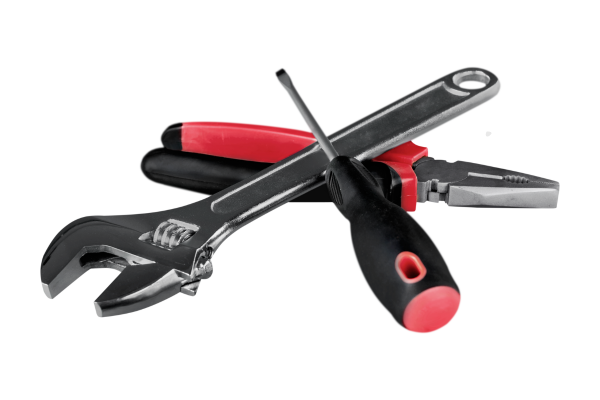
Long periods of humid weather can be hard on metal hand tools. Wrenches, pliers, sockets, screwdrivers, clamps, files, saws, and other steel tools may remain perfectly clean and functional for months and then suddenly begin showing orange spots or a thin layer of corrosion.
The problem is especially common when tools are stored for extended periods without being used. A toolbox or cabinet may protect them from dust and direct contact with rain, but it does not necessarily protect the metal from humid air or condensation.
Long-term storage therefore requires a slightly different approach from everyday tool storage. The objective is not simply to clean the tools and put them away. Before storage, you need to consider the condition of the metal, the storage environment, the type of protection being used, and how moisture will be managed while the tools remain unused.
The good news is that long-term storage does not need to be complicated. A consistent process involving cleaning, complete drying, inspection, appropriate corrosion protection, and suitable storage conditions can greatly reduce the chance of returning to a toolbox full of rusty tools.
Why Long-Term Humidity Is a Problem
A tool that is used frequently is often wiped, moved, handled, and inspected without anyone thinking about it.
A tool placed into storage for several weeks or months does not receive that attention.
During that time, the surrounding environment continues changing.
Humidity may rise and fall.
Temperatures may change between day and night.
Condensation may form on cool metal surfaces.
Moisture may enter through a garage door or poorly sealed storage area.
A tool that seemed completely dry when stored can therefore experience repeated exposure to moisture while nobody is looking at it.
This is why long-term storage requires prevention rather than relying on occasional cleaning.
Start With a Thorough Inspection
Before storing any metal tool for an extended period, inspect it carefully.
Look for:
- Surface rust
- Scratches
- Chipped finishes
- Oil or grease
- Paint residue
- Moisture
- Dirt
- Damaged handles
- Worn working surfaces
- Corrosion around joints
Do not put a rusty tool into long-term storage with the assumption that you will deal with it later.
Corrosion can progress while the tool remains unused.
It is generally easier to address a small problem before storage than to discover months later that the corrosion has become significantly worse.
Clean the Tools Before Storage
Long-term storage should begin with clean tools.
Remove dirt, grease, dust, paint residue, and other contamination appropriate to the tool’s material and finish.
A layer of dirty grease should not automatically be considered protection.
Grease can trap dust and contaminants against the metal and make it harder to detect corrosion.
Use a cleaning method appropriate for the specific tool.
Mild soap and water may be suitable for some general cleaning jobs.
A compatible degreaser may be more appropriate for heavier contamination.
Follow manufacturer instructions for specialized tools and finishes.
The objective is to leave the surface clean without damaging the protective coating that is already present.
Drying Is the Most Important Step
A tool should be completely dry before it is placed into long-term storage.
This seems obvious, but small amounts of moisture can remain in places that are easy to overlook.
Pay particular attention to:
- Joints
- Threads
- Socket interiors
- Grooves
- Recesses
- Hinges
- Areas behind moving parts
Use a clean towel to remove visible moisture.
Then allow the tools to air-dry in a suitable dry environment when necessary.
Do not put freshly washed tools immediately into a closed toolbox, plastic container, or sealed cabinet.
Trapped moisture can remain inside the storage system much longer than expected.
Inspect the Storage Environment
Before putting the tools away, inspect where they will actually spend the next several weeks or months.
Ask whether the location is:
- Dry
- Protected from direct water
- Free from obvious leaks
- Reasonably ventilated
- Protected from condensation
- Easy to inspect
A beautifully cleaned tool can still rust if it is stored in a consistently damp cabinet.
The storage environment is part of the maintenance process.
If the area has previously caused rust, consider whether a different location would provide better protection.
Avoid Storing Tools Directly on Damp Surfaces
Long-term storage should keep tools away from known moisture sources.
For example, avoid placing storage containers directly on a damp garage floor.
Keep metal tools away from areas where water routinely accumulates.
A raised shelf or cabinet can create separation from a damp floor.
The specific solution depends on the building, but the principle is simple:
Do not allow your long-term storage system to remain in contact with a persistent moisture source.
Choose the Right Storage Container
Different storage systems provide different levels of protection.
A traditional open shelf provides easy access but does little to isolate tools from humid air.
A toolbox or drawer cabinet provides more protection, but the interior can still become humid.
A sealed storage container can reduce environmental exchange, but sealing damp tools inside it can trap moisture.
There is therefore no universally perfect container.
The condition of the tools going into storage and the humidity inside the storage system matter just as much as the container itself.
Consider Corrosion-Protection Products
For corrosion-sensitive metal tools, an appropriate protective product can provide an additional barrier.
Depending on the application, this might include:
- Corrosion-inhibiting oils
- Protective sprays
- Waxes
- Specialized storage coatings
- Corrosion-inhibiting packaging materials
The correct option depends on the tool and how long it will be stored.
A tool that will be handled regularly may require a lighter protective film.
A tool being stored for a long period may benefit from a longer-lasting protective treatment.
Always follow the manufacturer’s instructions.
The purpose is to reduce exposure to moisture without creating a coating that causes other problems.
Do Not Overapply Protective Products
More protective product does not automatically mean more protection.
An excessive coating may attract dust, make tools difficult to handle, contaminate the storage system, or make future cleaning more difficult.
Apply an appropriate amount according to the product instructions.
The surface should be protected, not saturated.
For hand tools that will eventually be used again, consider how easily the protective material can be removed before the tool returns to normal service.
When Oil Makes Sense
Oil can provide useful corrosion protection on appropriate metal surfaces, but it should not be treated as a universal storage solution.
Some tools benefit from a thin corrosion-inhibiting film.
Others may have finishes or components for which a different product is preferable.
Moving mechanisms also need separate consideration.
A lubricant intended for a pivot is not necessarily the same thing as a long-term corrosion inhibitor for an exposed steel surface.
Choose a product based on the actual purpose.
What About Wax?
Protective waxes can provide a barrier on certain metal surfaces and may be useful for long-term storage.
They may attract less dust than some heavy oils once properly applied, but suitability depends on the tool, finish, and intended use.
Waxes are not a substitute for cleaning or moisture control.
The surface should still be clean and dry before applying a protective product.
When the tool is returned to service, any coating should be removed or cleaned according to the product’s instructions if necessary.
Use Desiccants Carefully
Desiccants such as silica gel can help reduce moisture in enclosed storage.
They may be particularly useful inside:
- Small tool cases
- Storage bins
- Closed drawers
- Containers holding corrosion-sensitive tools
However, desiccants have a limited capacity.
They cannot compensate for a serious leak or a continuously wet environment.
If a storage container has a large amount of moisture entering it, adding one small desiccant packet will not solve the underlying problem.
Think of desiccants as supplemental protection.
For longer storage periods, monitor them according to the manufacturer’s instructions and replace or regenerate them as appropriate.
Should You Seal Tools in Plastic Bags?
Plastic bags can protect clean tools from the surrounding environment, but there is a major condition:
The tool must be completely dry before sealing.
A damp tool inside an airtight bag can remain exposed to that moisture for an extended period.
For especially corrosion-sensitive tools, appropriate corrosion-inhibiting materials combined with controlled storage may be more effective than simply placing the tool into an ordinary plastic bag.
Do not rely on the bag itself to remove moisture.
It only limits exchange with the outside environment.
Use Corrosion-Inhibiting Packaging When Appropriate
Specialized corrosion-inhibiting packaging materials are designed to provide additional protection during storage.
Depending on the product, these materials can help create a more corrosion-resistant environment inside an enclosed package or container.
They may be useful for valuable tools, precision instruments, spare metal components, or equipment expected to remain unused for long periods.
Follow the manufacturer’s instructions regarding compatibility, sealing, storage duration, and handling.
There is no need to use specialized packaging for every ordinary household wrench.
The appropriate level of protection depends on the value and corrosion sensitivity of the items being stored.
Separate Sensitive Tools From Dirty Tools
Long-term storage is easier when the contents are organized.
Do not place heavily contaminated tools in the same sealed container as clean precision tools.
Separate tools that are oily, dirty, or exposed to corrosive materials before storage.
This is especially useful when storing a mixture of household and workshop equipment.
A clean storage environment reduces the chance that contamination from one tool will spread to another.
Pay Special Attention to Cutting Tools
Saw blades, chisels, files, shears, and other cutting tools can be more sensitive to corrosion because their working surfaces need to remain in good condition.
Clean and dry them carefully before storage.
Protect exposed metal appropriately.
Prevent cutting edges from unnecessarily contacting other tools.
Store them so that they can be retrieved safely without handling sharp edges carelessly.
For specialized cutting tools, the manufacturer’s storage recommendations should take priority over generic maintenance advice.
What About Tools With Wooden Handles?
Metal is not the only material that needs consideration during long-term storage.
Wooden handles can respond to changes in moisture differently from metal.
Avoid soaking wooden-handled tools during cleaning immediately before storage.
Make sure the handle is dry and inspect it for cracks, splitting, looseness, or other defects.
Do not assume that the ideal humidity level for protecting steel is automatically ideal for every other material in the toolbox.
A mixed-material tool may require balanced storage conditions.
Check Batteries Separately
Cordless power tools require a different storage strategy because their batteries are electronic components rather than simple metal tools.
Do not assume that a battery should be stored using the same approach as a steel wrench.
Follow the battery and tool manufacturer’s storage instructions.
This includes guidance about charge state, temperature, moisture, and storage location.
Do not place battery packs into a damp storage container simply because the metal tools are being stored there.
Keep electronic equipment protected according to the manufacturer’s recommendations.
Consider the Duration of Storage
The longer tools remain unused, the more important preventive maintenance becomes.
For a few weeks of storage, basic cleaning, drying, and appropriate protection may be sufficient.
For several months or longer, environmental control and periodic inspection become more important.
A tool stored for a year should not simply be placed in a box and forgotten if the environment is humid.
The exact maintenance interval depends on the storage conditions.
High humidity requires more attention than a stable, dry indoor environment.
Should You Inspect Tools During Storage?
Yes, especially when the environment has a history of causing corrosion.
Periodic inspection does not have to involve removing every tool from the toolbox.
Check the most corrosion-sensitive tools first.
Look at:
- Exposed steel
- Toolbox corners
- Drawer bottoms
- Cutting edges
- Bare surfaces
- Areas near scratches
If you notice early corrosion, address it before the problem spreads.
The earlier corrosion is discovered, the easier it is usually to manage.
What If the Tools Are Already Rusty?
If rust is already present, do not store the tool indefinitely without addressing it.
First determine how severe the corrosion is.
Light surface rust may be removable with an appropriate restoration method.
Moderate corrosion requires closer inspection.
Deep pitting or structural damage may make replacement or professional assessment more appropriate.
The important point is that long-term storage should preserve the condition of the tool rather than conceal an existing corrosion problem.
How to Prepare Tools for Seasonal Storage
Seasonal storage is a common reason for leaving tools unused for several months.
Examples include tools belonging to seasonal hobbies or equipment that is rarely needed during certain parts of the year.
Before storage:
Clean.
Remove dirt, grease, and contamination.
Dry.
Make sure moisture is gone.
Inspect.
Look for corrosion and damage.
Protect.
Use suitable corrosion protection when appropriate.
Organize.
Keep tools separated and accessible.
Control the environment.
Reduce exposure to humidity and direct moisture.
This process is simple enough to become a routine.
Common Long-Term Storage Mistakes
Putting tools away while damp
This is one of the easiest ways to create a corrosion problem.
Sealing moisture inside plastic
The container traps the very condition you are trying to prevent.
Over-oiling
Excess product attracts dust and creates a sticky storage environment.
Ignoring the toolbox
A damp storage system can undermine otherwise good tool care.
Storing rusty tools without treatment
Corrosion can progress while the tool remains unused.
Assuming desiccant solves everything
Desiccants have limited capacity and cannot fix major moisture sources.
Forgetting about condensation
Temperature changes can create moisture even without leaks.
A Practical Long-Term Storage Routine
When preparing a collection of metal tools for an extended humid period, use this sequence:
1. Empty and inspect the storage system.
Make sure the toolbox or cabinet is clean and dry.
2. Clean each tool.
Remove dirt, grease, and residues.
3. Dry everything completely.
Pay attention to joints and recesses.
4. Inspect for corrosion.
Treat small problems before storage.
5. Protect vulnerable metal.
Use a suitable corrosion inhibitor when appropriate.
6. Organize the tools.
Avoid unnecessary contact and make future inspection easier.
7. Add supplemental moisture control when appropriate.
Use desiccants or specialized packaging according to their instructions.
8. Inspect periodically.
Increase inspection frequency when humidity is high or corrosion has occurred previously.
A Good Storage System Should Make Inspection Easy
One of the overlooked advantages of organized storage is visibility.
If tools are tightly packed and difficult to remove, you are less likely to inspect them.
A storage system that allows you to see individual tools makes it easier to identify early corrosion.
Use trays, dividers, racks, or organizers where appropriate.
The goal is not to create a showroom.
It is to make maintenance practical.
If checking the condition of a tool takes seconds, you are more likely to do it regularly.
When to Move Tools to a Different Location
Sometimes the best storage strategy is changing the storage location.
If a garage remains persistently humid despite reasonable moisture-control efforts, particularly sensitive tools may be better stored indoors.
This can include:
- Precision measuring tools
- High-value hand tools
- Specialty cutting tools
- Older tools with worn finishes
- Tools made from corrosion-sensitive materials
You do not necessarily have to move everything.
Prioritize the tools for which corrosion would be most costly or difficult to reverse.
Final Thoughts
Storing metal tools during long periods of humidity requires more than placing them inside a toolbox and closing the lid.
The condition of the tools, the storage environment, the presence of moisture, and the type of corrosion protection all influence how well the tools survive long periods without use.
Start with clean, dry tools.
Inspect for existing rust and damage before storage.
Keep tools away from persistent moisture sources and avoid sealing damp tools inside plastic or closed containers.
Use appropriate corrosion-protection products when necessary, but avoid excessive oil or other coatings that can attract dirt and complicate future cleaning.
Desiccants and specialized corrosion-inhibiting packaging can provide additional protection in suitable situations, but they should be considered supplements rather than substitutes for controlling a serious moisture problem.
Finally, remember that long-term storage is not necessarily maintenance-free. If the environment is humid, periodic inspection can catch corrosion while it is still relatively easy to address.
A good storage routine does not need to be complicated. Clean the tools, dry them completely, protect vulnerable surfaces appropriately, control the storage environment, and make the tools easy to inspect.
Those simple steps can significantly reduce the chance that a long humid season turns a useful toolbox into a collection of rusty equipment.
Related Guides
- Why Tools Rust in a Garage Even When They Stay Indoors
- How to Prevent Rust on Hand Tools in a Humid Garage
- Is Oil or Wax Better for Protecting Metal Tools From Rust?
- How to Use Silica Gel to Reduce Moisture Around Stored Tools
- How to Inspect Your Toolbox for Early Signs of Rust
FAQ
How should I prepare metal tools for long-term storage?
Clean the tools, remove grease and dirt, dry them completely, inspect them for corrosion, and use appropriate protective products when necessary. The storage environment should also be clean and reasonably dry.
Can I store damp tools in sealed plastic bags?
It is not advisable to seal damp tools in plastic. The bag can trap moisture against the metal and increase the risk of corrosion. Tools should be completely dry before enclosed storage.
Should I oil tools before storing them for several months?
An appropriate corrosion-inhibiting product may be useful for some metal tools, but not every tool needs oil. Use the product recommended for the application and avoid excessive coating.
Does silica gel prevent rust during long-term storage?
Silica gel can reduce moisture inside enclosed containers, but its effectiveness depends on the size and conditions of the storage space. It cannot compensate for a major moisture source or continuously wet environment.
How often should stored tools be inspected?
There is no universal interval. Tools in a humid environment should be inspected more frequently than those kept in stable, dry conditions. Corrosion-sensitive tools deserve particular attention.
Should I remove rust before long-term storage?
Yes. Storing a corroded tool without treatment allows the existing problem to continue developing. Determine the severity of the corrosion and use an appropriate restoration method before storage.
Is a toolbox enough to protect tools from humidity?
A toolbox can protect against dust and direct exposure, but it does not automatically control humidity. A closed toolbox can even trap moisture if damp tools or humid air are enclosed inside.
Should expensive tools be stored inside the house instead of the garage?
When a garage remains persistently humid and cannot be reasonably controlled, moving particularly corrosion-sensitive or valuable tools to a drier environment can be a practical option.