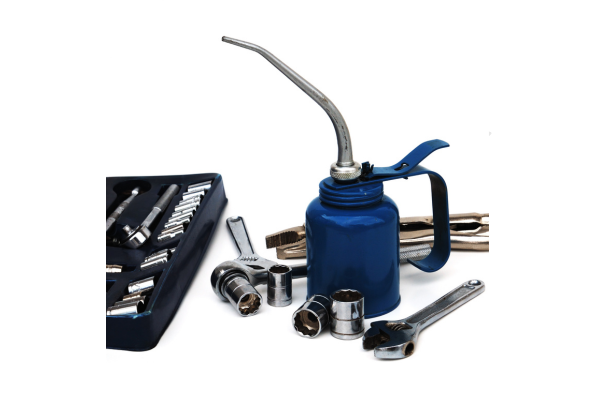
Protecting metal tools from rust often comes down to creating a barrier between the metal and the moisture in the surrounding environment. Two common options are protective oils and wax-based products. Both can be useful, but they behave differently and are better suited to different storage and usage conditions.
That makes the question more complicated than simply asking which product is stronger.
A tool that is handled every day may benefit from a light protective film that is easy to wipe away. A tool placed into storage for several months may benefit from a coating that remains stable for a longer period. A dusty workshop can also change the equation because some oily surfaces attract more contamination than a relatively dry wax coating.
There is no universal winner for every tool.
The better choice depends on the type of metal, the existing finish, how frequently the tool is used, the storage environment, and how important easy handling is.
This guide compares oil and wax as corrosion-protection methods for household and workshop tools and explains how to choose between them without creating unnecessary maintenance problems.
Why Metal Tools Need Protection
Many hand tools are made from steel or steel alloys.
Some have protective finishes such as chrome plating, paint, powder coating, black oxide, or other treatments. These finishes can slow corrosion, but they are not necessarily permanent.
Wear, scratches, chips, aggressive cleaning, or ordinary handling can expose areas that are more vulnerable to moisture.
Bare or exposed metal can react with the environment and eventually develop corrosion.
The purpose of a protective product is to reduce the contact between the metal and conditions that encourage corrosion.
Oil and wax approach this goal differently.
Oil creates a fluid or semi-fluid film over the surface.
Wax creates a more persistent solid or semi-solid barrier.
The ideal choice depends on what the tool needs.
What Protective Oil Does
Protective oils form a thin film over suitable metal surfaces.
Depending on the product, the film may help reduce direct contact between the metal and moisture or contaminants.
Oils are particularly convenient when the tool will continue to be handled or used regularly.
A light film can often be applied quickly and wiped down without extensive preparation.
Oil can also be useful for certain moving mechanisms when the specific product is suitable for lubrication as well as corrosion protection.
However, these benefits come with trade-offs.
Oil can attract dust.
A heavily oiled surface may feel slippery.
The protective film can be removed through handling.
Some oils may require periodic reapplication.
Not every product marketed for cleaning, lubrication, moisture displacement, or corrosion prevention has the same properties, so the manufacturer’s intended use matters.
What Protective Wax Does
Wax creates a more persistent coating than a typical thin oil film.
Once applied and cured or set according to the product’s instructions, it can leave a relatively dry or semi-dry barrier over the metal.
This can be useful for tools that will remain stored for extended periods.
Wax may also attract less loose dust than a wet oily surface, although the behavior depends on the specific formulation.
The main disadvantage is that wax can require more preparation to apply and may need to be removed before the tool returns to normal use.
A hardened coating can also be less convenient on moving mechanisms.
Wax is therefore often more useful for storage protection than for parts that need frequent handling or movement.
Oil vs. Wax at a Glance
The differences can be summarized simply.
| Feature | Protective Oil | Protective Wax |
|---|---|---|
| Application | Usually quick | Usually requires more preparation |
| Surface feel | Oily or slick depending on product | More dry or coated after curing |
| Dust attraction | Can be relatively high | Often lower after fully set |
| Reapplication | Often easier | Usually less frequent |
| Long-term storage | Good with the right product | Often very suitable |
| Frequent handling | Convenient | Can require more attention |
| Moving mechanisms | Some products can be suitable | Usually less convenient |
| Removal | Often simple | May require more cleaning |
| Best use | Regular-use protection | Longer-term storage protection |
These are general tendencies, not universal rules.
The formulation of the specific product matters.
When Oil Is the Better Choice
Oil is often convenient when tools are used frequently.
Suppose you regularly use the same set of wrenches in a home workshop.
You may want a protective product that can be wiped on quickly after cleaning and removed or renewed without much effort.
A thin film can provide practical protection while keeping maintenance simple.
Oil can also make sense for certain pivots and mechanisms when the manufacturer recommends lubrication.
However, the lubricant and the corrosion-protection requirements are not necessarily identical.
A product that works well as a lubricant may not provide the best long-term corrosion protection.
Always check what the product is designed to do.
When Wax Is the Better Choice
Wax becomes more attractive when the primary goal is longer-term storage.
Imagine a set of tools that will not be used for several months.
You may prefer a coating that remains in place rather than a light oil film that gradually disappears through handling or evaporation.
Wax can also make sense for tools with large exposed metal surfaces that are going into controlled storage.
The trade-off is that the coating may need to be removed before the tool is returned to certain uses.
For tools that will remain untouched for a long period, that extra preparation may be worthwhile.
Storage Environment Matters More Than the Product
It is easy to focus too much on the choice between oil and wax.
In reality, the storage environment often has a much larger effect.
A heavily humid garage can cause corrosion even when tools have been treated.
A leaking cabinet, damp floor, condensation, or wet tools inside a closed toolbox can undermine otherwise good corrosion protection.
Think of protective products as one layer of a larger system.
A good strategy is:
clean tool → completely dry → appropriate protection → suitable storage environment.
Not:
wet tool → lots of oil → closed box.
The second approach can trap moisture and create a much less effective storage system.
What About Chrome-Plated Tools?
Chrome-plated tools usually have an existing protective surface.
That does not mean additional protection is never useful, especially around damaged or exposed areas, but aggressive treatment can be unnecessary.
A heavy coating may also reduce the visual and handling benefits of a clean chrome surface.
Use a product compatible with the finish and intended use.
Avoid assuming that every oil or wax can safely be applied to every plated surface.
When the tool manufacturer gives specific maintenance instructions, follow them.
What About Bare Steel?
Bare steel is more sensitive to environmental moisture than many well-protected finished surfaces.
For these tools, corrosion protection can be particularly useful when storage conditions are humid.
A suitable oil or wax can provide an additional barrier after the tool has been cleaned and dried.
The choice should depend on how often the tool will be handled.
For a frequently used bare-steel file or hand tool, a removable protective oil may be convenient.
For long-term storage, a more persistent coating may make more sense.
Oil Can Attract Dust
One of the biggest arguments against excessive oil is contamination.
A wet oily film can catch:
- Dust
- Sand
- Metal particles
- Wood fibers
- Textile fibers
Over time, this can form a layer of dirty residue.
That is particularly undesirable around moving mechanisms.
For tools stored in a dusty workshop, a very light protective film may be preferable to heavy oiling.
Wipe away excess product after application.
The goal is to protect the metal, not create a visibly wet coating.
Wax Can Also Have Drawbacks
Wax is not automatically better simply because it is more persistent.
A thick wax coating can:
- Require more effort to apply
- Need removal before some uses
- Collect dirt if improperly applied
- Interfere with fine mechanisms
- Hide the condition of the underlying surface
Some products are specifically designed for protective storage and are easier to remove than ordinary household waxes.
Use products according to their intended purpose rather than adapting unrelated materials.
What About Tools With Moving Joints?
Moving mechanisms need special consideration.
A hinge, pivot, ratchet, or adjustable mechanism may have specific lubrication requirements.
A wax coating on a moving interface can interfere with movement depending on the mechanism.
Oil may be more appropriate when lubrication is actually required.
But even then, the amount matters.
Apply only the quantity recommended for the mechanism.
Do not flood a joint with oil and assume that more protection is better.
Excess lubricant can attract abrasive particles and make future cleaning more difficult.
Should You Use Oil on Cutting Tools?
Cutting tools need careful handling because the protective product should not interfere with the tool’s working surface.
For some metal storage situations, a corrosion-protection film may be appropriate.
However, the exact method depends on the tool and manufacturer.
Do not apply an oily or waxy coating to a cutting edge immediately before use unless the manufacturer specifically indicates that the treatment is appropriate.
The product may need to be removed before the tool returns to service.
For specialized blades, follow the manufacturer’s recommendations.
How to Apply Protective Oil Correctly
Start with a clean and dry tool.
Apply a small amount of suitable protective oil to a cloth.
Wipe the exposed metal surface evenly.
Avoid flooding the tool.
Pay attention to corrosion-prone areas such as:
- Exposed steel
- Joints
- Edges
- Scratches
- Threads
Then use a clean cloth to remove obvious excess.
The finished surface should be protected without becoming excessively wet or slippery.
For products intended for long-term corrosion protection, follow the product’s specific directions rather than using a generic routine.
How to Apply Protective Wax Correctly
The preparation is similar.
The tool should be clean and completely dry.
Apply the wax according to its instructions.
Use an even, controlled layer.
Do not pack the product into moving mechanisms unless it is specifically designed for that application.
Allow the wax to cure or set for the time specified by the manufacturer.
Afterward, inspect the surface.
A properly applied protective wax should create a consistent barrier rather than a thick, uneven accumulation.
Should You Combine Oil and Wax?
There is generally little reason to combine multiple protective products simply because both are available.
Layering products can create compatibility issues and may make later cleaning more difficult.
If you need the benefits of a specific storage system, choose a product designed for that application.
Follow the manufacturer’s instructions rather than experimenting with mixtures.
The objective is reliable protection, not the maximum number of coatings.
How Long Does Protection Last?
There is no universal lifespan for oil or wax protection.
Durability depends on:
- Product formulation
- Amount applied
- Exposure to handling
- Humidity
- Temperature
- Contamination
- Storage conditions
- Type of metal
- Tool finish
A frequently used wrench may lose much of its protective film simply through handling.
A tool stored in a controlled environment may retain protection much longer.
Instead of following an arbitrary calendar, inspect the tool periodically.
If the protective film has disappeared or corrosion begins appearing, reassess the maintenance routine.
What If the Tool Is Already Rusty?
Do not simply cover active corrosion with more oil or wax and consider the problem solved.
First determine whether the corrosion needs treatment.
Light surface rust may be manageable through an appropriate cleaning and rust-removal process.
Deeper corrosion needs closer inspection.
The tool should generally be cleaned and appropriately treated before applying long-term protection.
Protective coatings are most useful when they prevent new corrosion rather than conceal existing corrosion.
Consider How Often the Tool Is Used
Frequency of use is one of the simplest ways to decide between oil and wax.
Daily or frequent use
A light protective oil may be more convenient because it can be refreshed quickly.
Occasional use
Either method can work depending on storage conditions.
Long-term storage
A suitable wax or dedicated long-term corrosion inhibitor may be more convenient if the product is intended for storage.
This is only a starting point.
The tool’s manufacturer instructions and environmental conditions remain important.
Consider How Clean the Storage Environment Is
A dusty workshop changes the equation.
In a clean indoor cabinet, a light oil film may remain relatively clean.
In a dusty garage, the same amount of oil may collect enough debris to create another maintenance problem.
If the environment is dusty, consider minimizing wet residue.
A controlled storage container, cleaner toolbox, or suitable protective coating may reduce contamination.
Again, the best solution is usually a combination of environmental control and appropriate surface protection.
What About Humid Garages?
Humid environments increase the importance of corrosion prevention.
Neither oil nor wax should be considered a substitute for controlling moisture.
If the garage experiences persistent humidity, investigate the environmental cause.
Measure humidity when useful.
Look for condensation.
Keep tools dry.
Avoid damp storage surfaces.
Use appropriate corrosion protection as an additional layer.
A well-protected tool stored in a constantly wet environment is still being exposed to conditions that encourage corrosion.
Common Mistakes When Using Protective Products
Applying too much oil
Excess oil attracts dirt and creates a slippery surface.
Waxing dirty metal
The coating can trap contamination against the surface.
Protecting wet tools
A coating may trap moisture underneath.
Using an unrelated household wax
The product may not be designed for metal-tool storage.
Applying storage protection to moving surfaces
The coating may interfere with the mechanism.
Ignoring the tool’s finish
Some coatings and materials are sensitive to particular chemicals.
Never checking the tool again
Even a good storage system should be inspected periodically in a humid environment.
A Practical Decision Guide
Use this simple process when deciding between oil and wax.
Choose a light protective oil when:
The tool is used frequently.
You need easy application.
The surface is compatible with the product.
Periodic reapplication is acceptable.
The mechanism benefits from suitable lubrication.
Consider protective wax when:
The tool will remain unused for a relatively long period.
You want a persistent barrier.
The surface is compatible with the product.
You are willing to remove or clean the coating before returning the tool to use.
Consider another storage solution when:
The environment is extremely humid.
The tool has serious existing corrosion.
The material or finish is incompatible with the available products.
The manufacturer specifies a different maintenance system.
Final Thoughts
There is no universal answer to the question of whether oil or wax is better for protecting metal tools from rust.
Oil is often convenient for tools that are handled regularly because a thin film can be applied and renewed easily. Wax can be attractive for longer-term storage because it can create a more persistent barrier and may leave less wet residue after setting.
But the product itself is only part of the equation.
A clean and completely dry tool stored in a reasonably dry environment will usually be much easier to protect than a damp tool placed into a humid toolbox.
Before choosing a coating, consider the tool’s metal, finish, moving parts, frequency of use, storage period, and environmental conditions.
Use a product intended for the job, apply it according to the manufacturer’s instructions, and avoid excess.
Most importantly, remember that rust prevention is a system rather than a single product. Cleaning, drying, storage, humidity control, inspection, and appropriate surface protection all work together.
The best protective method is ultimately the one that gives you reliable corrosion resistance without creating new maintenance problems.
Related Guides
- Why Tools Rust in a Garage Even When They Stay Indoors
- How to Prevent Rust on Hand Tools in a Humid Garage
- How to Store Metal Tools During Long Periods of Humidity
- How to Use Silica Gel to Reduce Moisture Around Stored Tools
- How to Inspect Your Toolbox for Early Signs of Rust
FAQ
Is oil or wax better for preventing rust on hand tools?
Neither is universally better. Light protective oil can be convenient for tools used frequently, while suitable protective wax can be useful for longer-term storage. The correct choice depends on the tool, finish, environment, and storage period.
Does oil attract dust?
It can. A wet or excessive oil film may attract dust, wood particles, metal shavings, and other contaminants. Applying only the amount required and wiping away excess can reduce this problem.
Is wax suitable for moving tool joints?
Usually, moving mechanisms should follow their manufacturer’s lubrication recommendations. A storage wax is not automatically appropriate for a pivot, ratchet, hinge, or adjustment mechanism.
Can I apply wax over rust?
A protective wax should not be treated as a substitute for rust removal. Existing corrosion should be assessed and treated appropriately before long-term protection is applied.
Should I oil tools before putting them in a humid garage?
A suitable corrosion-inhibiting product may provide additional protection, but oil alone will not solve persistent humidity or condensation. Keep tools clean and dry and address environmental moisture as well.
How much oil should I put on a tool?
Use the amount specified by the product manufacturer. For general surface protection, the objective is usually a thin, controlled film rather than a visibly wet coating.
Can I use regular household furniture wax on metal tools?
Do not assume that a household furniture wax is suitable for metal-tool protection. Use a product whose manufacturer identifies it as appropriate for the metal and intended application.
Do I need to remove protective wax before using the tool?
That depends on the specific product and tool. Follow the manufacturer’s instructions. Some storage coatings are designed to be removed before normal use, while others may have different application requirements.
Does protective oil eliminate the need to control garage humidity?
No. Environmental control remains important. Oil can provide an additional barrier, but persistent humidity, condensation, or direct moisture can still create corrosion problems.
How often should I reapply rust protection?
There is no universal schedule. Inspect the tool and storage environment periodically. Reapply protection when the existing film is no longer adequate, taking into account how frequently the tool is handled and the conditions in which it is stored.