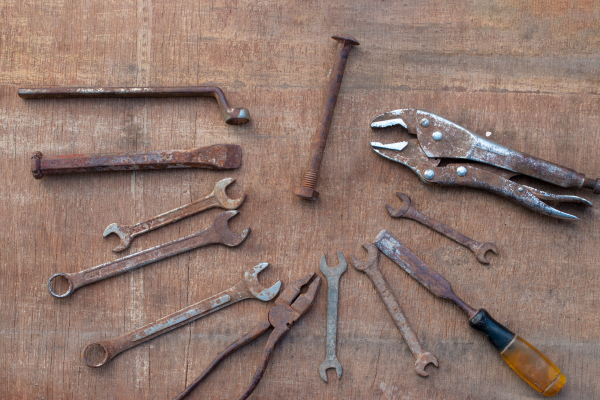
A humid garage can be a difficult environment for hand tools. Wrenches, pliers, screwdrivers, sockets, clamps, saws, and other steel tools may begin developing orange spots even when they are kept indoors and appear to be protected from rain.
The frustrating part is that rust prevention is usually easier than rust removal. Once corrosion becomes established, removing it takes time and may affect the original finish. Preventing moisture from remaining on the metal in the first place is a much simpler strategy.
The key is to think about the entire storage environment rather than relying on one product. A rust-prevention routine can include controlling humidity, keeping tools dry, maintaining the toolbox, protecting exposed metal, improving organization, and checking for early signs of corrosion.
There is no single method that works perfectly for every garage. A dry indoor workshop, an attached garage, and a poorly ventilated outdoor storage area can have very different conditions. The most effective approach is therefore to identify the specific sources of moisture affecting your tools and combine practical prevention methods accordingly.
Why Humid Garages Cause Rust
Rust is a form of corrosion that develops when susceptible metals interact with moisture and oxygen. The process does not require a puddle of water sitting visibly on a wrench.
A humid environment can provide enough moisture at a metal surface for corrosion to occur, especially when the tool remains exposed for long periods.
Several conditions can increase the risk:
- High relative humidity
- Condensation
- Poor ventilation
- Wet tools being stored
- Damp floors or walls
- Temperature fluctuations
- Salt and other contaminants
- Damaged protective finishes
- Long periods without inspection
The same garage can produce very different corrosion rates depending on the season and storage location.
This is why a tool that remained rust-free for years may suddenly begin showing corrosion after environmental conditions change.
The First Step: Find the Moisture Source
Before buying rust-prevention products, investigate the garage.
Look for obvious sources of moisture.
Check the floor for damp areas.
Inspect walls and ceilings for leaks.
Look around doors and windows for water intrusion.
Pay attention to areas where vehicles are parked after rain.
Observe whether condensation appears on metal surfaces during temperature changes.
Check whether recently washed tools are being stored before they are completely dry.
A rust problem is much easier to solve when you know whether the moisture is coming from the building, the weather, the tools, or the storage system.
If the source is a leak, adding more oil to every tool may only hide the underlying problem temporarily.
Measure Humidity Instead of Guessing
Garages can feel dry while still having conditions that encourage corrosion.
A simple digital hygrometer can help you understand the environment.
Instead of taking one reading and assuming it represents the entire day, observe the garage at different times.
You may discover that humidity rises:
- At night
- Early in the morning
- After rain
- When the garage door is opened
- During seasonal weather changes
- After a vehicle is parked while wet
This information can make your prevention strategy much more targeted.
The goal is not to chase a single perfect number. It is to determine whether your storage environment regularly experiences conditions that are favorable to corrosion.
Keep Tools Dry Before Storage
This is one of the simplest and most effective habits.
A tool that has been exposed to water, washing, condensation, or heavy humidity should not immediately be placed inside a closed toolbox.
Dry the tool first.
Use a clean towel to remove visible moisture and allow the tool to finish air-drying when necessary.
Pay attention to:
- Joints
- Threads
- Grooves
- Socket interiors
- Recessed areas
- Areas around handles
- Moving mechanisms
A tool can appear dry on the outside while retaining moisture in a small recess.
That is especially important for tools stored in closed drawers.
Do Not Let Wet Rags Share the Toolbox
A surprisingly common source of moisture and contamination is the toolbox rag.
A rag used to wipe down a wet tool can remain damp for a long time inside a closed drawer.
The same applies to paper towels, cleaning cloths, or other absorbent material that is left inside tool storage.
Keep damp cleaning materials outside the toolbox until they are dry.
Similarly, do not store containers of liquid, wet gloves, or other moisture sources alongside corrosion-sensitive tools.
A dry storage system starts with dry contents.
Clean Tools Before Long-Term Storage
Dirt and grease can retain contaminants against the metal surface.
Before storing tools for weeks or months, clean them appropriately and remove visible moisture.
This is especially useful for tools that will not be used frequently.
A tool placed into storage with a layer of dirty grease may appear protected because the surface is oily, but that contamination can also trap debris and moisture.
For long-term storage, the objective is a clean, dry surface followed by an appropriate protective treatment when needed.
Choose Protective Products Carefully
Protective oils, corrosion inhibitors, waxes, and other products can reduce exposure of metal to moisture.
However, no single protective product is ideal for every tool.
Consider how the tool will be used.
A tool that is handled daily may not be a good candidate for a heavy, sticky coating that attracts dust.
A tool being stored for months may benefit from a different type of protection.
When selecting a product, look at:
- Intended application
- Compatible materials
- Residue
- Ease of removal
- Storage duration
- Manufacturer recommendations
The objective is to create an appropriate barrier without turning the tool into a dust magnet.
Thin Protection Is Usually Better Than Excess
Applying more protective product does not necessarily provide better protection.
A heavy oily coating may:
- Attract dust
- Collect grit
- Make handles slippery
- Transfer onto storage surfaces
- Require more frequent cleaning
Use enough product to provide the intended protective effect and follow the product instructions.
A thin, controlled application is often easier to maintain than a tool covered in excess residue.
Which Tools Need the Most Attention?
Not every tool has the same corrosion risk.
Pay extra attention to:
Bare steel tools: exposed metal is generally more vulnerable than protected surfaces.
Precision tools: corrosion can affect surfaces where dimensions matter.
Cutting tools: corrosion can compromise edges and make inspection more difficult.
Older tools: protective finishes may already be worn.
Frequently handled tools: fingerprints and contamination can accumulate.
Tools stored near garage doors: they may experience larger changes in temperature and humidity.
Tools at the bottom of drawers: they may be more exposed to accumulated moisture and debris.
Identifying high-risk tools helps you focus maintenance where it matters most.
Keep Tools Organized
Organization is not only about convenience.
A crowded drawer can create a poor storage environment.
Tools packed tightly together may trap dirt and moisture between surfaces.
The problem is particularly relevant when several tools are stored inside a drawer after outdoor or wet work.
Leave enough space to inspect and remove individual tools.
Use appropriate organizers for small tools, sockets, and accessories.
An organized drawer also makes it easier to notice early rust.
If every tool is buried under another tool, a small orange spot can remain unnoticed for months.
Inspect the Toolbox Itself
A clean toolbox can be one of the best forms of rust prevention.
Inspect the storage system regularly.
Look at:
- Drawer bottoms
- Seams
- Hinges
- Drawer rails
- Rubber seals
- Foam liners
- Corners
- Fasteners
Look for moisture, rust, dirt, or residues.
If the toolbox itself begins to corrode, determine the cause.
A damaged coating can expose the underlying metal.
A leak or damp storage location can create recurring moisture.
Repairing the storage environment can protect every tool inside it.
Avoid Storing Tools on Damp Floors
Floor-level storage can expose tools to moisture that is not obvious from eye level.
This is especially relevant in garages where water enters from outside or where condensation develops on concrete.
Whenever practical, keep tool cabinets and storage containers away from standing water and damp areas.
The exact solution depends on the garage.
The important principle is to avoid allowing a corrosion-sensitive storage system to remain in contact with a persistent moisture source.
Pay Attention to Seasonal Changes
Rust prevention should not be treated as identical throughout the year.
A garage can behave very differently during dry and humid periods.
For example, a tool storage system that performs well for months may begin developing corrosion during a period of high humidity and frequent temperature changes.
Seasonal inspections are therefore useful.
Before a period known for increased humidity, inspect the toolbox and corrosion-sensitive tools.
Make sure protective measures are still appropriate.
Check whether condensation is occurring.
Small adjustments before the environment becomes problematic are easier than restoring tools afterward.
Improve Air Movement When Appropriate
Air movement can help reduce moisture accumulation, but ventilation needs to be considered in the context of the local environment.
If outdoor air is drier than the garage, ventilation may help.
If outdoor air is warmer and much more humid, opening the garage may instead introduce additional moisture.
The goal is not simply to move air.
It is to manage moisture intelligently.
Fans can improve circulation in some situations, while dehumidification may be more appropriate in others.
Always consider safety and the building’s ventilation requirements.
Consider a Dehumidifier for Persistent Humidity
If humidity remains high and other moisture sources have been addressed, a suitable dehumidifier can be part of a broader strategy.
However, this is most useful when the space itself can be reasonably controlled.
A dehumidifier will not solve a significant leak or continuous water intrusion.
It can, however, help maintain a more stable environment when the problem is primarily excessive humidity.
If one is used, maintain it according to the manufacturer’s instructions and monitor the environment rather than assuming that it is working perfectly at all times.
Use Desiccants as Supplemental Protection
Desiccants such as silica gel can help reduce moisture in smaller enclosed storage spaces.
They can be useful inside:
- Tool cases
- Small storage bins
- Drawers
- Containers for corrosion-sensitive items
But they have limits.
A small packet of silica gel cannot solve a large, persistently humid garage.
Desiccants should therefore be considered supplemental protection.
Monitor them according to the manufacturer’s instructions and replace or regenerate them when necessary.
Store Cutting Tools Carefully
Saw blades, utility blades, chisels, shears, and other cutting tools deserve additional attention.
Their edges can be affected by corrosion, and rust can make it more difficult to inspect the working surface.
Keep them clean and dry.
Prevent sharp edges from rubbing unnecessarily against damp or contaminated surfaces.
Store them in a way that protects the cutting edge while still allowing inspection.
For specialty tools, follow the manufacturer’s storage recommendations.
Keep Chemical Contaminants Away From Tools
Not all corrosion problems come from humidity alone.
Salt, certain chemicals, dirt, and other contaminants can increase the risk of corrosion.
For example, a tool used outdoors may collect residues that continue affecting the surface after the visible moisture has disappeared.
After working in a particularly dirty or wet environment, clean the tool appropriately before storage.
Keep corrosive substances away from tool drawers whenever possible.
The storage environment should protect tools from both moisture and contamination.
Be Careful With Automotive Environments
Garages are often used for vehicle maintenance, which introduces oils, road grime, salts, coolants, and other substances.
These materials can end up on hand tools even when the tool itself is not being used directly with them.
Wipe contaminated tools before putting them back into general storage.
Consider separating tools used for particularly dirty work from cleaner household tools.
This can reduce the spread of contaminants throughout the toolbox.
Wipe Tools After Heavy Handling
Your hands can transfer moisture, oils, and residues to exposed metal surfaces.
This does not mean every fingerprint causes rust.
But in a humid environment, regularly wiping frequently handled bare-metal surfaces can be a useful preventive habit.
This is especially relevant for tools with large exposed steel surfaces or tools that are handled repeatedly but rarely cleaned.
A quick wipe after use takes very little time.
What About WD-40?
Products sold under the same brand can have different formulations and intended uses, so avoid treating a brand name as a universal maintenance instruction.
Some products can help displace moisture or provide temporary protection, while others are specifically formulated for lubrication, cleaning, or long-term corrosion prevention.
Read the label and use the product according to its intended purpose.
The important principle is not the brand.
It is choosing a product appropriate for the job and the tool.
Should Tools Be Stored in Plastic Bags?
Plastic storage can help protect certain tools from environmental moisture, but completely sealing damp tools inside a bag can create a different problem.
If moisture is already present, the bag may trap it against the tool.
For long-term storage, the tool should therefore be clean and completely dry before being enclosed.
Appropriate corrosion-inhibiting materials or desiccants may also be useful depending on the storage situation.
Do not treat a sealed bag as a substitute for proper drying.
Should Every Tool Be Oiled?
No.
This is one of the most common mistakes in rust prevention.
Different tools require different approaches.
A tool with an exposed steel surface may benefit from a corrosion-inhibiting treatment.
A handle may not.
A moving mechanism may require a particular lubricant.
A measuring instrument may need a very different storage method.
Applying oil indiscriminately can create sticky surfaces, attract dust, and interfere with normal handling.
Use protective products according to the needs of the specific tool.
A Practical Humid-Garage Maintenance Schedule
A simple routine can make rust prevention manageable.
After wet or dirty work
Clean the tool and dry it before storage.
Weekly or during frequent use
Check frequently handled tools for visible contamination or corrosion.
Monthly
Inspect the toolbox, drawer bottoms, and corrosion-prone tools.
Before long-term storage
Clean, dry, inspect, and appropriately protect tools.
During humid seasons
Pay closer attention to condensation, storage conditions, and humidity measurements.
The exact frequency can be adjusted to the environment and amount of tool use.
A Five-Minute Rust Prevention Check
When you have very little time, inspect these five areas:
1. Are any tools wet?
Dry them before storage.
2. Is there condensation inside the toolbox?
Investigate the humidity source.
3. Is there early surface rust?
Address it before it spreads.
4. Is the toolbox itself damp or corroded?
The storage system may be contributing to the problem.
5. Are any tools coated with excessive oil or dirty grease?
Clean them appropriately rather than adding more lubricant.
This quick inspection can catch developing problems before they become large restoration jobs.
What to Do if Rust Has Already Appeared
Do not assume that the prevention routine has failed completely.
Rust can occur even in a well-maintained environment, especially on older or damaged tools.
First determine the severity.
Light surface rust may be treated with an appropriate cleaning and rust-removal method.
Moderate corrosion requires closer inspection.
Deep pitting or structural corrosion may justify replacement or professional assessment.
After addressing the tool, investigate why the corrosion developed.
If the environmental conditions remain unchanged, the rust may return.
Common Mistakes in Rust Prevention
Using oil instead of controlling humidity
Protective products can help, but they cannot solve a continuously wet environment.
Storing tools before they are dry
This traps moisture.
Over-oiling
Excess lubricant attracts dirt.
Ignoring damaged finishes
Scratches expose vulnerable metal.
Never cleaning the toolbox
Contamination can build up even when the tools appear clean.
Assuming one product works for every tool
Different materials and finishes require different maintenance approaches.
Waiting until rust is severe
Early corrosion is much easier to address than advanced corrosion.
A Complete Rust-Prevention Strategy
For most home garages, the strongest approach is a combination of simple measures.
Control the environment.
Monitor humidity and investigate moisture sources.
Control the tools.
Clean and dry them before storage.
Control the storage system.
Keep drawers, liners, and cabinets clean and dry.
Protect vulnerable surfaces.
Use appropriate corrosion-prevention products when needed.
Inspect regularly.
Catch small problems before they become severe.
This layered approach is much more reliable than depending on a single spray or coating.
Final Thoughts
Preventing rust on hand tools in a humid garage is less about finding one miracle product and more about controlling the conditions that allow corrosion to develop.
Start by understanding the environment. Measure humidity when necessary, investigate condensation and leaks, and pay attention to how temperature changes affect the storage area.
Then develop simple tool habits: clean contaminated tools, dry them thoroughly, avoid storing damp materials, use protective products appropriately, and inspect the toolbox as well as its contents.
Do not overcomplicate the process. A clean, dry toolbox combined with regular inspection will often do more for long-term tool preservation than excessive use of oils and chemicals.
When corrosion does appear, treat it as information. Ask why that tool rusted and whether the same conditions could affect other tools.
The most successful rust-prevention system is one that fits naturally into normal tool use. Dry the tool when you are finished, put it away properly, keep the storage environment reasonably controlled, and inspect it often enough to notice small changes.
Those habits can greatly reduce the amount of time spent restoring rusty tools and help keep a household toolbox reliable for years.
Related Guides
- Why Tools Rust in a Garage Even When They Stay Indoors
- How to Store Metal Tools During Long Periods of Humidity
- Is Oil or Wax Better for Protecting Metal Tools From Rust?
- How to Use Silica Gel to Reduce Moisture Around Stored Tools
- How to Inspect Your Toolbox for Early Signs of Rust
FAQ
What is the best way to prevent hand tools from rusting in a humid garage?
The most effective approach is usually a combination of moisture control, proper storage, thorough drying, regular inspection, and appropriate corrosion protection for vulnerable metal surfaces.
Should I oil all my hand tools?
No. Not every tool or surface needs oil. Use protective products only where appropriate, and follow manufacturer recommendations when available. Excessive oil can attract dust and create a new maintenance problem.
Can a dehumidifier stop tools from rusting?
A suitable dehumidifier can help when excessive humidity is contributing to corrosion, but it will not solve leaks, standing water, or other direct moisture sources. It works best as part of a broader moisture-control strategy.
Can silica gel protect tools in a toolbox?
Silica gel can help reduce moisture in enclosed storage, particularly small cases and containers. It is supplemental protection rather than a substitute for keeping the garage and tools dry.
Why do tools rust after I clean them?
Rust may develop when the tool is not completely dry after cleaning or when it is returned to a humid environment. Check joints, grooves, and other areas where water may remain trapped.
Should I store tools in sealed plastic bags?
Sealed storage can be useful for clean, completely dry tools under appropriate conditions, but sealing a damp tool can trap moisture and encourage corrosion. Dry the tool thoroughly before enclosing it.
How often should I check tools for rust?
There is no universal schedule. Tools stored in humid environments should be inspected more frequently, particularly during periods of high humidity or major temperature changes.
Can a scratched tool still be protected from rust?
Yes. A scratch does not automatically make a tool unusable, but it can expose underlying metal and create a more vulnerable area. Clean the surface appropriately and use suitable protection when necessary.