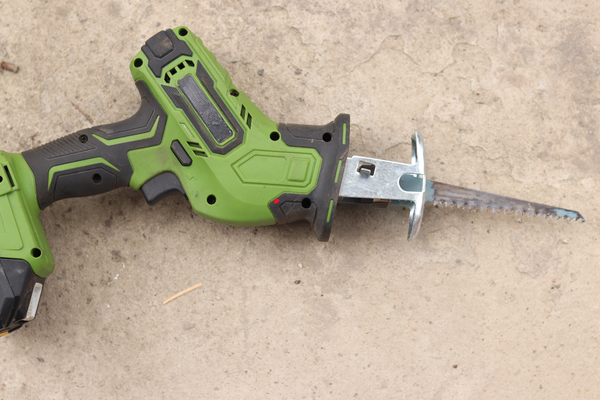
A cordless reciprocating saw is a versatile tool for demolition, renovation, pruning, cutting lumber, plastic, metal, and other materials when equipped with the appropriate blade. Its ability to make rapid back-and-forth cuts makes it useful in situations where other saws are difficult to maneuver.
That versatility also exposes the tool to demanding conditions.
A reciprocating saw can encounter sawdust, metal particles, moisture, vibration, heat, resin, dirt, and significant mechanical stress. The blade changes direction rapidly, the shoe contacts the workpiece, and the blade-clamping mechanism must repeatedly secure the cutting accessory.
For that reason, routine maintenance should focus on more than simply wiping the housing.
The blade clamp, shoe, ventilation openings, battery compartment, trigger, housing, and accessories all deserve regular inspection. Storage is equally important because a dirty or damp saw can develop problems while sitting unused between projects.
Fortunately, most routine maintenance can be performed without opening the tool. Cleaning the exterior, removing loose debris, inspecting the blade and clamp, checking the battery, and storing the equipment correctly can go a long way toward preserving performance.
This guide focuses on routine care, inspection, and storage. Always prioritize the instructions supplied by the manufacturer for your particular model, especially when changing blades, servicing internal components, handling batteries, or addressing electrical or mechanical faults.
Why a Reciprocating Saw Needs Regular Maintenance
A reciprocating saw works differently from a circular saw or drill.
Instead of rotating continuously, its blade moves rapidly back and forth.
That movement places repeated mechanical loads on:
- Blade
- Blade clamp
- Drive mechanism
- Shoe
- Housing
- Motor
- Battery
- Internal bearings and transmission components
At the same time, cutting produces debris that can collect around the tool.
Woodworking may produce sawdust and resin.
Metal cutting can create sharp particles.
Demolition work can generate drywall dust, dirt, insulation fibers, and other debris.
Outdoor work can expose the saw to moisture and soil.
A maintenance routine needs to account for all of these conditions.
Remove the Battery Before Maintenance
Before cleaning, inspecting, or changing the blade, remove the battery according to the manufacturer’s procedure.
This simple step should become automatic.
The saw contains a powerful motor capable of moving the blade rapidly. Even an apparently inactive tool should be handled as powered equipment until its power source has been disconnected.
Removing the battery also provides access to the battery compartment and lets you inspect the electrical connection.
Do not clean around the trigger, blade clamp, or moving components with the battery installed simply because you believe you will not activate the switch.
Make power-source removal part of the routine.
Allow the Saw to Cool
A reciprocating saw can become warm during prolonged cutting.
The motor, transmission, and housing may retain heat after the trigger is released.
Allow the tool to cool according to the manufacturer’s guidance before beginning maintenance.
Do not pour water over the saw to cool it faster.
Do not place a very hot tool immediately into an enclosed case if doing so could trap excessive heat.
Cooling should happen under controlled conditions.
Inspect the Tool Before Cleaning
Before wiping the saw, look at its overall condition.
Check for:
- Cracks
- Broken housing sections
- Damaged switches
- Bent shoe
- Damaged blade clamp
- Excessive corrosion
- Missing components
- Signs of impact
- Melted or discolored plastic
A small scratch on the housing is usually a cosmetic issue.
A crack near the battery compartment, switch, blade clamp, or structural portion of the housing deserves more attention.
Cleaning should never be used to hide structural damage.
Remove Loose Dust First
Start with dry cleaning.
Use a soft brush, clean cloth, or appropriate vacuuming method to remove loose particles.
Focus on:
- Blade area
- Blade clamp
- Shoe
- Ventilation openings
- Battery compartment
- Trigger area
- Housing seams
Removing dry debris first prevents contamination from becoming a muddy or sticky residue when moisture is introduced.
It also makes the underlying condition of the tool easier to see.
Clean the Blade Clamp
The blade clamp is one of the most important parts of the saw.
Depending on the model, it may use a lever, collar, or another quick-release mechanism.
Dust and debris can accumulate around it during cutting.
Inspect the clamp for:
- Dirt
- Metal particles
- Resin
- Rust
- Damage
- Restricted movement
Operate the release mechanism only according to the manufacturer’s procedure.
Do not force a stuck clamp.
If the clamp does not secure a compatible blade correctly, stop using the saw until the issue is resolved.
Do Not Spray Cleaner Directly Into the Clamp
The blade holder is a mechanical opening, but that does not mean it should be flooded with cleaner.
Liquid can travel deeper into the mechanism.
For ordinary contamination, use a controlled cleaning method.
A soft brush can remove loose particles from the accessible area.
If a specialized cleaning product is appropriate, apply it according to its instructions and the manufacturer’s guidance.
If the clamp continues to behave abnormally after cleaning, it may require service rather than additional chemicals.
Inspect the Blade Before Installation
The blade is a consumable but important component.
Before installing it, inspect the blade for:
- Cracks
- Missing teeth
- Bent sections
- Severe corrosion
- Deformation
- Excessive wear
Use a blade suitable for the material and application.
Do not install a blade simply because its shank physically fits.
The correct blade depends on the saw, material, cutting task, and manufacturer’s specifications.
Use the Correct Blade for the Material
Reciprocating saw blades are designed for different applications.
You may encounter blades intended for:
- Wood
- Metal
- Plastic
- Demolition
- Pruning
- Mixed materials
The tooth geometry, thickness, length, and construction can vary.
Using the wrong blade can reduce cutting performance and increase the load on the saw.
A blade designed for fast wood cutting is not automatically suitable for heavy metal work.
Choose the blade based on the material and intended application.
Replace Damaged Blades
A damaged blade should not be kept in service simply because only a few teeth are affected.
Inspect the entire blade.
Signs that replacement may be appropriate include:
- Cracks
- Severe bending
- Broken sections
- Excessive corrosion
- Significant tooth loss
- Deformation around the shank
Blades are consumable components.
There is usually little benefit in trying to restore a severely damaged blade when a suitable replacement is readily available.
Keep Spare Blades Organized
A reciprocating saw is often used for several different materials during one project.
Store spare blades separately and identify them by application where practical.
A small storage case can keep blades from:
- Bending
- Getting wet
- Becoming contaminated
- Damaging other tools
Keep sharp blades away from loose objects that can deform their teeth.
Organization also makes selecting the correct blade faster.
Inspect the Shoe
The shoe supports the saw against the workpiece.
Depending on the design, it may be fixed or adjustable.
Inspect it for:
- Bending
- Cracks
- Excessive wear
- Heavy contamination
- Loose hardware
- Corrosion
The shoe should remain appropriately aligned with the tool.
A badly damaged shoe can affect control and cutting behavior.
Do not straighten a severely deformed component by force unless the manufacturer provides a suitable repair procedure.
Clean the Shoe
Remove sawdust, metal particles, resin, and dirt from the shoe.
A cloth or soft brush is usually sufficient for ordinary contamination.
If the tool has been used against dusty or dirty surfaces, inspect the underside as well.
The shoe does not need to be polished.
It needs to remain clean enough to make proper contact and easy enough to inspect for damage.
Check Adjustable Shoe Mechanisms
Some reciprocating saws allow the shoe to move or adjust.
If yours does, inspect the mechanism.
Look for:
- Dirt
- Corrosion
- Excessive play
- Damaged locking components
- Unusual resistance
Operate the adjustment according to the manufacturer’s procedure.
Do not force the shoe if it becomes stuck.
A locking mechanism that no longer holds the shoe securely requires attention before the tool is used again.
Keep Ventilation Openings Clear
The motor and electronics may depend on airflow through the housing.
Inspect the ventilation openings after dusty work.
Remove loose contamination with:
- Soft brush
- Suitable vacuum
- Manufacturer-approved compressed air procedure
Avoid forcing particles deep into the tool.
The objective is to clear accessible dust rather than relocate it from the exterior to the interior.
Be Careful With Compressed Air
Compressed air can be useful for power-tool cleaning, but excessive pressure can create problems.
It may:
- Push dust deeper into the housing
- Distribute particles around the workshop
- Drive debris toward bearings or electrical components
- Create an airborne dust cloud
If compressed air is recommended for the specific tool, use it carefully and follow the manufacturer’s guidance.
For ordinary external contamination, a brush and vacuum often provide better control.
Clean Around the Trigger
Fine dust can accumulate around the trigger and switch.
Use a soft brush to remove visible contamination.
Avoid spraying cleaner directly into the control.
Do not insert metal objects into gaps.
The trigger should move normally.
Pay attention to:
- Sticking
- Inconsistent response
- Unusual resistance
- Physical damage
A trigger that does not behave normally should be investigated before the saw returns to service.
Inspect the Housing for Cracks
A reciprocating saw can be dropped or struck during demolition and renovation work.
After a significant impact, inspect the housing carefully.
Look for:
- Cracks
- Deformation
- Broken mounting points
- Loose components
- Damage around the blade area
- Battery-compartment damage
A motor that still runs does not prove that the tool is structurally sound.
If the housing protects an important component and has suffered substantial damage, follow the manufacturer’s service recommendations.
Clean the Battery Compartment
Remove the battery and inspect the compartment.
Look for:
- Sawdust
- Metal particles
- Dirt
- Moisture
- Corrosion
- Foreign objects
- Damaged contacts
Use controlled dry cleaning for loose debris.
Avoid applying oil or household chemicals to electrical contacts.
If contacts are bent, burned, badly corroded, or otherwise damaged, use the manufacturer’s service procedure.
Inspect the Battery
Battery care is part of power-tool maintenance.
Check the pack for:
- Cracks
- Swelling
- Deformation
- Leakage
- Burn marks
- Damaged terminals
Do not use or charge a battery that is visibly damaged simply to see whether it still works.
Follow the battery manufacturer’s safety instructions.
Store the battery according to its own temperature and charging requirements.
Keep Batteries Away From Demolition Dust
Demolition work can create large amounts of fine dust.
Do not leave battery packs sitting directly beside the cutting area.
Keep them in a clean and dry storage location when they are not installed in the tool.
Reducing contamination at the source is easier than cleaning fine dust from electrical interfaces afterward.
Keep the Tool Dry
A reciprocating saw may be used outdoors, but it should not be stored wet.
After exposure to rain or damp conditions:
Remove the battery.
Remove visible moisture.
Clean contamination appropriately.
Allow the tool to dry completely.
Follow manufacturer instructions for significant water exposure.
Do not turn on a potentially wet saw simply to see whether it still works.
Protect the Saw From Humidity
Humidity can affect exposed metal components and electrical contacts over time.
Pay attention to:
- Blade clamp
- Fasteners
- Shoe hardware
- Battery contacts
- Other exposed metal components
Store the saw in a reasonably dry environment.
If it is kept in a humid garage, monitor storage conditions and consider appropriate moisture-control measures.
A dry storage case can provide additional protection when the saw itself is completely dry before enclosure.
Use a Clean Storage Case
If the saw comes with a case, clean it regularly.
Remove:
- Sawdust
- Metal fragments
- Dirt
- Resin
- Other debris
Inspect molded compartments and foam inserts.
A dirty case can quickly recontaminate a clean saw.
Do not close the case while either the tool or case is damp.
Keep Blades Out of the Tool Case Loose
Loose reciprocating-saw blades can damage other equipment and themselves.
Use a blade case, compartment, or other suitable storage system.
Keep different lengths and applications organized.
Protect the teeth and shanks from unnecessary deformation.
A little organization makes future blade selection much easier.
Avoid Storing the Saw With a Blade Installed for Long Periods When It Is Not Necessary
Whether a blade should remain installed depends on the manufacturer’s recommendations and how the saw is stored.
For long-term storage, removing the blade may make inspection and protection easier.
If the blade remains installed, ensure that the tool is stored securely and that the cutting edge cannot damage the case or other equipment.
Follow the manufacturer’s storage guidance.
Do Not Use the Saw as a Pry Tool
Reciprocating saws are frequently used during demolition, which can encourage users to treat the blade or shoe as a lever.
Avoid loading the blade sideways or using the saw as a pry bar unless the manufacturer specifically states that the tool and accessory are designed for that application.
Side loading can damage or break a blade and can place abnormal stress on the tool.
Use a separate pry tool when leverage is required.
Avoid Twisting the Blade Excessively
The blade is designed primarily for the intended cutting motion.
Forcing it sideways can increase stress.
If the cut is not progressing correctly, investigate:
- Blade selection
- Blade condition
- Material
- Cutting technique
- Tool capacity
Do not compensate by twisting the saw aggressively.
Use Appropriate Cutting Pressure
More pressure is not always better.
The correct cutting technique depends on the material, blade, and tool.
Excessive pressure can:
- Increase motor load
- Increase heat
- Increase vibration
- Reduce blade life
- Make the cut less controlled
Let the blade perform the cutting rather than forcing the machine through the material.
Watch for Binding
Blade binding can occur when the cut closes around the blade or when the tool is positioned incorrectly.
When resistance increases unexpectedly, do not simply pull harder.
Stop and reassess the cut.
Check whether the blade is appropriate and whether the workpiece is adequately supported.
Forcing a bound blade can increase stress on both the accessory and the tool.
Woodcutting Creates Resin and Sawdust
When cutting wood, inspect the blade and clamp for:
- Resin
- Sawdust
- Wood fibers
Resin can become sticky and make contamination harder to remove.
Clean the tool after heavy woodworking.
Use appropriate dust collection where available.
Keep the storage case clean as well.
Metal Cutting Produces Sharp Debris
Metal cutting can produce hot or sharp particles.
Do not wipe the tool with bare hands immediately after metal cutting.
Allow the equipment to cool and use appropriate handling methods.
Inspect the blade and shoe for embedded particles.
Remove loose debris carefully.
If metal particles have entered deep into the housing, do not assume that aggressive compressed air is the best solution.
Follow the manufacturer’s maintenance guidance.
Pruning Creates Its Own Maintenance Challenges
Reciprocating saws are sometimes used with pruning blades.
Plant sap, moisture, bark, soil, and organic residue can accumulate around the blade.
Clean the tool after outdoor pruning work.
Dry the metal components.
Inspect for corrosion.
Pay special attention to the blade clamp because organic residue can make mechanical movement more difficult.
Check for Corrosion
Inspect exposed metal for:
- Orange spots
- Brown discoloration
- Roughness
- Pitting
- Flaking
Light surface corrosion may be treatable.
Deep corrosion around the blade clamp, shoe mechanism, or other important components deserves greater caution.
A clean appearance does not mean that corrosion has not affected the underlying metal.
Protect Exposed Metal Appropriately
If the saw will be stored for an extended period in a humid environment, an appropriate corrosion-protection product may be useful on compatible exposed metal surfaces.
Use the product according to its instructions.
Avoid spraying it indiscriminately onto:
- Battery contacts
- Triggers
- Electrical components
- Rubberized grips
- Internal openings
A targeted protective treatment is easier to control.
Do Not Flood the Mechanism With Oil
A reciprocating saw is not supposed to be soaked in lubricant.
Excess oil can attract dust and create contamination.
Some internal components may require specialized lubrication, but that is a service procedure rather than a general storage habit.
Follow the manufacturer’s recommendations.
Listen for Unusual Noise
A reciprocating saw has a recognizable operating sound.
Changes can indicate a problem.
Listen for:
- Grinding
- Rattling
- Clicking
- Squealing
- Unusual mechanical vibration
A damaged blade can sometimes create abnormal behavior.
Mechanical wear can also be responsible.
If the sound changes significantly, stop and investigate rather than continuing until the tool fails.
Watch for Excessive Vibration
Some vibration is normal because of the reciprocating mechanism.
A sudden increase in vibration is different.
Possible causes include:
- Damaged blade
- Improper blade installation
- Mechanical wear
- Damaged shoe
- Internal problem
Inspect the blade and tool.
If excessive vibration persists, professional service may be appropriate.
Do not attempt to compensate by applying more pressure.
Monitor Operating Temperature
A reciprocating saw can become warm during prolonged cutting.
Some warmth is expected.
Excessive heat should be investigated, especially when accompanied by:
- Burning smell
- Smoke
- Sudden power loss
- Repeated thermal shutdown
Stop using the tool when significant warning signs appear.
Do not cool it with water.
Allow it to cool according to the manufacturer’s recommendations.
Inspect the Blade Clamp Before Every Important Job
Because the clamp directly retains the cutting accessory, its condition matters.
Before a demanding project:
Check that it operates correctly.
Inspect for visible damage.
Make sure the blade seats according to the manufacturer’s procedure.
Do not use a blade that cannot be securely retained.
A problem with the clamp is not something to compensate for through increased force.
Check the Shoe Before Cutting Structural Material
The shoe helps stabilize the saw against the workpiece.
Before demanding work, inspect it for damage and confirm that any adjustable mechanism remains secure.
A loose or bent shoe can make the tool harder to control.
Follow the manufacturer’s instructions for any adjustment.
Store the Saw Away From Heavy Equipment
Do not place heavy tools on top of a reciprocating saw.
The housing, shoe, trigger, and blade clamp can be damaged by unnecessary weight or impact.
Use a dedicated case, cabinet, shelf, or organizer.
Good storage also makes inspections easier.
Keep the Saw Away From Chemicals
Workshop chemicals can damage plastics, rubber, coatings, and other components.
Avoid storing the saw beside leaking containers of:
- Degreasers
- Solvents
- Paint
- Adhesives
- Automotive fluids
A dry, clean equipment cabinet is preferable to an unstructured storage corner.
A Five-Minute Post-Project Routine
After a normal cutting project:
1. Remove the battery.
2. Allow the tool to cool.
3. Remove loose dust and debris.
4. Inspect the blade.
5. Check the blade clamp.
6. Clean the shoe.
7. Inspect the vents.
8. Check the battery compartment.
9. Wipe the housing and grip.
10. Clean and dry the storage case.
This routine can be completed quickly and makes good maintenance a natural part of the project.
A Deeper Periodic Inspection
For frequently used saws, perform a more detailed inspection.
Clean the housing thoroughly.
Inspect the blade clamp.
Check the shoe and its adjustment system.
Inspect the ventilation openings.
Check the trigger.
Inspect the battery compartment.
Look for corrosion.
Examine the storage case.
Review any changes in noise, vibration, heat, or cutting performance noticed during recent projects.
A deeper inspection can reveal gradual wear before the tool develops a serious failure.
When the Saw Needs Professional Service
Routine cleaning cannot fix every issue.
Consider qualified service when the tool develops:
- Persistent overheating
- Burning smell
- Smoke
- Electrical abnormalities
- Severe vibration
- Unusual mechanical noise
- Intermittent operation
- Major power loss
- Blade-clamp failure
- Significant housing damage
Do not continue using the tool simply because it still starts.
A tool that starts but behaves abnormally can still have a serious underlying problem.
Do Not Open the Housing Without a Proper Procedure
The temptation to open a power tool becomes greater when dust is visible around the vents.
Avoid casual disassembly.
Inside the housing may be:
- Motor components
- Electronics
- Bearings
- Gears
- Wiring
- Switches
If internal maintenance is required, follow the manufacturer’s service procedure or seek qualified assistance.
When to Replace the Saw
Replacement may be appropriate when:
- The housing is severely compromised
- The motor or transmission has failed
- The blade-clamping system is damaged beyond practical repair
- Replacement parts are unavailable
- Repair costs are excessive
- Reliable operation cannot be restored
A high-quality professional saw may justify repair.
A low-cost tool with major internal damage may not.
Consider future use, tool quality, availability of parts, and total repair cost.
Common Maintenance Mistakes
Cleaning while the battery remains installed
Remove the power source before maintenance.
Spraying cleaner into the blade clamp
Liquid can reach internal components.
Using damaged blades
Replace accessories that are structurally compromised.
Using ordinary blades for demanding applications
Choose blades appropriate for the tool and material.
Pressing excessively during cutting
This increases load and heat.
Twisting the saw sideways in the cut
Side loading can damage the blade and tool.
Using the tool as a pry bar
Use an appropriate tool for leverage.
Blowing high-pressure air into vents
This can force debris deeper into the housing.
Storing the saw while wet
Moisture can contribute to corrosion.
Ignoring abnormal vibration
The blade or tool may have a mechanical problem.
Continuing after a burning smell
Stop and investigate.
Final Thoughts
A cordless reciprocating saw is built for demanding work, but its durability depends heavily on how it is maintained.
The best routine starts with the blade and its surrounding mechanisms. Remove the battery before maintenance, allow the tool to cool appropriately, remove loose dust, inspect the blade clamp, check the shoe, and make sure the ventilation openings remain reasonably clear.
The blade deserves particular attention.
Use an accessory appropriate for the material and application, inspect it before demanding work, and replace it when it develops cracks, severe deformation, significant tooth damage, or other defects.
Cutting technique also affects tool life. Excessive pressure, sideways twisting, binding, and using the saw as a pry bar can put unnecessary stress on the blade and internal mechanism.
Dust control matters as well. Wood, metal, demolition, and pruning work all create different types of contamination. Clean the tool after demanding projects and keep the storage case free from accumulated debris.
Battery care should be treated separately. Inspect the pack for damage and follow the manufacturer’s instructions for charging and long-term storage.
Humidity deserves attention too. Keep the saw dry, protect exposed metal when appropriate, and avoid storing the equipment near damp floors, leaks, or chemicals.
Finally, distinguish routine maintenance from genuine mechanical or electrical problems. Burning smell, smoke, severe vibration, abnormal noise, repeated overheating, intermittent operation, and significant power loss are warning signs that deserve more than another cleaning session.
A well-maintained reciprocating saw should be clean, dry, properly equipped, mechanically sound, adequately ventilated, and stored in a way that protects both the machine and its accessories.
That standard does not require complicated maintenance.
It requires consistent habits.
Clean the tool after the work. Inspect the blade and clamp. Protect the battery. Store everything properly. Address abnormal behavior before it becomes a failure.
Those simple steps can help keep a cordless reciprocating saw dependable through years of demanding projects.
Related Guides
- How to Clean a Cordless Drill After Working in Dust
- How to Store Cordless Power Tools Between Projects
- How to Keep Dust From Building Up Inside Power Tools
- Why Power Tools Overheat and What You Should Check First
- How to Care for Power Tool Batteries During Long-Term Storage
- How to Inspect and Maintain a Cordless Angle Grinder
FAQ
How often should I clean a cordless reciprocating saw?
Clean it after dusty, dirty, outdoor, or metal-cutting projects and whenever visible contamination accumulates. Frequently used saws should also receive periodic detailed inspections.
Should I remove the battery before cleaning a reciprocating saw?
Yes. Remove the battery according to the manufacturer’s procedure before cleaning, inspecting, or changing the blade.
How do I clean the blade clamp?
Remove the battery and use a controlled dry-cleaning method such as a soft brush to remove loose debris. Avoid flooding the clamp with liquid and follow the manufacturer’s instructions for more difficult contamination.
Can I use any reciprocating-saw blade?
No. The blade should be compatible with the tool, the material, and the intended application. Different blades are designed for wood, metal, demolition, pruning, and other tasks.
How do I know when a reciprocating-saw blade needs replacement?
Replace a blade when it has cracks, severe bending, significant tooth damage, excessive corrosion, or other deformation that compromises reliable cutting.
Why is my reciprocating saw vibrating more than before?
Possible causes include a damaged blade, improper installation, a damaged shoe, mechanical wear, or another tool problem. Stop and inspect the blade and tool rather than continuing to apply pressure.
Should I lubricate the blade clamp?
Do not automatically lubricate it. First clean and inspect the mechanism, then follow the manufacturer’s recommendations for any lubricant and application method.
Can I wash a cordless reciprocating saw?
Do not assume that the tool can be washed or rinsed. Water can enter electrical and mechanical components. Use controlled cleaning methods and follow the manufacturer’s instructions.
Can I use compressed air to clean a reciprocating saw?
Compressed air may be appropriate in some manufacturer-approved cleaning procedures, but excessive pressure can force dust deeper into the housing. Use it carefully and consider a brush or suitable vacuum for ordinary external cleaning.
How should I store a cordless reciprocating saw?
Clean the tool, remove the battery according to manufacturer instructions, keep the saw dry, protect the blade and clamp from unnecessary impacts, organize spare blades, and store the equipment in a clean and suitable case or cabinet.
Can humidity damage a reciprocating saw?
Yes. Repeated exposure to moisture and condensation can contribute to corrosion of exposed metal and contamination of electrical interfaces. Store the tool in a dry environment and inspect it periodically.
What should I do if my reciprocating saw smells like it is burning?
Stop using it and follow the manufacturer’s troubleshooting or service guidance. A burning smell can indicate excessive load, electrical problems, mechanical friction, or another fault.
When should I replace a cordless reciprocating saw?
Consider replacement when the tool has severe structural or mechanical damage, major electrical failure, an irreparable blade-clamping problem, unavailable parts, or repair costs that are unreasonable compared with replacement.