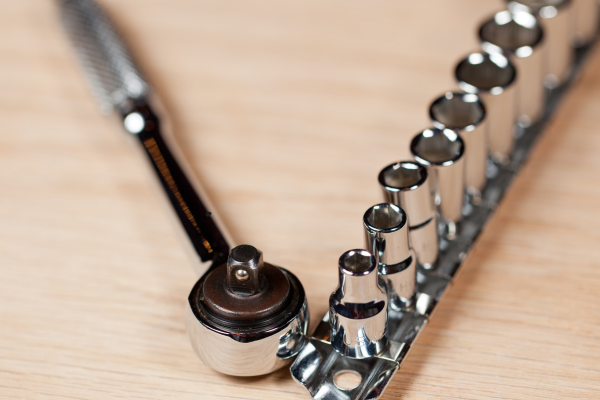
A ratchet and socket set is one of the most useful tool combinations for mechanical work, home repairs, automotive maintenance, furniture assembly, and general workshop tasks. Unlike simple hand tools that may require little attention, a ratchet and socket set contains several moving and precision-made components that benefit from regular inspection and proper care. Dirt, grease, moisture, corrosion, and excessive force can gradually affect the way the ratchet mechanism operates and can also damage socket surfaces. The good news is that maintaining a ratchet and socket set does not require complicated equipment. With regular cleaning, careful inspection, proper lubrication, and suitable storage, a quality set can remain reliable for many years.
Why Regular Ratchet and Socket Maintenance Matters
A ratchet works through a small internal mechanism that allows the handle to drive a fastener in one direction while moving freely in the opposite direction. This mechanism contains closely fitted components, so contamination can interfere with its movement even when the outside of the tool appears clean. Dust, metal particles, hardened grease, and moisture can eventually make the ratchet feel rough or cause the mechanism to slip.
Sockets have different maintenance concerns. Their interior surfaces need to remain clean enough to fit securely over fastener heads, while the square drive opening must remain free from excessive wear or deformation. A damaged socket can fit poorly on a fastener and increase the chance of rounding the corners of the fastener.
Regular maintenance also gives you an opportunity to identify problems before they become safety concerns. A ratchet that suddenly skips under load, a socket with visible cracks, or a drive connection that no longer fits securely should not simply be ignored. Finding these problems during a routine inspection is much safer than discovering them while applying substantial force.
Start With a Complete Inspection
Before cleaning or lubricating the set, inspect the ratchet, sockets, extensions, adapters, and other accessories individually. This is particularly important if the tools are used frequently or have been exposed to moisture, automotive fluids, construction dust, or outdoor conditions.
Begin with the ratchet handle. Look for cracks, deep scratches, deformation, corrosion, and damage around the square drive. Examine the direction selector and make sure it moves positively between positions rather than feeling loose or vague.
Next, operate the ratchet without a socket attached. The mechanism should move smoothly and consistently. Listen for unusual grinding, clicking, or irregular sounds. A small amount of mechanical noise is normal, but a noticeable change from the way the tool normally feels can indicate contamination or internal wear.
Inspect every socket for cracks, severe corrosion, deformation, or unusual wear. Pay particular attention to thin-wall sockets because their walls can be more vulnerable to damage when exposed to high loads or improper use.
Do not overlook extensions and adapters. The square drive ends should not be visibly twisted, rounded, or excessively worn. Accessories that no longer connect securely can create problems even when the ratchet itself remains in good condition.
Clean the Ratchet and Sockets Before Lubrication
Cleaning should normally come before lubrication because applying oil over dirt can create a sticky mixture that attracts even more debris. For routine cleaning, begin by wiping the exterior of each component with a clean cloth.
For sockets with grease or oily residue, use a suitable degreasing cleaner according to the manufacturer’s instructions. A soft brush can help remove contamination from recessed areas. After cleaning, dry the components thoroughly.
Pay particular attention to the inside of the sockets. Dirt trapped inside can interfere with the fit between the socket and fastener. If a socket has accumulated hardened material, take the time to remove it rather than putting the tool back into storage while it is still contaminated.
The ratchet head may require more attention because debris can enter around the moving mechanism. Do not automatically flood the mechanism with cleaner. Excessive liquid can carry contamination deeper into the mechanism or remove lubricant from areas where it is needed. When cleaning an internal ratchet mechanism, follow the tool manufacturer’s recommended procedure whenever one is available.
After cleaning, make sure the tool is completely dry. Moisture left on bare or lightly protected metal surfaces can contribute to corrosion, especially when the tools are stored in an enclosed toolbox or humid workshop.
How to Lubricate a Ratchet Properly
Lubrication is primarily important for the moving mechanism inside the ratchet. The exact lubricant and application method depend on the ratchet design and manufacturer’s recommendations.
If the ratchet has a serviceable mechanism, use a small amount of appropriate light mechanical lubricant rather than applying a large quantity. Excess lubricant is not necessarily better. Too much oil can attract dust and grit, which may eventually make the mechanism less clean rather than more reliable.
Apply lubricant carefully to the mechanism and operate the ratchet several times to distribute it. If excess lubricant remains around the head, wipe it away with a clean cloth.
Some modern ratchets may have specific maintenance instructions or sealed components. In those cases, do not disassemble the mechanism simply because you want to lubricate it. Disassembling a precision ratchet without knowing how its components are positioned can introduce new problems.
If the ratchet begins to feel rough shortly after cleaning and lubrication, lubrication alone may not solve the problem. Contamination or internal wear may require a more thorough service or replacement of worn components.
Take Care of the Square Drive Connection
The square drive is one of the most important parts of the ratchet because it transfers force from the handle to the socket. It should fit securely into the socket without excessive looseness.
Keep the drive connection clean. Dirt or corrosion around the square drive can make sockets difficult to install or remove. Wipe the area after use and inspect it for deformation.
When attaching a socket, push it fully onto the drive. A partially engaged socket may disconnect unexpectedly when force is applied. Some ratchets use a retaining ball or another retention mechanism to help hold sockets in place. Make sure this mechanism continues to function correctly.
If a socket repeatedly falls off even though it is correctly installed, inspect both the socket and the ratchet drive. Do not assume that the problem is simply a dirty connection. Excessive wear in either component can reduce the security of the connection.
Avoid Using a Ratchet as a Hammer or Striking Tool
One of the easiest ways to shorten the life of a ratchet is to use it for a purpose for which it was not designed. A ratchet is designed to turn fasteners, not to serve as a hammer, pry bar, or striking tool.
Avoid hitting the ratchet handle with another object to increase force. This can damage the internal mechanism, deform the handle, or create hidden damage that may not become obvious until the tool is placed under load again.
The same principle applies to sockets. If a socket is not designed for impact applications, it should not be used with an impact wrench or another power tool that generates repeated high torque. Impact-rated sockets are specifically designed for those applications and have different construction characteristics.
Using the correct tool for the job is one of the most effective forms of maintenance because it prevents damage before it occurs.
Do Not Use a Cheater Bar Without Understanding the Risk
Adding a long pipe or similar extension to a ratchet handle can dramatically increase the torque applied to the mechanism. Although this technique may appear effective when a fastener is difficult to loosen, it can exceed the design limits of the ratchet.
If a fastener requires unusually high force, first determine why it is difficult to remove. Corrosion, thread damage, contamination, incorrect tool selection, or excessive tightening may be responsible.
For applications requiring very high torque, use a tool specifically designed for that purpose, such as an appropriate breaker bar or torque tool. A ratchet should not automatically be treated as a substitute for every high-torque tool.
Maintain Sockets According to Their Condition
Sockets do not contain the same moving mechanism as ratchets, but they still require regular inspection. Check the drive opening and the working end of every socket.
Look for rounded edges, cracks, deep corrosion, and visible deformation. A socket that no longer fits a fastener correctly should not be forced onto it. Continuing to use a badly worn socket can damage both the tool and the fastener.
Keep sockets organized according to size. This is more than a convenience. Good organization reduces unnecessary handling and makes it easier to notice when a particular socket is missing or damaged.
If your set contains both metric and SAE sizes, keep them clearly separated or use a storage system that identifies each size. Accidentally selecting a socket that is close to the required size can result in a poor fit and damage to the fastener.
Prevent Rust Before It Starts
Rust prevention is especially important when tools are stored in garages, sheds, workshops, or other environments where humidity changes significantly.
After cleaning, make sure metal components are completely dry before storage. Avoid leaving damp tools inside closed cases because trapped moisture can create a favorable environment for corrosion.
For long-term storage, a suitable protective film can be applied to exposed metal surfaces when appropriate for the tool and intended use. The objective is to create protection against moisture without leaving the tool excessively oily.
Storage location also matters. A toolbox placed directly on a damp concrete floor can be exposed to more moisture than a toolbox kept on a shelf or elevated surface. In humid environments, improving ventilation and controlling moisture can benefit the entire tool collection.
Do not store tools while they are contaminated with water, salt, aggressive chemicals, or corrosive residues. Cleaning the tools before storage is much easier than restoring heavily corroded tools later.
How to Store a Ratchet and Socket Set
A good storage system protects tools from physical damage as well as moisture. Keep sockets in their designated positions so they do not constantly strike against one another.
If the original storage case is sturdy and keeps the components secure, it can be an excellent option. However, a damaged case that allows sockets to move freely may no longer provide adequate protection.
Avoid storing heavy objects on top of a tool case if doing so could deform the case or place unnecessary pressure on the tools inside.
For workshops with high humidity, consider additional moisture-control measures appropriate for the storage environment. The goal should be to reduce exposure to moisture rather than relying exclusively on a corrosion-prevention product.
After using the set in wet conditions, allow the components to dry before closing the case. This simple habit can make a significant difference over time.
What to Do When a Ratchet Starts Slipping
A ratchet that slips under load deserves immediate attention. Do not continue applying high force simply to see whether the problem happens again.
First, inspect the mechanism and make sure the direction selector is fully engaged. Clean external contamination and check whether the mechanism operates normally without load.
If the ratchet continues to slip, the internal mechanism may be worn, damaged, or contaminated. Depending on the design, the manufacturer may offer replacement repair components or recommend professional service.
A slipping ratchet should not be treated as a minor inconvenience. When a mechanism unexpectedly releases under load, the user’s hand can move suddenly, potentially causing an injury or causing the tool to strike nearby components.
If the ratchet is significantly worn or damaged and replacement parts are unavailable, replacing the tool may be the safer and more practical solution.
When a Socket Should Be Replaced
Sockets are generally durable, but they are not indestructible. Replace a socket when it develops a crack, significant deformation, severe corrosion, or excessive wear that prevents a secure fit.
Do not attempt to repair a cracked socket by welding or grinding unless the tool manufacturer specifically provides an appropriate repair procedure. Altering the geometry of a precision socket can affect how forces are transferred to a fastener.
A socket that repeatedly slips off a fastener is also a warning sign. Before replacing it, verify that you are using the correct size and that the fastener itself is not damaged. If the correct socket still fits poorly, inspect the socket for wear.
A Simple Maintenance Routine
A practical maintenance routine does not need to take much time. After each significant use, wipe the tools clean and check for moisture, dirt, or obvious damage.
Every few uses, inspect the ratchet mechanism, square drive, sockets, and extensions more carefully. Remove accumulated grease and debris rather than allowing contamination to build up.
For tools used frequently, perform a more complete inspection periodically. Check for corrosion, wear, loose components, and changes in the way the ratchet operates.
Before long-term storage, clean and dry every component, apply appropriate protection where needed, and store the set in a dry, organized location.
This approach is more effective than waiting until the tool develops a serious problem. Preventive maintenance takes less time than repairing or replacing damaged equipment.
Common Maintenance Mistakes to Avoid
One common mistake is assuming that a tool does not need maintenance simply because it still works. Internal wear can develop gradually, and small problems are easier to address before they become failures.
Another mistake is using excessive lubricant. More lubricant does not automatically mean better protection. Excess oil can attract abrasive particles and create contamination inside moving mechanisms.
Storing wet tools is another avoidable problem. Even high-quality steel can develop corrosion when moisture remains trapped around the tool for extended periods.
Using the wrong socket size is also harmful. A socket should fit the fastener properly and completely. A loose fit increases the possibility of rounding the fastener.
Finally, avoid treating a ratchet as a high-torque tool simply because it can generate substantial force. When a job requires more torque than the tool is designed to handle, use the appropriate alternative instead of forcing the ratchet beyond its intended application.
How Proper Maintenance Extends Tool Life
The lifespan of a ratchet and socket set depends on several factors, including the quality of the tools, frequency of use, working environment, applied loads, and maintenance practices. Good maintenance cannot prevent every failure, but it can reduce unnecessary wear and help identify problems earlier.
A clean ratchet is easier to inspect and less likely to develop problems caused by contamination. Clean sockets provide a more reliable fit. Dry storage reduces corrosion. Proper lubrication supports smooth movement in serviceable mechanisms. Correct tool selection prevents unnecessary mechanical stress.
Together, these small practices create a maintenance system that protects the investment in the entire tool set.
Final Thoughts
A ratchet and socket set can remain useful for many years when it is treated as precision equipment rather than simply as a collection of metal tools. Regular cleaning, inspection, appropriate lubrication, rust prevention, correct storage, and proper use all contribute to reliable performance.
The most important habit is to pay attention to changes. If a ratchet begins to feel different, a socket becomes loose, corrosion appears, or a component shows physical damage, investigate the problem instead of continuing to use the tool as if nothing has changed.
Good tool maintenance is ultimately about preventing avoidable damage. A few minutes spent cleaning and inspecting a ratchet and socket set after use can help preserve its condition, reduce the chance of unexpected failure, and ensure that the right tool remains ready when it is needed.