A damaged hand tool does not always need to be thrown away. Many tools can be cleaned, lubricated, adjusted, or restored after years of use. Surface rust can often be treated, dirty mechanisms can sometimes be cleaned, and worn accessories may be replaceable.
The difficult decision comes when a tool has both useful life and visible damage. At that point, the question is no longer simply whether the tool can be repaired. It is whether repairing it is practical, reliable, and appropriate for the work it needs to perform.
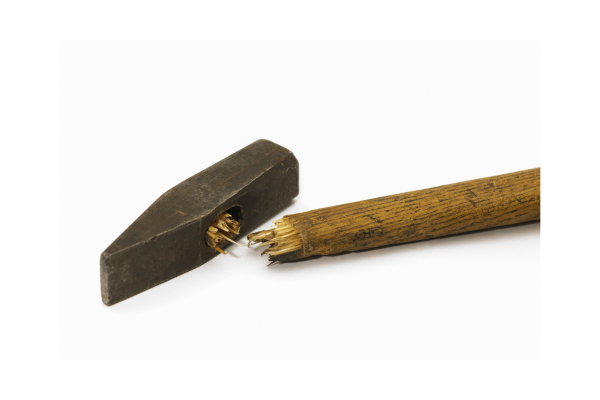
This distinction is especially important with tools that are subjected to force. A cracked hammer handle, severely worn wrench, damaged cutting tool, or compromised plier pivot can create a problem that cleaning and lubrication cannot solve.
Replacing a tool does not necessarily mean admitting that it was poorly maintained. Sometimes replacement is the most sensible part of maintenance.
The purpose of this guide is to help you decide when a hand tool should be cleaned and maintained, when it may be worth repairing, and when replacement is the better choice.
Repairable Damage vs. Structural Damage
The first thing to establish is what kind of problem the tool has.
Some defects are primarily related to contamination or surface condition.
Examples include:
- Dirt
- Grease
- Paint residue
- Adhesive
- Light surface rust
- Dry mechanisms
These problems can often be addressed through ordinary maintenance.
Structural damage is different.
Examples include:
- Cracked handles
- Severely bent shafts
- Deep corrosion
- Broken components
- Severely worn working surfaces
- Damaged threads
- Loose structural connections
These defects can affect the tool’s ability to safely perform its intended function.
The important question is therefore:
Can the tool be returned to its intended condition without compromising its reliability?
If the answer is uncertain, continuing to use it simply because it can technically be repaired may not be the best decision.
Start With the Tool’s Intended Purpose
A defect cannot be judged properly without considering what the tool is designed to do.
For example, a small cosmetic scratch on a screwdriver handle may have little practical significance.
A similar-looking crack in the handle of a hammer can be much more important because the tool is subjected to repeated impact.
Likewise, minor surface discoloration on a measuring tool may not matter, while damage to its measurement markings can make the instrument unreliable.
Before deciding whether to repair or replace a tool, consider:
What does this tool need to do?
How much force does it normally experience?
Which component is damaged?
Could failure affect the user or the workpiece?
These questions are more useful than judging the tool by appearance alone.
When Cleaning Is Usually Enough
Cleaning is normally the appropriate first step when the tool is structurally sound but contaminated.
Typical examples include:
- Greasy wrenches
- Dirty pliers
- Paint-covered screwdrivers
- Dusty measuring tools
- Tools with adhesive residue
- Tools with light surface contamination
After cleaning, inspect the tool again.
If the working surfaces remain intact and the mechanism functions normally, there may be no reason to replace it.
This is one of the most important maintenance principles:
Do not replace a tool simply because it is dirty.
A neglected but structurally sound hand tool may have many years of useful life remaining.
When Rust Does Not Necessarily Mean Replacement
Rust is another condition that is often misunderstood.
A small amount of surface corrosion does not automatically make a tool unusable.
Light rust may sometimes be removed through an appropriate restoration process.
The more important question is whether the corrosion has caused material loss.
Look for:
- Deep pits
- Flaking metal
- Thinning
- Damaged threads
- Compromised edges
- Corrosion around structural connections
Removing surface rust is one thing.
Replacing metal that has already been lost is another.
If the corrosion is deep enough to affect the tool’s dimensions, strength, or working surfaces, replacement or professional evaluation may be more appropriate.
When a Cracked Handle Means Replacement
A cracked handle deserves particular attention.
Handles exist to provide control and, in many cases, to isolate the user’s hand from the forces involved in the job.
A small cosmetic mark is not necessarily a structural problem.
A crack that extends through a significant portion of the handle is different.
Consider replacement or appropriate repair when you see:
- Deep cracks
- Splitting
- Loose sections
- Structural deformation
- Severe deterioration
- Separation around the tool’s connection point
Do not assume that adhesive is a permanent solution for every cracked handle.
The correct repair depends on the tool’s construction.
A damaged handle on a force-bearing tool can be a reason to remove the tool from service rather than continue using it while waiting for a convenient repair.
Hammers Deserve Extra Caution
Hammers are a good example of a tool where replacement decisions should be conservative.
A hammer transfers impact energy repeatedly.
Inspect:
- Head
- Handle
- Head-to-handle connection
- Striking surface
- Claw, if present
A secure head and structurally sound handle are fundamental.
A cracked wooden handle, damaged composite handle, loose head, or serious deformation should not be ignored.
Cleaning and rust removal may improve appearance, but they cannot make a structurally compromised hammer reliable.
If the condition is uncertain, replacement or professional assessment is usually more sensible than taking chances with a striking tool.
When a Screwdriver Should Be Replaced
A screwdriver can often be cleaned and maintained easily.
But its tip is a working surface that has specific geometry.
Inspect for:
- Rounded edges
- Chipped sections
- Severe deformation
- Significant material loss
- Bent shaft
- Cracked handle
- Loose shaft-to-handle connection
A slightly scratched handle may not matter.
A badly worn tip can.
Grinding a worn tip without understanding its geometry may make the tool less effective.
If the tip no longer fits the intended fastener correctly and replacement is inexpensive, replacing the screwdriver is often the most practical option.
When Pliers Have Reached the End of Their Useful Life
Pliers can develop several different types of wear.
Inspect the pivot, jaws, cutters, and handles.
Cleaning may solve stiffness caused by dirt.
Lubrication may help when appropriate.
But consider replacement when you find:
- Excessive pivot looseness
- Severely damaged jaws
- Chipped cutters
- Structural cracks
- Deep corrosion
- Significant deformation
A pair of pliers should remain mechanically predictable.
If the jaws no longer align properly or the pivot has excessive permanent play, the tool may no longer perform its intended function reliably.
When an Adjustable Wrench Should Be Replaced
An adjustable wrench has both working jaws and a mechanical adjustment system.
Inspect:
- Fixed jaw
- Moving jaw
- Adjustment screw
- Threads
- Handle
- Body
Cleaning can resolve contamination.
Lubrication may improve an appropriate mechanism.
Surface rust may be treatable.
But serious thread damage or excessive looseness is more concerning.
If the moving jaw cannot remain properly controlled against a fastener, the wrench may no longer be reliable.
Do not continue using an adjustable wrench simply because the adjustment screw still turns.
The quality of the jaw engagement matters too.
When a Wrench Is Too Worn to Trust
Fixed wrenches also have a practical limit.
Inspect the working surfaces for rounding or deformation.
A wrench that has been repeatedly used on the wrong-size fasteners can develop worn corners.
This can increase the likelihood of slipping.
Minor surface marks are usually less concerning than deformation of the actual working area.
If the wrench no longer fits the intended fastener properly, replacement is generally preferable to trying to grind the jaws back into shape.
When a Tape Measure Should Be Replaced
Measuring tools present a special problem because their usefulness depends on reliable measurements.
A tape measure can be dirty and still perfectly useful.
But consider replacement when:
- Measurement markings are seriously damaged
- The blade is badly bent
- The hook is structurally compromised
- The blade has substantial corrosion
- The lock no longer works reliably
- Retraction is severely abnormal
- The housing is seriously damaged
- Measurements are inconsistent
Do not repaint measurement markings yourself and assume the tool is accurate.
When the measurement reference itself has been compromised, replacement can be the more dependable choice.
When a Handsaw Should Be Replaced
A handsaw may remain useful despite cosmetic wear.
However, inspect the blade for:
- Cracks
- Severe bending
- Missing teeth
- Extensive corrosion
- Deep pitting
- Significant tooth damage
Some quality saws can be sharpened or professionally restored.
Other saws are inexpensive enough that replacement is more practical.
The decision depends on the blade’s condition, the saw’s value, and whether the tooth geometry can reasonably be restored.
Never assume that aggressive filing or grinding will return a damaged blade to its original condition.
When Cutting Tools Need Extra Attention
Cutting tools have working edges, which means their condition can affect both performance and control.
Examples include:
- Shears
- Utility tools
- Files
- Pruning tools
- Hand saws
- Cutting pliers
Inspect the cutting edge carefully.
Look for:
- Chips
- Cracks
- Severe wear
- Corrosion
- Deformation
A dull tool and a structurally damaged tool are not the same thing.
A dull edge may be suitable for sharpening if the tool is designed for it.
A cracked or badly deformed cutting component may justify replacement.
Repair Cost Is Only One Part of the Decision
A common mistake is comparing only the repair cost with the purchase price of a new tool.
There are actually several costs to consider.
Purchase price
Replacement parts
Cleaning products
Specialized service
Your time
Risk of an unsuccessful repair
A repair that costs $10 may seem reasonable on a $30 tool.
But if it requires several hours and still produces an uncertain result, the practical cost is much higher.
On the other hand, a high-quality specialty tool may be worth repairing even when restoration is relatively expensive.
Value is not always determined by retail price.
Consider Tool Quality
The quality and uniqueness of the tool should influence the decision.
A basic screwdriver available everywhere is relatively easy to replace.
A discontinued specialty tool may not be.
An older high-quality wrench may have characteristics that make restoration worthwhile.
A common low-cost tool with severe damage may not.
Consider:
- Build quality
- Availability
- Replacement cost
- Specialty function
- Personal importance
- Repairability
This prevents a purely price-based decision.
Consider Replacement Parts
Some hand tools have replaceable components.
Examples can include:
- Saw blades
- Hammer handles
- Springs
- Pivot hardware
- Specialized components
A tool may be worth keeping when the damaged part can be replaced according to the manufacturer’s procedure.
Before discarding a quality tool, check whether legitimate replacement parts are available.
However, do not assume every component is safely replaceable at home.
If the repair involves structural or safety-critical components, follow the manufacturer’s instructions or seek appropriate professional service.
When a Repair Is Worth It
Repair is particularly attractive when:
The main body of the tool is sound.
The damaged component is replaceable.
The tool is high quality or difficult to replace.
The repair method is established.
The total cost is reasonable.
The repaired tool can be returned to reliable service.
For example, a quality saw with a replaceable blade may clearly be worth keeping.
Likewise, a well-built tool with a replaceable handle may justify repair when the replacement procedure is appropriate.
When Replacement Is Usually Better
Replacement becomes more attractive when:
- Structural integrity is compromised
- Working surfaces are severely worn
- Corrosion has caused significant material loss
- Replacement cost is low
- Repair requires extensive modification
- Replacement parts are unavailable
- The repair result would remain uncertain
The last point is important.
A repair that looks acceptable is not necessarily reliable.
If you cannot confidently determine whether the tool will perform as intended after the repair, replacement may be the safer choice.
Do Not Repair by Removing More Metal
Aggressive grinding is a common response to damaged metal tools.
A rusty wrench gets ground.
A damaged screwdriver tip gets reshaped.
A saw tooth gets filed heavily.
The problem is that every removal process changes the tool.
The manufacturer designed the working surfaces with particular dimensions and geometry.
Removing material may:
- Change fit
- Alter strength
- Affect balance
- Reduce contact
- Change cutting geometry
- Remove protective finishes
Restoration should therefore be controlled rather than based on the goal of making every surface look new.
Do Not Use Improvised Structural Repairs
Glue, tape, wire, screws, and other improvised solutions can be tempting.
They may be useful for temporary non-structural situations in some contexts, but they should not automatically be treated as permanent repairs for force-bearing tools.
A repair needs to be appropriate for the tool’s construction and intended load.
If the damaged component is critical to safe operation, follow the manufacturer’s repair procedure or seek professional service.
Appearance is not proof of structural integrity.
Consider the Consequences of Failure
One of the best ways to decide whether replacement is appropriate is to ask:
What happens if this tool fails while I am using it?
Failure of a measuring tool may result in an incorrect measurement.
Failure of a screwdriver may damage a fastener.
Failure of a hammer or heavily loaded gripping tool can have more serious consequences.
The greater the consequence of failure, the less reasonable it is to accept uncertainty about a repair.
This is an important maintenance principle:
The acceptable amount of uncertainty depends on the job.
When Sentimental Value Matters
Some tools are kept for reasons beyond practical use.
A tool inherited from a family member, an old specialty tool, or a vintage piece can have personal value even when its economic value is modest.
In these situations, preservation may be more important than simple replacement.
However, preservation and use are not necessarily the same thing.
A collectible tool can be cleaned and displayed without being returned to demanding service.
This distinction can protect both the object and the user.
Cosmetic Damage vs. Functional Damage
A simple way to classify defects is to ask whether they affect function.
Usually cosmetic
- Minor scratches
- Faded finish
- Small discoloration
- Superficial marks
Potentially functional
- Worn working edges
- Excessive pivot movement
- Damaged threads
- Bent shafts
- Cracked handles
- Severe corrosion
- Damaged measurement markings
This classification is not absolute.
Any damage should be assessed in the context of the particular tool.
But it provides a useful starting point.
A Three-Question Replacement Test
Before replacing a damaged hand tool, ask:
1. Can it be safely restored?
Not merely cleaned, but actually returned to appropriate working condition.
2. Is restoration economically and practically reasonable?
Consider parts, service, time, and tool value.
3. Can I trust the result?
This is the most important question.
If the answer to any of these is clearly no, replacement deserves serious consideration.
A Simple Decision Tree
You can simplify the process further.
Is the tool merely dirty?
Clean it.
Is it dirty and has an appropriate lubricated mechanism?
Clean, dry, then lubricate if required.
Does it have light surface rust?
Assess and restore appropriately.
Does it have a replaceable damaged component?
Check the manufacturer’s repair procedure and replacement-part availability.
Does it have structural damage or major wear?
Consider professional evaluation or replacement.
Would failure create a significant safety problem?
Do not rely on an uncertain repair.
This decision tree prevents maintenance from becoming an endless attempt to save every tool.
Keep a Small “Replace” Box
If you maintain a large toolbox, consider separating tools that are no longer suitable for regular use.
A designated area can contain tools that are:
- Awaiting repair
- Awaiting replacement
- Useful only for non-critical tasks
- Being kept for parts
- Being retained for sentimental reasons
This prevents a questionable tool from accidentally returning to your main working set.
It also makes future replacement decisions easier.
How to Handle Tools That Are “Almost” Worn Out
A tool that is almost worn out can be more dangerous than one that is obviously broken.
An obviously broken tool is easy to reject.
A slightly worn tool may tempt you to keep applying more force.
This is why gradual wear deserves attention.
If a wrench slips more often than it used to, a screwdriver no longer fits correctly, or pliers have developed significant play, investigate the change rather than simply adapting your technique.
A tool should not require increasingly unusual behavior from the user to remain functional.
Replacement Does Not Mean Waste
Some people keep damaged tools indefinitely because throwing them away feels wasteful.
Reuse can be valuable when it is appropriate.
A retired tool might still be useful for:
- Display
- Education
- Non-critical practice
- Parts
- Workshop decoration
But a tool that has been removed from service should be clearly separated from the working toolbox.
Do not let a structurally compromised tool accidentally return to a job where failure matters.
When a Professional Assessment Makes Sense
Professional evaluation may be worthwhile when:
- The tool is expensive
- The tool is specialized
- The repair is complex
- The tool has significant sentimental value
- The damage involves structural components
- You cannot determine whether restoration is safe
A professional can sometimes identify whether a tool is realistically repairable rather than leaving you to guess.
For common low-cost tools, however, professional service may cost more than replacement.
A Practical Maintenance Philosophy
Good tool maintenance is not about preserving every object forever.
It is about maintaining useful equipment responsibly.
That means:
Clean what can be cleaned.
Lubricate what should be lubricated.
Restore what can be restored properly.
Replace what is no longer reliable.
This approach prevents the toolbox from becoming a collection of questionable equipment.
It also makes organization easier because every tool has a clear status.
Final Thoughts
Knowing when to replace a hand tool is an important part of maintenance.
A dirty tool is not necessarily a bad tool. Surface rust is not automatically a reason for replacement. Many common problems can be solved through appropriate cleaning, lubrication, adjustment, or restoration.
The situation changes when structural integrity, working geometry, or reliable operation has been compromised.
Cracked handles, badly damaged working surfaces, deep corrosion, severe deformation, broken mechanisms, excessive pivot wear, and compromised measurement components deserve much more caution than ordinary cosmetic wear.
When deciding whether to repair or replace a tool, look beyond the purchase price. Consider the tool’s quality, replacement availability, repair cost, your time, and most importantly, whether you can trust the repaired tool.
The best maintenance decision is not always the one that keeps an old tool in the toolbox.
Sometimes the correct maintenance action is to remove a worn or damaged tool and replace it with one that can perform the job reliably.
A healthy toolbox is not measured by how few tools you throw away. It is measured by how confidently you can reach for a tool when you need it.
Related Guides
- How to Tell Whether a Dirty Tool Needs Cleaning, Lubrication, or Replacement
- How to Inspect Used Hand Tools Before Bringing Them Into Your Toolbox
- How to Maintain Screwdrivers So They Last Longer
- How to Maintain Pliers and Keep Their Joints Moving Smoothly
- How to Maintain an Adjustable Wrench
FAQ
Should I replace a hand tool just because it is rusty?
Not necessarily. Light surface rust may be treatable if the underlying metal remains sound. Deep pitting, significant material loss, damaged working surfaces, or structural corrosion are much more concerning.
How do I know if a tool is safe to repair?
Consider whether the problem is superficial or structural, whether an appropriate repair method exists, and whether the repaired tool can be trusted to perform its intended function. When safety-critical components are involved and the repair is uncertain, professional assessment or replacement is preferable.
Is a cracked tool handle repairable?
It depends on the tool and the type of construction. A structural crack should not automatically be repaired with glue or another improvised method. Follow the manufacturer’s repair procedure or replace the tool when a reliable repair cannot be established.
Should I replace a screwdriver with a worn tip?
When the working tip is significantly rounded, chipped, or deformed and no appropriate manufacturer-supported restoration exists, replacement is often the practical choice. Grinding the tip can change its geometry.
When should rusty pliers be replaced?
Light surface corrosion may be treatable. Replacement becomes more appropriate when corrosion causes significant material loss, damages the pivot or jaws, or compromises the tool’s structural condition.
Is a loose hammer head a reason to replace the hammer?
A loose head should be treated seriously because the hammer is subjected to repeated impact. The correct response depends on the hammer’s construction and whether the attachment can be reliably restored according to an appropriate repair procedure. Do not continue using a questionable hammer.
Should I repair an old adjustable wrench?
An old adjustable wrench may be worth restoring when the body, jaws, and adjustment mechanism remain fundamentally sound. Severe thread damage, excessive looseness, deep corrosion, or deformed jaws may make replacement more appropriate.
How do I decide whether repair is cheaper than replacement?
Consider the purchase price, replacement parts, professional service, cleaning materials, and the time required for restoration. A cheap tool with extensive damage may not be worth repairing, while a quality specialty tool can justify more substantial restoration.
Can I keep a damaged tool for non-critical jobs?
A retired tool can sometimes be useful for display, education, parts, or other appropriate purposes. Clearly separate structurally compromised tools from your normal working equipment so they are not accidentally used for a job they are no longer suitable for.
What is the most important question when deciding whether to replace a tool?
Ask whether you can genuinely trust the tool after maintenance or repair. A repair that looks acceptable is not enough if the tool’s structural integrity or working reliability remains uncertain.