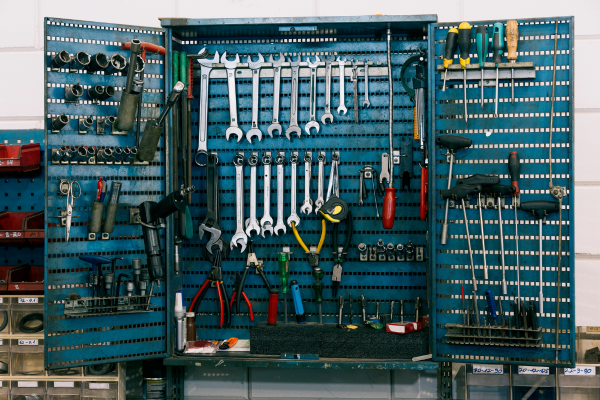
A tool cabinet is supposed to protect your tools from dust, damage, and environmental exposure. Yet in a humid garage or workshop, the cabinet itself can become part of the problem. Moisture can accumulate inside drawers, condensation can appear on metal surfaces, and tools may begin developing rust even when the cabinet looks clean.
This often leads to a frustrating routine: clean the cabinet, notice moisture again, clean it again, and eventually discover that corrosion has returned anyway.
The solution is not to clean the cabinet more frequently. It is to reduce the conditions that allow moisture to accumulate in the first place.
Keeping a tool cabinet dry is mainly an environmental-control problem. Cleaning remains important, but it should be the maintenance layer rather than the main strategy. A good system combines proper placement, moisture control, dry tools, sensible organization, ventilation where appropriate, and regular inspection.
This guide explains how to keep a tool cabinet dry while reducing the need for constant cleaning and repeated rust removal.
Why Tool Cabinets Become Damp
A metal tool cabinet can develop moisture inside even when there is no obvious leak.
Several conditions can contribute.
The surrounding garage may have elevated humidity. Temperature changes can cause condensation on cold metal surfaces. Wet tools can introduce moisture directly into drawers. Damp cleaning cloths can create a localized humid environment. A cabinet positioned against a damp wall may also experience more moisture than one placed in a better location.
The important distinction is between dirt and moisture.
Cleaning removes dirt.
It does not necessarily solve a humidity problem.
If a cabinet becomes damp again shortly after cleaning, repeated wiping is unlikely to be the long-term answer.
The source of the moisture needs to be identified.
Start With the Cabinet’s Location
One of the simplest ways to reduce moisture exposure is to reconsider where the cabinet is positioned.
Look at the surrounding area.
Is the cabinet:
- Directly on a damp floor?
- Against an exterior wall?
- Near a garage door?
- Under a water pipe?
- Near a sink or utility area?
- Close to a vehicle that regularly brings in water?
- Positioned where condensation tends to form?
You do not necessarily need to move the cabinet.
But if one side repeatedly shows dampness, corrosion, or condensation, its location may be contributing to the problem.
Keeping the cabinet away from obvious moisture sources is usually more effective than repeatedly cleaning its interior.
Keep the Cabinet Off Damp Floors
Garage floors can remain damp after rain, washing, snow, or condensation.
A large metal cabinet positioned directly on a damp surface is exposed to that environment continuously.
If practical, keep the cabinet elevated or positioned so that it does not remain in contact with standing water or persistently damp areas.
The exact solution depends on the cabinet design and building.
Do not place unstable supports underneath a heavy cabinet simply to raise it. Any structural modification should maintain stability and follow the cabinet manufacturer’s guidance.
The principle is straightforward:
reduce contact with persistent moisture sources.
Do Not Push the Cabinet Against a Damp Wall
Walls can also transfer moisture.
A garage wall that appears dry may have a different temperature and moisture profile from the rest of the room.
If the back of a cabinet is pressed tightly against that wall, air movement around the cabinet may be limited.
When the cabinet can be safely positioned with appropriate clearance from the wall, a small amount of space can make inspection and air circulation easier.
The exact spacing should depend on the building and cabinet design.
Avoid creating an unsafe gap simply for ventilation.
The goal is practical access and moisture management, not maximum distance.
Control Humidity in the Garage
If the cabinet repeatedly becomes damp, investigate the wider environment.
A basic hygrometer can help determine relative humidity and reveal patterns that are difficult to detect by feel.
Take readings at different times rather than relying on a single measurement.
For example, the garage may become significantly more humid:
- After rainfall
- When the garage door remains open
- During cooler nights
- When a wet vehicle enters
- During particular seasons
Once you know when humidity increases, it becomes easier to decide whether environmental changes are needed.
Ventilation Is Not Always the Same as Drying
It is tempting to assume that opening the garage door will always make a cabinet drier.
That is not necessarily true.
If the outside air is more humid than the air inside the garage, opening the door may introduce additional moisture.
Ventilation can be useful when the incoming air is helping remove moisture, but the effect depends on the local climate and conditions.
The goal is therefore not simply to maximize airflow.
The goal is to manage moisture.
In some situations natural ventilation may help. In others, dehumidification or better building maintenance may be more appropriate.
Consider a Dehumidifier for Persistent Problems
When humidity remains high and the source cannot be eliminated, a suitable dehumidifier can help control the environment.
This is particularly relevant for garages or workshops that remain closed for long periods.
However, a dehumidifier should not be used to compensate for an active leak or standing water.
First investigate obvious sources.
Look for:
- Roof leaks
- Wall moisture
- Floor moisture
- Plumbing leaks
- Water entering under doors
- Poor drainage
- Condensation
Environmental control works better when direct moisture sources are addressed first.
Keep Wet Tools Out of the Cabinet
One of the biggest sources of cabinet moisture is often the tools themselves.
A wrench used outdoors in the rain, a tool washed with water, or equipment exposed to condensation should not automatically be placed into a closed drawer.
Dry the tool completely first.
This is particularly important for:
- Pliers
- Wrenches
- Sockets
- Cutting tools
- Adjustable tools
- Bare-steel tools
Pay attention to joints, threads, recesses, and other areas where moisture can remain hidden.
A cabinet cannot remain dry if wet tools are repeatedly introduced into it.
Be Careful With Cleaning Cloths
Cleaning cloths can introduce more moisture than expected.
A cloth used to wipe down a wet tool may remain damp for hours.
If it is placed into the cabinet afterward, it creates a small humid environment inside the drawer.
Keep wet or recently used cloths outside the cabinet until they are completely dry.
The same principle applies to:
- Paper towels
- Sponges
- Wet gloves
- Damp rags
- Cleaning pads
Do not treat the drawer as a place to store cleaning materials simply because there is room.
Avoid Storing Liquids in Tool Drawers
Even a tightly closed container can leak.
Bottles of:
- Cleaner
- Lubricant
- Paint
- Water
- Chemical products
can become a source of contamination or moisture when stored around hand tools.
Keep liquids in appropriate storage areas according to their labels and safety requirements.
If a product does need to be stored near tools, make sure the container is suitable, secure, and unlikely to leak.
A dry cabinet starts with eliminating unnecessary moisture sources.
Do Not Overfill the Drawers
A crowded drawer is harder to maintain.
Tools stacked on top of each other can trap dust, debris, and moisture.
They also make it difficult to inspect the drawer bottom.
Avoid filling every available space simply because the cabinet has capacity.
Leave enough organization and access that you can:
- See the drawer surface
- Remove individual tools
- Inspect corrosion-prone items
- Clean occasional debris
- Detect moisture early
Good organization therefore contributes indirectly to moisture control.
Use Appropriate Drawer Liners
Drawer liners can protect tools and reduce contact with dirty surfaces.
However, liners can also hide moisture or contamination if the area underneath is never inspected.
Choose liners that are appropriate for the cabinet and maintain them properly.
During periodic maintenance, remove them where practical and inspect underneath.
Look for:
- Dampness
- Rust marks
- Oil accumulation
- Debris
- Damage
Never assume that a liner automatically makes the drawer dry.
It can improve organization, but it does not remove moisture.
Be Careful With Foam Inserts
Foam is useful for organizing tools and protecting surfaces, but it can retain moisture.
If a foam insert becomes damp, do not immediately close it inside the cabinet.
Remove it and allow it to dry completely according to the material manufacturer’s recommendations.
Inspect the surface underneath.
Moisture trapped between foam and metal can create a localized environment where corrosion develops unnoticed.
Foam should make organization easier, not create a hidden moisture reservoir.
Give Moisture a Chance to Escape
A cabinet that remains closed continuously can trap humid air.
This does not mean that the answer is to leave the drawers permanently open.
The appropriate approach depends on the environment.
During periods when the surrounding air is reasonably dry, opening the cabinet briefly during routine use may allow air exchange.
In very humid conditions, opening the cabinet can sometimes introduce more moisture.
The goal is to avoid treating airflow as a universal solution.
Measure and observe the environment when necessary.
Use Desiccants in Small Enclosed Spaces
Desiccants such as silica gel can provide supplemental moisture control inside suitable drawers and containers.
They are particularly useful when:
- The drawer is relatively small
- The tools are already dry
- The container is reasonably enclosed
- The moisture source is limited
Follow the desiccant manufacturer’s instructions regarding capacity and replacement.
Do not expect a small packet to control humidity in an entire garage.
If a packet becomes saturated quickly, that is useful information. It may indicate that too much moisture is entering the storage environment.
Use Corrosion Protection on Vulnerable Tools
Keeping the cabinet dry is only one layer of protection.
Tools with exposed steel or damaged finishes may benefit from an appropriate corrosion-inhibiting treatment.
The exact product depends on the tool and intended use.
A protective oil, wax, or dedicated corrosion inhibitor can provide additional resistance when used according to its instructions.
Avoid excessive application.
A heavily oiled tool can attract dust and create contamination that eventually becomes another maintenance issue.
The objective is balanced protection.
Separate Frequently Used and Long-Term Stored Tools
Not all tools need identical storage conditions.
Frequently used tools are regularly handled, cleaned, and inspected.
Tools used only occasionally can remain untouched for months.
Organizing them separately can make maintenance easier.
High-priority corrosion-sensitive tools can receive additional attention while everyday tools remain easily accessible.
This also means that you can use different storage methods when appropriate.
A specialized tool stored for six months may need more corrosion protection than a wrench used several times a week.
Keep Dirty Workshop Tools Separate
Tools used with:
- Grease
- Paint
- Adhesive
- Soil
- Metal dust
- Wood dust
can introduce contamination into a clean cabinet.
If possible, separate heavily contaminated tools from cleaner household equipment.
This may be as simple as using different drawers or trays.
The goal is to prevent one dirty tool from spreading contamination throughout the storage system.
This also makes cabinet cleaning easier.
Inspect the Cabinet for Condensation
Condensation is one of the most important things to watch for.
It can appear as:
- Tiny water droplets
- Damp surfaces
- Moisture around metal corners
- Water marks
- Rust spots
It can be more noticeable after significant temperature changes.
If condensation repeatedly appears inside the cabinet, investigate the environmental conditions.
The solution may involve:
- Changing the cabinet location
- Controlling humidity
- Improving building ventilation
- Using a dehumidifier
- Reducing temperature fluctuations
- Protecting sensitive tools
The specific remedy depends on the cause.
Check the Cabinet in Different Seasons
A cabinet that remains dry during one season can become problematic during another.
Seasonal changes can affect:
- Humidity
- Temperature
- Condensation
- Rain exposure
- Garage ventilation
This is why a single successful inspection does not prove that the storage system is permanently dry.
Pay particular attention during periods when your garage historically experiences more humidity.
A seasonal inspection can catch changes before they lead to widespread corrosion.
Clean Less by Preventing More
The easiest way to reduce cleaning frequency is to reduce contamination entering the cabinet.
Develop simple habits.
Before storage:
Remove heavy dirt.
Dry wet tools.
Wipe visible grease.
Remove metal shavings.
Keep damp materials outside.
Return tools to appropriate locations.
This takes less effort than repeatedly deep-cleaning an entire cabinet.
Maintenance works best when small actions prevent large cleaning jobs.
What to Do When the Cabinet Is Already Dirty
Do not simply add desiccant and hope the problem disappears.
Start by emptying the affected drawer or compartment.
Remove loose debris.
Clean oil and grease appropriately.
Inspect for rust.
Check whether the cabinet itself has corrosion or damaged coatings.
Dry the area completely.
Then identify why the moisture or contamination accumulated.
If the same drawer becomes dirty or damp again shortly afterward, the underlying cause has not been addressed.
What if the Cabinet Itself Starts Rusting?
Rust on the cabinet deserves attention.
Inspect the corrosion.
Determine whether it is:
- Superficial
- Localized
- Spreading
- Causing coating failure
- Affecting structural components
Light surface corrosion may be manageable with appropriate cleaning and treatment.
If corrosion is severe or structural integrity is affected, more comprehensive repair or replacement may be necessary.
Do not simply paint over active corrosion without preparing the surface appropriately.
A cabinet that is deteriorating can also expose tools to additional contamination.
Keep Corrosion-Prone Tools Easy to Inspect
Visibility is an underrated form of maintenance.
Do not bury corrosion-sensitive tools underneath other equipment.
Keep them organized so you can see the exposed metal.
This makes early detection much more likely.
For example, a bare-steel file hidden beneath several tools may develop corrosion unnoticed for months.
A file stored visibly in a dedicated section is easier to inspect.
The same principle applies to saw blades, precision tools, and older hand tools.
Use a Simple Maintenance Schedule
You do not need to clean the cabinet constantly.
A practical schedule might look like this:
After particularly wet work
Dry tools before storage and remove visible contamination.
During normal use
Watch for damp drawers or condensation.
Periodically
Inspect vulnerable tools and the cabinet itself.
During humid seasons
Pay closer attention to humidity and moisture patterns.
During deeper maintenance
Empty drawers, clean them, inspect liners, check rails, and verify that everything is dry.
The exact frequency should reflect the storage environment.
A Practical Dry-Cabinet Routine
When you want to keep maintenance simple, use this sequence:
1. Keep the environment reasonably dry.
Measure humidity when recurring rust suggests a problem.
2. Keep the cabinet away from obvious moisture sources.
Avoid damp floors and water intrusion.
3. Store only dry tools.
Do not introduce unnecessary moisture.
4. Remove dirty materials.
Keep wet rags, liquids, and contaminated waste elsewhere.
5. Organize the drawers.
Make inspection easy.
6. Use supplemental moisture control when useful.
Desiccants can help in small enclosed spaces.
7. Protect exposed metal appropriately.
Use corrosion protection when needed.
8. Inspect regularly.
Look for condensation and early corrosion rather than waiting for severe rust.
Common Mistakes
Cleaning the cabinet repeatedly without measuring humidity
The problem may be environmental rather than dirt.
Closing wet tools inside drawers
This introduces moisture directly into storage.
Leaving damp rags in the cabinet
A small wet cloth can increase moisture in a closed drawer.
Overloading drawers
Crowded tools trap contamination and make inspection difficult.
Assuming desiccants solve garage humidity
They are supplemental, not a replacement for environmental control.
Over-oiling every tool
Excess oil attracts dust.
Ignoring the cabinet’s own corrosion
The storage system is part of the environment.
Never inspecting beneath liners
Hidden moisture can remain undetected.
Final Thoughts
Keeping a tool cabinet dry does not require constantly cleaning it. In fact, repeated cleaning is often a sign that the storage system’s underlying conditions need attention.
Start by identifying where moisture comes from. Check the cabinet’s location, monitor humidity when necessary, watch for condensation, and keep wet tools and damp materials outside the storage system until they are completely dry.
Organization also matters. Overcrowded drawers make it harder to inspect tools and can trap contamination against metal surfaces. Appropriate liners and desiccants can provide additional protection, but neither should be treated as a substitute for controlling persistent moisture.
Protect corrosion-sensitive tools with suitable products when necessary, but avoid excessive oil and other coatings that attract dust.
Most importantly, develop a maintenance routine that prevents problems instead of reacting to them. A few seconds spent drying a tool before storage can save much more time than cleaning an entire cabinet later.
A dry tool cabinet is not necessarily one that is cleaned every week. It is one where moisture has few opportunities to accumulate, contamination is controlled, and early signs of corrosion are easy to see.
Once those conditions are established, routine maintenance becomes much simpler.
Related Guides
- Why Tools Rust in a Garage Even When They Stay Indoors
- How to Prevent Rust on Hand Tools in a Humid Garage
- How to Store Metal Tools During Long Periods of Humidity
- How to Use Silica Gel to Reduce Moisture Around Stored Tools
- How to Inspect Your Toolbox for Early Signs of Rust
FAQ
Why does my tool cabinet keep getting damp?
Possible causes include high garage humidity, condensation, wet tools, damp floors, leaks, and temperature changes. Measuring humidity and inspecting the cabinet’s surroundings can help identify the underlying cause.
Should I leave my tool cabinet drawers open to dry them?
Not necessarily. Opening drawers can help under some conditions, but if the outside air is more humid, it can introduce additional moisture. The appropriate approach depends on the environmental conditions.
Can silica gel keep a tool cabinet dry?
Silica gel can provide supplemental moisture control in suitable small enclosed spaces. It is not a substitute for controlling persistent humidity in a garage or workshop.
Should I put wet tools in a toolbox with silica gel?
It is better to dry the tools first. Silica gel should not be used as a substitute for proper drying because moisture may remain trapped inside joints, recesses, and other areas.
Can a drawer liner cause rust?
A liner does not automatically cause rust, but moisture can become trapped underneath it. Periodic inspection beneath liners is therefore useful, particularly in humid environments.
How can I reduce moisture without buying a dehumidifier?
Start by identifying moisture sources, keeping wet tools and rags out of the cabinet, avoiding damp storage locations, improving appropriate ventilation when conditions permit, and keeping the cabinet clean and dry.
Should I oil every tool inside the cabinet?
No. Some exposed metal surfaces may benefit from corrosion protection, but excessive oil can attract dust. Use an appropriate product only where needed.
Why does rust appear only in one drawer?
A localized problem may be caused by condensation, a damp liner, a particular tool that is being stored wet, or a difference in how that drawer is exposed to the surrounding environment. Inspect that drawer separately.
How often should I inspect a tool cabinet for moisture?
There is no universal schedule. A cabinet in a humid garage should be checked more frequently than one in a stable indoor environment. Periodic inspection becomes particularly important during prolonged humid weather.