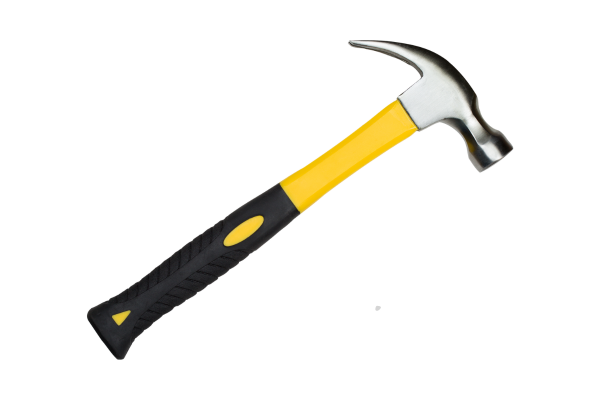
A tool handle may look like one of the simplest parts of a hand tool, but it plays an important role in both performance and safety. The handle allows the user to control the tool, transfer force, absorb part of the vibration generated during use, and maintain a secure grip. When a handle begins to crack, split, loosen, or deform, the entire tool can become less reliable.
Wooden handles can develop cracks from repeated impacts, moisture changes, drying, poor storage, or excessive force. Plastic and composite handles can also deteriorate because of impacts, chemicals, heat, ultraviolet exposure, or age. Even a handle that appears intact can become loose at the connection point with the metal portion of the tool.
Preventing these problems does not require complicated maintenance. The most effective approach is to use the tool correctly, inspect it regularly, keep it clean and dry, store it appropriately, and address small signs of deterioration before they become major failures.
Why Tool Handles Crack and Split
Tool handles are exposed to repeated mechanical stress. Every time a hammer strikes a surface, a chisel is driven into material, or a screwdriver is subjected to torque, forces are transferred through the handle.
Over time, repeated stress can contribute to wear. The exact rate depends on the material, construction, frequency of use, working environment, and how much force the tool experiences.
Wooden handles are particularly affected by changes in moisture. Wood naturally absorbs and releases moisture depending on the surrounding environment. Repeated cycles of expansion and contraction can contribute to cracks or splits, especially when the handle is already dry, damaged, or poorly finished.
Impact damage is another common cause. Dropping a tool, striking the handle against hard surfaces, or using excessive force can create small defects that gradually become larger.
Plastic and composite handles can develop cracks after repeated impacts or exposure to conditions outside their intended operating range. Some chemicals can also degrade certain materials.
Understanding these causes makes prevention easier because the goal is not simply to repair a damaged handle but to reduce the conditions that cause the damage in the first place.
Inspect Handles Before Heavy Use
A quick inspection should be performed before using a hand tool for demanding work.
Look closely at the entire handle, including the area where it connects to the working portion of the tool. Check for cracks, splits, deep dents, deformation, discoloration, or loose sections.
Run your eyes along the handle rather than checking only the center. Damage often develops near connection points, corners, or areas that experience repeated impact.
For wooden handles, pay particular attention to long cracks running along the grain. A small surface mark is not necessarily a structural problem, but a crack that extends significantly through the handle deserves immediate attention.
For plastic or composite handles, look for cracks around openings, transitions, and connection points.
If the handle moves independently when the working portion of the tool should remain fixed, stop using the tool until the cause has been identified.
Check Whether the Handle Is Loose
A loose handle is one of the most important warning signs to recognize early.
On many tools, the handle is connected to a metal head, shaft, tang, or other working component. Repeated use can gradually affect that connection.
For a hammer or similar striking tool, the head should remain securely attached to the handle. Any unexpected movement between the two components should be investigated before further use.
For tools with handles molded or fitted around a shaft, check whether the handle rotates, shifts, or separates from the shaft.
Do not assume that tightening or forcing the component back into place automatically solves the problem. The underlying connection may be worn, damaged, or improperly fitted.
If the manufacturer provides a specific replacement or maintenance procedure, follow it rather than improvising a repair.
Keep Wooden Handles Dry
Moisture management is one of the most important aspects of maintaining wooden handles.
Wood is naturally responsive to humidity. Storing a wooden-handled tool in a constantly damp environment can increase the risk of swelling, mold, surface deterioration, and other problems. Repeated movement between very humid and very dry environments can also create stress within the wood.
After using a tool in wet conditions, dry the handle before storage.
Do not leave wooden-handled tools lying directly on a wet garage floor, outdoor ground, or other damp surface.
At the same time, avoid exposing wooden handles to extreme heat for prolonged periods. Very rapid drying can cause wood to lose moisture too quickly and may contribute to cracking.
A stable storage environment is generally preferable to repeated cycles of extreme humidity and dryness.
Protect Wooden Handles From Excessive Dryness
Moisture is not the only environmental concern. Extremely dry conditions can also affect wood.
A wooden handle that becomes excessively dry may shrink or develop surface cracks. Changes can be particularly noticeable around the grain and connection points.
The goal is not to keep wood artificially wet. Instead, store tools in a reasonably stable environment and avoid unnecessary exposure to extreme heat or direct sources of heat.
Do not place wooden-handled tools directly beside heaters, furnaces, or other intense heat sources.
If a wooden handle requires a protective finish, use a product appropriate for the specific type of wood and tool. The purpose should be to protect the material without creating a surface that becomes excessively slippery during use.
Avoid Using Handles as Striking Surfaces
One of the easiest ways to damage a handle is to strike it with another object when it was not designed for that purpose.
A screwdriver handle, pliers handle, wrench handle, or other hand-tool handle should not automatically be treated as a striking surface.
Even if the handle appears strong, repeated impacts can create internal damage, cracks, or deformation.
Only use a tool for striking when it is specifically designed for that application.
Likewise, do not use a handle as a substitute for a pry bar or lever. The forces involved in prying can be very different from those the handle was designed to withstand.
Correct use is therefore one of the most effective forms of handle maintenance.
Do Not Use Excessive Force
Applying excessive force can shorten the life of both the handle and the working portion of a tool.
When a fastener is difficult to turn, for example, repeatedly applying greater force to a standard wrench may place unnecessary stress on the handle and the rest of the tool.
Instead, determine why the fastener is difficult to move and select an appropriate tool for the situation.
For striking tools, use controlled impacts rather than unnecessarily powerful blows.
For chisels and similar tools, match the force to the material and tool design.
Excessive force is often a symptom of using the wrong tool, incorrect technique, or a tool that has already become damaged or dull.
Inspect Handles After Accidental Drops
Dropping a tool does not automatically mean that it is damaged, but it is a good reason to perform an inspection.
Check the handle for new cracks, dents, deformation, or separation from the working component.
If the tool landed on a hard surface, examine the impact area carefully.
For wooden handles, inspect both the surface and connection points. A crack can begin at an impact location and expand during subsequent use.
For plastic or composite handles, look for white stress marks, fractures, or changes in shape.
Do not immediately return a dropped tool to heavy use simply because it still works during a quick test.
A more careful inspection is especially important if the tool will be subjected to significant force.
Keep Handles Clean
Dirt, grease, oil, chemicals, and other contaminants can affect the surface of a handle.
A dirty handle may become slippery, reducing control during use. Some chemicals may also affect plastics, rubber, coatings, or finishes.
Clean handles using a method appropriate for their material.
Avoid soaking wooden handles unnecessarily. Excessive water exposure can affect the wood and the connection between components.
For plastic or composite handles, avoid solvents unless they are known to be compatible with the material.
After cleaning, dry the tool before storage.
A clean handle is easier to inspect and generally easier to grip safely.
Protect Handles From Chemical Damage
Workshops can contain solvents, fuels, adhesives, paints, degreasers, and other chemicals. Not every handle material reacts the same way to these substances.
Avoid leaving hand tools submerged in chemical products unless the manufacturer specifically indicates that the material is compatible.
If a chemical spills onto a handle, clean it promptly using an appropriate method.
Pay attention to changes in texture, swelling, cracking, discoloration, or softening. These can indicate that the material has been affected.
If a handle has suffered significant chemical damage, do not assume that cleaning will restore its original strength.
The safest approach is to follow the manufacturer’s guidance or replace the affected component when appropriate.
Store Tools So Handles Do Not Get Damaged
Storage can prevent many forms of accidental handle damage.
Do not throw heavy tools into a container where they repeatedly strike one another. Repeated impact can damage wooden, plastic, and composite handles.
Use drawers, racks, pegboards, toolboxes, or other systems that keep tools organized and reduce unnecessary contact.
Long-handled tools should be stored in a position where they cannot easily fall or become trapped beneath heavier objects.
Avoid placing heavy equipment on top of handles.
Good storage also makes inspection easier because damage is visible rather than hidden inside a crowded toolbox.
Prevent Damage From Temperature Extremes
Extreme temperatures can affect some handle materials.
Plastic and composite materials can become more brittle under certain conditions, while heat can soften or degrade some materials.
Wood can also respond to temperature changes through changes in moisture content.
Avoid storing hand tools in locations exposed to unnecessary extreme temperatures for long periods.
A garage or workshop does not have to be climate-controlled to store hand tools properly, but reducing extreme exposure can help extend their useful life.
Pay Attention to the Connection Point
The area where the handle meets the working component deserves special attention.
This location often experiences concentrated stress because forces from the working portion are transferred through the handle.
Check for gaps, movement, cracks, deformation, or signs that the components are separating.
On striking tools, inspect the connection after repeated heavy use.
On screwdrivers and similar tools, inspect where the shaft enters the handle.
On pliers and other tools with molded grips, look for separation or movement around the joint.
A problem at the connection point can become more serious quickly, so it should not be ignored.
Replace Damaged Handles Correctly
Some tools are designed with replaceable handles. When replacement is possible, use a component designed for the specific tool.
A replacement handle should match the tool’s dimensions and intended application.
Avoid improvising with unsuitable materials or modifying the tool in ways that change how forces are transferred.
For wooden handles, proper fitting is particularly important. A handle that is too loose or incorrectly installed can become unstable under load.
If you are uncertain about the correct replacement procedure, consult the manufacturer’s instructions or have the tool serviced by someone with appropriate experience.
The objective is to restore the original function rather than simply making the tool appear usable again.
When a Handle Should Be Replaced Immediately
Some signs indicate that continued use is not appropriate.
A significant crack through a load-bearing handle is one example. Severe splitting, major deformation, loose connections, or substantial chemical damage are other reasons to remove a tool from service.
Do not rely on tape, glue, or other temporary coverings as structural repairs for a seriously damaged handle.
A damaged handle can fail unexpectedly when force is applied.
The correct response is to determine whether the tool has a proper replacement component or whether the entire tool should be replaced.
A hand tool is generally inexpensive compared with the consequences of an unexpected failure during heavy work.
Maintenance for Wooden Handles
Wooden handles benefit from a consistent maintenance routine.
Keep them clean and dry. Inspect them regularly for cracks, splinters, loose areas, and changes in shape.
Light surface roughness can sometimes be addressed appropriately, but aggressive sanding can remove too much material and alter the shape of the handle.
If a protective finish is appropriate, choose one compatible with the wood and intended use.
Do not create an excessively smooth or oily surface if doing so reduces grip.
The objective is to maintain the handle’s structural condition while preserving comfortable and controlled handling.
Maintenance for Plastic and Composite Handles
Plastic and composite handles require different considerations.
Inspect them for cracks, deformation, brittleness, and chemical damage.
Avoid prolonged exposure to substances that may degrade the material.
Keep them clean and dry, and store them away from unnecessary heat or direct sunlight when the manufacturer recommends doing so.
A composite handle may look intact while having damage from a significant impact. If the tool has experienced an unusually hard drop or accident, inspect it carefully before returning it to heavy use.
When replacement grips are available, use compatible components rather than attempting to reshape or modify the original handle.
A Simple Handle Maintenance Routine
A practical routine can be completed in a few minutes.
After using a hand tool, wipe the handle clean and remove visible contamination.
Inspect the handle for new cracks, dents, loose sections, or deformation.
Check the connection between the handle and working component.
If the handle is wooden, make sure it is dry before storage.
If the tool has moving or striking components, inspect those areas at the same time.
Store the tool where it will not be repeatedly struck by other equipment.
Before heavy work, perform another quick inspection and confirm that the tool is appropriate for the task.
This routine is simple enough to become part of normal workshop habits.
Common Mistakes That Shorten Handle Life
Several habits can significantly reduce the useful life of a hand-tool handle.
Using a handle as a hammer is one of the most obvious examples. Applying excessive force to a tool that is not designed for it is another.
Storing wooden handles in damp environments can accelerate deterioration, while storing them next to strong heat sources can contribute to excessive drying.
Leaving oil or chemicals on handles can affect grip and, depending on the material, may cause deterioration.
Ignoring small cracks is also a common mistake. A small defect can grow when the tool is repeatedly placed under load.
Finally, attempting improvised structural repairs can create a false sense of security. A handle that looks repaired is not necessarily a handle that can safely withstand the original forces.
How Proper Use Prevents Handle Damage
Maintenance begins before the tool is ever put away.
Select the correct tool for the task. Use appropriate force. Keep the working surface in good condition so that excessive force is not required.
For striking tools, use controlled impacts. For wrenches and similar tools, avoid improvised extensions unless the tool is specifically designed for that application.
Keep your grip secure and avoid using damaged tools simply because they are convenient.
Good technique reduces the mechanical stress experienced by the handle and can therefore extend the life of the entire tool.
Long-Term Storage Considerations
When hand tools will not be used for an extended period, prepare the handles before storage.
Clean them thoroughly and make sure they are dry.
Inspect wooden handles for cracks and loose connections. Inspect plastic and composite handles for signs of deterioration.
Choose a storage location with relatively stable environmental conditions and reduced exposure to moisture and extreme temperatures.
Do not pile heavy equipment on top of hand tools.
If the storage environment is humid, address the humidity itself where practical rather than relying entirely on surface treatments.
Long-term storage should preserve the condition of the tool rather than simply keeping it out of sight.
Building a Preventive Maintenance Habit
The most effective way to protect tool handles is to make inspection part of normal tool use.
When a tool is picked up, look at it. When a project ends, clean it. When something feels different, investigate it.
This approach makes maintenance much easier because problems are identified while they are still small.
A handle that is cleaned regularly and stored properly is easier to inspect than one covered in dirt and hidden among dozens of other tools.
Over time, these simple habits reduce unnecessary wear and help prevent unexpected failures.
Final Thoughts
Tool handles are often overlooked because they appear less complicated than the working parts of a hand tool. However, they are essential to control, force transfer, and safe operation.
Preventing cracks, splitting, and looseness starts with proper use. Avoid excessive force, striking handles that are not designed for impact, and using tools for purposes they were not intended to perform.
Regular inspection is equally important. Look for cracks, movement, deformation, chemical damage, and deterioration around connection points. Keep wooden handles dry and protected from extreme environmental conditions, and keep plastic and composite handles away from substances or temperatures that may damage them.
Storage also matters. Organized storage reduces accidental impacts, moisture exposure, and unnecessary stress.
When damage does occur, deal with it promptly. Minor maintenance can often preserve a tool, while serious structural damage should lead to replacement or an appropriate manufacturer-approved repair.
A good hand tool should feel solid, predictable, and appropriate for the work being performed. Maintaining its handle is therefore not just about appearance. It is about preserving the tool’s ability to transfer force in a controlled manner and remain dependable throughout its useful life. With regular inspection, correct use, proper cleaning, and suitable storage, many hand-tool handles can remain in good condition for years.