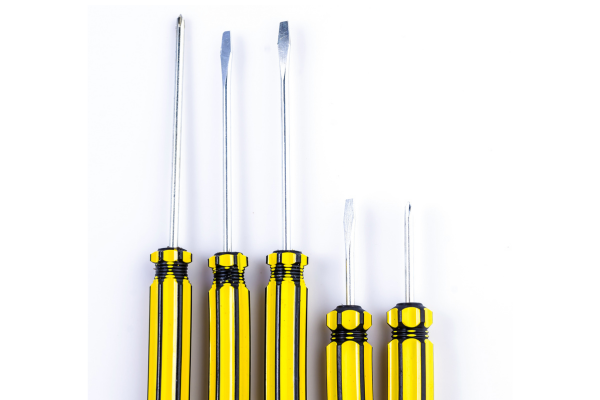
A screwdriver is one of the simplest tools in a household toolbox, but simplicity does not mean it requires no maintenance. A good screwdriver can remain useful for many years when its tip, shaft, handle, and storage conditions are properly cared for.
The opposite is also true. Using the wrong screwdriver for a fastener, exposing the shaft to moisture, leaving grease on the handle, storing tools in a damp toolbox, or using the screwdriver as a pry bar can shorten its useful life considerably.
Most screwdriver problems do not happen suddenly. Wear usually develops gradually. A tip begins to round, the shaft develops corrosion, the handle becomes damaged, or contamination accumulates around the connection between the handle and shaft. Regular inspection makes these changes easier to identify before they become a reason to discard the tool.
Good screwdriver maintenance is therefore less about complicated repairs and more about a few consistent habits: use the correct tool for the job, keep it clean and dry, protect it from corrosion, inspect it regularly, and replace it when its working condition is no longer reliable.
This guide explains how to maintain screwdrivers throughout their useful life while avoiding common habits that can cause unnecessary damage.
Why Screwdriver Maintenance Matters
A screwdriver transfers force from your hand to a fastener.
That means the condition of the working tip matters significantly.
A damaged tip may no longer fit the screw correctly. Poor engagement can cause slipping, which can damage both the tool and the fastener.
The handle matters as well. A cracked or slippery grip can reduce control.
The shaft also needs attention. Corrosion can affect the surface, while bending or structural damage can make the tool unsuitable for normal use.
Maintenance therefore protects more than the appearance of the screwdriver.
It helps preserve:
- Tip geometry
- Grip and control
- Corrosion resistance
- Mechanical integrity
- Ease of use
- Storage condition
A few minutes of maintenance can be enough to prevent relatively small problems from becoming permanent.
Know What Type of Screwdriver You Have
Before deciding how to maintain a screwdriver, identify its basic design.
Common types include:
- Phillips
- Slotted
- Pozidriv
- Torx
- Hex
- Specialty drivers
Different tip designs are intended for different fasteners.
Using an almost-compatible screwdriver because it seems to fit can accelerate wear.
For example, forcing a Phillips screwdriver into a fastener designed for another drive profile may damage the tool’s tip or the screw head.
Proper maintenance therefore begins before the screwdriver is even used.
Using the correct driver reduces unnecessary stress on the working end.
Choose the Correct Size
Size matters just as much as drive type.
A screwdriver tip should fit the fastener properly.
If it is too small, excessive force may concentrate on a relatively small area.
If it is too large, it may not seat correctly.
Neither situation is ideal.
A well-fitting screwdriver transfers force more effectively and reduces the temptation to compensate by twisting harder.
When a screwdriver repeatedly slips from a fastener, stop and reassess the size, drive type, and condition of both components.
Do not assume that more force is the solution.
Do Not Use a Screwdriver as a Pry Bar
One of the fastest ways to damage a screwdriver is to use it for a job it was not designed to perform.
Examples include:
- Prying open covers
- Chiseling
- Scraping hardened material
- Levering heavy components
- Hammering on a standard screwdriver
- Opening containers
Some specialty tools are specifically designed for impact or prying applications, but an ordinary screwdriver should not automatically be treated as one.
Using the wrong tool can bend the shaft, damage the handle, deform the tip, or create a safety hazard.
Tool longevity begins with using the tool for its intended purpose.
Clean Screwdrivers After Heavy Use
Routine dirt is easy to manage.
After a particularly dirty job, wipe the screwdriver before returning it to storage.
Remove:
- Grease
- Oil
- Dust
- Paint
- Adhesive
- Soil
- Metal particles
A clean screwdriver is easier to inspect.
It is also less likely to transfer contamination to your toolbox or other tools.
For general cleaning, a mild detergent solution may be appropriate for many handles and metal surfaces, provided the materials are compatible.
Avoid unnecessary soaking.
The connection between the handle and shaft can contain areas that are difficult to dry.
Keep the Tip Clean
The tip is the part of the screwdriver that directly contacts the fastener, so contamination can affect performance.
Paint, adhesive, hardened grease, and other residues can prevent the tip from seating properly.
Clean the tip carefully.
Use a cloth or suitable soft brush for ordinary contamination.
For stubborn residue, select a method compatible with the tool’s material and finish.
Avoid grinding or aggressively sanding the tip simply to make it look clean.
The geometry of the working end is more important than cosmetic appearance.
Inspect the Tip for Wear
Regularly inspect the tip under good lighting.
For Phillips screwdrivers, look for rounded or damaged edges.
For slotted drivers, inspect the blade edges for distortion, chipping, or excessive wear.
For Torx, Pozidriv, and other shaped tips, look for changes in the original geometry.
A worn tip may show:
- Rounded corners
- Chipped edges
- Asymmetry
- Deformation
- Visible material loss
- Reduced engagement with the correct fastener
Cleaning cannot restore missing material.
When wear becomes significant, replacement is generally preferable to attempting to reshape the tip without appropriate equipment and knowledge.
Stop Using a Screwdriver That Slips Repeatedly
Repeated slipping deserves attention.
It can be caused by:
- Wrong screwdriver size
- Incorrect drive type
- Damaged fastener
- Worn screwdriver tip
- Misalignment
- Excessive force
Do not automatically blame the screwdriver.
Check both the tool and the fastener.
If the screwdriver is correct and the tip is in good condition, but slipping continues because the fastener is damaged, replacing the screwdriver may not solve the problem.
Diagnosing the cause prevents unnecessary tool replacement.
Protect the Shaft From Rust
The shaft is often exposed metal, although many screwdrivers have protective finishes.
Moisture and contaminated storage can contribute to corrosion.
To reduce the risk:
Keep the shaft clean.
Dry it after wet cleaning.
Avoid storing the tool while damp.
Inspect scratches and damaged finishes.
Use appropriate corrosion protection when necessary.
The amount of protection required depends on the tool’s material, finish, and storage environment.
A chrome-plated shaft stored in a dry indoor cabinet may need little additional treatment.
A bare-steel shaft in a humid garage may require more attention.
How to Clean Surface Rust
If early surface rust appears, address it before it becomes extensive.
Begin by cleaning away dirt and grease.
Assess the rust.
Light surface corrosion may be manageable with a suitable rust-removal method.
Avoid using increasingly aggressive abrasives simply because the rust is visually unpleasant.
The goal is to remove corrosion while preserving the original shaft and working tip.
If corrosion has caused deep pitting or significant material loss, the tool may need replacement rather than cosmetic restoration.
Protect the Handle
The handle is an important part of the screwdriver because it allows you to control and apply force.
Check for:
- Cracks
- Splits
- Loose material
- Chemical damage
- Excessive wear
- Unusual stickiness
- Deformation
Clean the handle with a method appropriate for the material.
Mild soap and water are often a reasonable starting point for many plastic handles, but compatibility still matters.
Avoid harsh solvents unless the manufacturer confirms that they are appropriate.
A handle that looks slightly dirty is usually less concerning than one that has become structurally compromised.
Keep the Handle Dry and Clean
Oil and grease can make a screwdriver handle slippery.
That matters because control is part of safe tool use.
If the handle becomes contaminated with grease, clean it appropriately.
Do not rely on the roughness of the original grip to compensate for a thick oily coating.
After cleaning, dry the handle thoroughly.
A clean grip is easier to hold consistently and easier to inspect for cracks or deterioration.
Check the Shaft-to-Handle Connection
This area is often overlooked.
Hold the screwdriver normally and inspect the point where the shaft enters the handle.
Look for:
- Movement
- Cracks
- Gaps
- Separation
- Corrosion
- Unusual looseness
The connection should remain secure.
If the shaft appears loose inside the handle, cleaning will not solve the problem.
A compromised connection can reduce control and may indicate that the screwdriver should be removed from service.
Avoid Excessive Heat
Some people use heat to soften adhesives or loosen components, but unnecessary heat can affect tool materials and finishes.
A screwdriver should not automatically be exposed to high temperatures simply because it is made primarily from steel.
The handle may contain plastic or other materials that have different temperature limits.
If a manufacturer provides restrictions regarding heat exposure, follow them.
Do not use a screwdriver as an improvised heating tool.
Do Not Hammer a Standard Screwdriver
This deserves separate attention because it is such a common habit.
Some screwdrivers are specifically designed for impact and have features that support this use.
A standard screwdriver may not be.
Striking an ordinary screwdriver with a hammer can damage the handle, shaft, tip, or internal connection.
It can also create flying fragments if the tool is damaged.
When impact is required, use a tool specifically designed for that purpose.
Store Screwdrivers Properly
Good storage reduces unnecessary wear.
Avoid throwing screwdrivers into a drawer where their tips repeatedly contact hard metal edges.
This can damage working ends and make the tools more difficult to locate.
Useful storage options include:
- Dedicated screwdriver racks
- Drawer organizers
- Tool trays
- Cases
- Pegboards
- Vertical holders
The specific system is less important than the result.
The screwdriver should be easy to retrieve, protected from unnecessary impact, and stored in a clean, dry environment.
Keep Different Tools Separated
A toolbox often contains many tools with hard metal surfaces.
When they are piled together, screwdrivers can repeatedly strike against:
- Wrench jaws
- Socket edges
- Drill accessories
- Cutting tools
- Other screwdriver tips
This can create unnecessary cosmetic and working-surface damage.
Separating tools with organizers or dedicated compartments can reduce these impacts.
It also improves visibility, making inspections easier.
Protect Screwdriver Tips During Storage
The working end deserves particular protection.
Do not store screwdrivers in a way that forces their tips against the bottom of a metal drawer.
Avoid throwing heavy tools on top of them.
For specialty or precision drivers, consider storage that keeps the tips separated.
There is no need to wrap every ordinary screwdriver individually, but sensitive tools benefit from controlled storage.
Do Screwdrivers Need Lubrication?
Most fixed-shaft screwdrivers do not need routine lubrication.
The shaft itself is not normally a moving mechanism.
Applying oil to the entire tool can create unnecessary residue and attract dust.
Some screwdrivers have ratcheting or other specialized mechanisms.
Those should be maintained according to the manufacturer’s instructions.
The key principle is simple:
Do not lubricate a component merely because it is made of metal.
Lubrication should have a specific purpose.
Protect the Metal Without Over-Oiling
If the screwdriver has exposed corrosion-sensitive metal and the storage environment justifies additional protection, a suitable corrosion inhibitor may be appropriate.
Apply it sparingly.
A heavy oily coating can:
- Attract dust
- Make handling slippery
- Contaminate storage surfaces
- Make the tool harder to clean
A thin, appropriate protective film is usually easier to maintain than a visibly greasy screwdriver.
The exact product should be compatible with the tool’s material and finish.
Be Careful With Painted or Coated Screwdrivers
Some screwdriver shafts and handles have coatings or markings.
These may be affected by solvents and abrasives.
Do not use aggressive cleaners simply because the tool is dirty.
Test unfamiliar products on a small area when appropriate.
The goal is to preserve the original coating while removing unwanted contamination.
Do Not Grind the Tip to “Renew” It
A worn tip may tempt you to reshape it.
For some specialized tools, professional sharpening or refurbishment may be possible.
However, casual grinding can alter the geometry of the working end.
This is especially risky for shaped tips such as Phillips and Torx.
Removing material changes the dimensions and can reduce engagement with the fastener.
If a screwdriver tip is significantly worn, replacement is often the simplest and safest solution.
Maintain Magnetic Screwdrivers Correctly
Some screwdrivers have magnetic tips.
Keep the tip clean so that debris does not interfere with the magnetic contact and fastener engagement.
Metal particles can accumulate around a magnetic tip.
Remove them periodically using an appropriate method.
Do not assume that stronger magnetism compensates for a dirty or damaged tip.
The screwdriver still needs to fit the fastener correctly.
Avoid Using Screwdrivers With Damaged Fasteners
Tool maintenance also involves using the right working conditions.
If a screw head is heavily damaged, even a perfect screwdriver may slip.
Continuing to apply high force can damage the screwdriver tip and make the fastener problem worse.
When a fastener is compromised, change the approach rather than repeatedly forcing the same tool.
This protects the screwdriver and improves the chance of resolving the actual problem.
Inspect Screwdrivers Before High-Force Work
Before using a screwdriver on a stubborn fastener, take a moment to inspect it.
Look at the tip.
Check the shaft.
Inspect the handle.
Make sure the tool is the correct size.
This is particularly useful when a fastener is expected to require significant force.
A damaged screwdriver should not be the tool you choose for a demanding job.
How Environment Affects Screwdriver Life
Storage conditions have a major influence on longevity.
A dry indoor environment can keep screwdrivers in good condition for years.
A humid garage can accelerate corrosion.
A toolbox exposed to condensation can create moisture problems.
A dusty workshop can increase contamination.
A toolbox filled with loose metal accessories can create repeated physical impacts.
Maintenance should therefore consider the environment as well as the tool.
Create a Simple Maintenance Schedule
You do not need to perform a full screwdriver inspection every week.
A practical routine could be:
After heavy use
Wipe away dirt and grease.
After wet exposure
Dry the screwdriver completely.
During routine toolbox organization
Check tips and handles.
When the screwdriver starts slipping
Inspect the tool and the fastener.
During deeper maintenance
Look for corrosion, shaft damage, and connection problems.
This is enough for most household screwdrivers.
When Should You Replace a Screwdriver?
Replacement is generally appropriate when the tool has significant damage or no longer performs reliably.
Consider replacing it when you find:
- Severely worn tip
- Chipped working end
- Bent shaft
- Cracked handle
- Loose shaft-to-handle connection
- Deep corrosion
- Significant material loss
- Structural damage
Cosmetic scratches alone usually do not mean that a screwdriver must be discarded.
The decision should be based on function and structural condition.
What About Cheap Screwdrivers?
Low-cost screwdrivers still deserve proper maintenance, but replacement may sometimes be more economical than extensive restoration.
For example, a basic screwdriver with a severely worn tip may not justify hours of attempted reshaping.
The same decision may be different for a high-quality specialty screwdriver.
Consider:
- Tool condition
- Replacement cost
- Availability
- Intended use
- Safety
- Importance of the tool
The goal is practical maintenance, not keeping every tool forever.
A Simple Long-Life Screwdriver Routine
For most home toolboxes, these habits provide strong basic care:
Use the correct screwdriver for the fastener.
Keep the tip clean.
Do not use the screwdriver as a pry bar or chisel.
Keep the handle free from excessive oil and grease.
Dry the shaft after wet cleaning.
Protect corrosion-sensitive metal when necessary.
Store screwdrivers so the tips are not constantly damaged.
Inspect worn tips and damaged handles.
Replace tools that are structurally compromised.
The routine is simple because screwdriver maintenance does not need to be complicated.
Final Thoughts
A screwdriver can last for many years when its working surfaces, handle, shaft, and storage conditions receive basic attention.
The most important habit is proper use. Even excellent maintenance cannot compensate for repeatedly using a standard screwdriver as a pry bar, chisel, scraper, or impact tool.
Clean contamination when it appears, keep the tool dry, inspect the tip regularly, and protect exposed metal when the storage environment calls for it.
Do not over-lubricate a fixed screwdriver shaft, and do not aggressively grind a worn tip in an attempt to make it look new. Once the working geometry or structural condition has deteriorated beyond practical maintenance, replacement is often the better decision.
Storage also matters. Keeping screwdrivers separated and protecting their tips from unnecessary impacts reduces wear that otherwise happens simply because tools are thrown together in a drawer.
The best screwdriver-maintenance routine is therefore straightforward: use the right tool, keep it clean and dry, inspect it regularly, store it properly, and replace it when its condition can no longer support reliable use.
Those habits cost very little time and can extend the useful life of an ordinary screwdriver significantly.
Related Guides
- How to Clean Hand Tools After Heavy Use Without Damaging the Finish
- How to Clean Greasy Wrenches, Pliers, and Sockets at Home
- How to Tell Whether a Dirty Tool Needs Cleaning, Lubrication, or Replacement
- How to Store Screwdrivers, Pliers, and Wrenches So They Stay Easy to Find
- How to Protect Tools From Rust Without Making Them Oily
FAQ
How often should I clean my screwdrivers?
Clean them whenever dirt, grease, paint, or other contamination becomes noticeable, and always dry them thoroughly after wet cleaning. Periodic inspection is more important than following a rigid calendar.
Should I oil a screwdriver shaft?
Most ordinary fixed-shaft screwdrivers do not need routine lubrication. Excess oil can attract dust and make the tool slippery. Corrosion protection may be appropriate for exposed metal in humid storage environments, but it should be used sparingly and appropriately.
Why does my screwdriver keep slipping?
Possible causes include an incorrect screwdriver size, the wrong drive type, a worn screwdriver tip, a damaged screw head, poor alignment, or excessive force. Inspect both the tool and the fastener.
Can I sharpen a worn screwdriver tip?
Casual grinding can change the geometry of the tip and make it less effective. For many ordinary screwdrivers, replacement is more practical when the working end is significantly worn.
Can I use a screwdriver as a pry bar?
A standard screwdriver should not be used as a pry bar unless it is specifically designed and rated for that purpose. Prying can bend the shaft, damage the handle, or compromise the tool.
How do I prevent screwdriver tips from getting damaged in a toolbox?
Store screwdrivers in a rack, organizer, tray, or dedicated compartment where the working ends are protected from repeated contact with other metal tools.
Can rust on a screwdriver be removed?
Light surface rust may be treatable using an appropriate corrosion-removal method compatible with the tool’s material and finish. Deep pitting or significant material loss may justify replacement.
What should I do if the screwdriver handle is cracked?
A cracked handle can affect control and may indicate that the tool should be removed from service. Cleaning or lubrication does not restore structural integrity.
Do magnetic screwdrivers require special maintenance?
They mainly need to be kept clean and stored appropriately. Metal particles can collect around the magnetic tip, so inspect and clean the tip periodically.
How can I make my screwdrivers last longer?
Use the correct size and drive type, avoid misuse, keep the tools clean and dry, protect exposed metal from corrosion, store the tips safely, and replace tools when significant wear or structural damage makes them unreliable.