
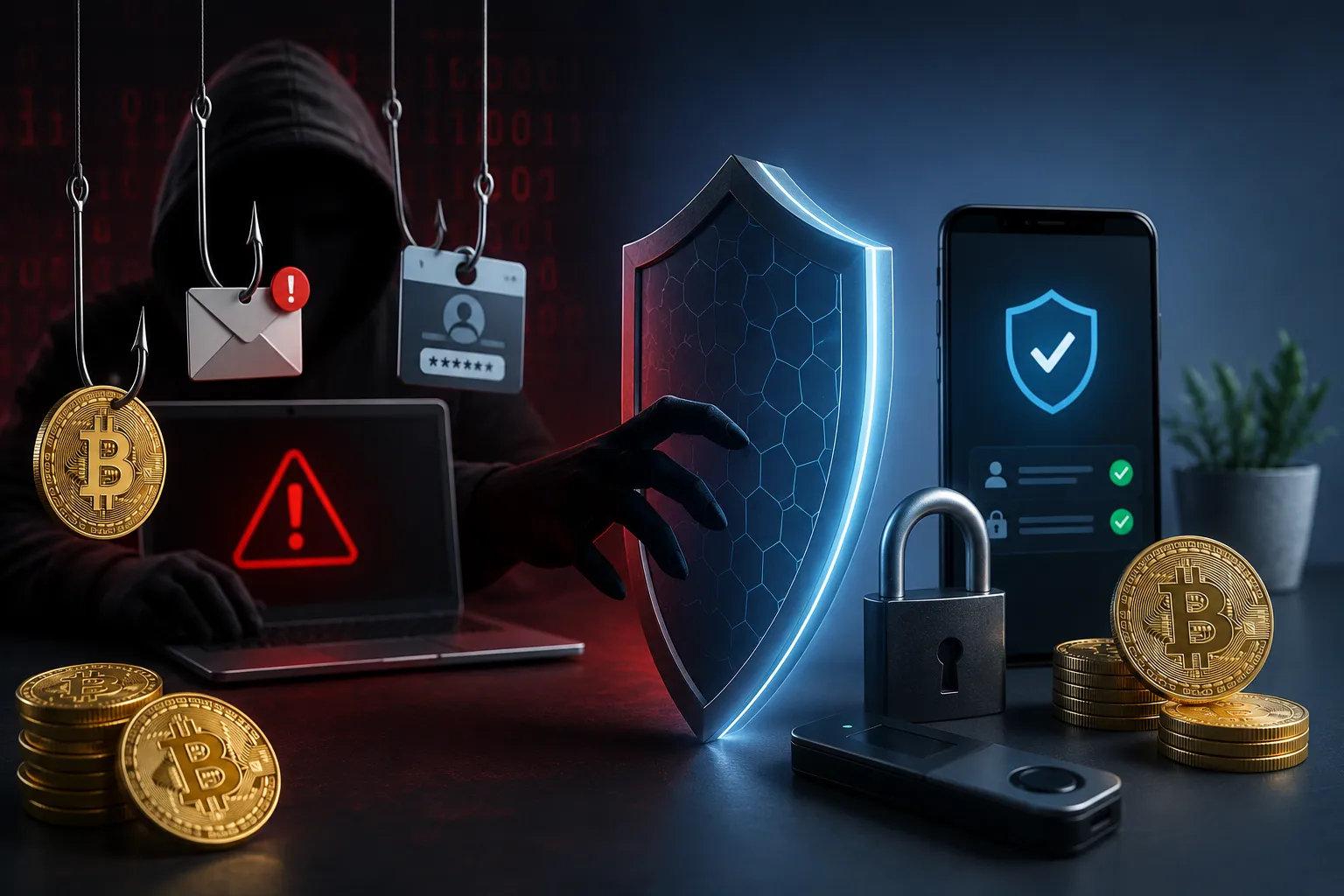
Americans lost $9.3 billion to cryptocurrency scams in 2024, according to the FBI’s Internet Crime Complaint Center. That figure does not include the broader category of investment fraud tied to crypto — when that is added, the total exceeds $10 billion for the year. In 2025, cryptocurrency scams received at least $14 billion on-chain globally, according to blockchain analytics firm Chainalysis, a significant increase from 2024. The average payment made to scam operations increased from $782 in 2024 to $2,764 in 2025 — a 253% jump that reflects increasingly sophisticated targeting of larger individual accounts rather than mass low-value fraud.
These numbers matter beyond their scale because of a specific feature of cryptocurrency that makes it uniquely attractive to fraudsters: once funds are transferred, they are effectively unrecoverable. Unlike a credit card charge that can be disputed or a bank wire that can sometimes be reversed if reported quickly, a cryptocurrency transfer is final. There is no central authority to contact, no chargeback mechanism, no equivalent of calling your bank. This is why scammers consistently prefer cryptocurrency as a payment method and why understanding how these scams operate is genuinely important even for people who do not actively invest in digital assets.
Why Cryptocurrency Is Uniquely Attractive to Scammers
Understanding the appeal of cryptocurrency to fraudsters explains both the scale of the problem and why the usual financial safeguards do not apply.
Irreversibility is the primary factor. Standard financial transactions have varying degrees of reversibility: credit card purchases can be disputed under consumer protection laws, wire transfers can sometimes be recalled in the first hours, ACH transfers can be reversed within certain windows. Cryptocurrency transactions are confirmed on the blockchain within minutes and cannot be undone by any third party. Once sent to a scammer’s address, the funds are gone.
Pseudonymity complicates recovery. While cryptocurrency transactions are publicly visible on the blockchain, the addresses involved are not automatically linked to real identities. Law enforcement has developed increasingly sophisticated blockchain tracing capabilities — in October 2025, the Department of Justice seized over $15 billion in a single operation against a pig butchering scam network — but individual victims have essentially no practical recourse without law enforcement involvement, which takes months or years.
Global reach with minimal infrastructure means anyone with an internet connection can be targeted from anywhere in the world. The scam operations responsible for the largest losses are typically run by organized criminal enterprises operating from countries with limited law enforcement cooperation, making prosecution extraordinarily difficult.
The Six Most Common Cryptocurrency Scam Types
Understanding these specific structures makes them significantly easier to recognize before money changes hands:
Pig butchering scams (sha zhu pan) are the highest-value fraud category and among the most psychologically sophisticated. The name refers to the practice of “fattening a pig before slaughter.” An attacker — often operating from a criminal compound in Southeast Asia — initiates contact through a dating app, social media, or a “wrong number” text. They invest weeks or months building a genuine relationship with the victim, discussing everyday topics, establishing emotional connection and trust. At some point, they casually mention successful cryptocurrency investments and offer to show the victim their platform. The victim is introduced to a fraudulent trading site that shows convincing fake returns. They invest a small amount, see apparent profits, and invest more. When they attempt to withdraw, they encounter fees, taxes, or verification requirements designed to extract additional funds before the platform vanishes entirely. According to the FTC, investment fraud — the category dominated by pig butchering — accounted for 60% of all cryptocurrency paid to scammers in 2025.
Fake celebrity endorsement scams use AI-generated deepfake videos of prominent figures to promote fraudulent cryptocurrency giveaways or investment platforms. In 2025, multiple deepfake videos of prominent tech executives circulated across YouTube and social media platforms, directing viewers to fraudulent sites. These videos are convincing enough to deceive people who know the celebrity’s real voice and appearance — because the AI reproduction is close enough to trigger trust before critical analysis can engage. AI deepfake crypto scams surged 700% in 2025, according to industry reports.
Rug pulls occur in the decentralized finance space. Developers create a new cryptocurrency token, generate excitement through aggressive marketing and fabricated endorsements, attract investors who drive up the price, then abruptly withdraw all funds from the liquidity pool and disappear — leaving investors holding tokens that are instantly worthless. Rug pull losses reached $94.8 million in 2024, with 2025 projecting significantly higher due to several high-profile collapses. The OM Mantra token collapse in April 2025, in which a token lost over 90% of its value in hours, sparked investigations into whether it constituted a rug pull involving over $5.5 billion in losses.
Pump-and-dump schemes are a more traditional form of securities fraud applied to cryptocurrency. Organizers acquire large amounts of a low-market-cap token, then coordinate promotion through Telegram groups, Discord servers, and social media to drive up price by attracting outside buyers. Once the price rises sufficiently, the organizers sell their holdings, the price collapses, and late buyers lose most or all of their investment. Pump-and-dump losses reached $740 million in 2025.
Crypto ATM scams exploit the presence of Bitcoin ATMs in convenience stores and pharmacies. A scammer calls a victim impersonating a government agency, bank, or utility company, claims there is an urgent problem (unpaid taxes, fraud on the account, a suspended license), and instructs the victim to withdraw cash and deposit it into a cryptocurrency ATM to “protect” the funds or resolve the problem. Americans lost more than $333 million to crypto ATM scams in 2025 alone, according to the FBI. This scam disproportionately affects older adults, who are less familiar with cryptocurrency and more likely to trust caller authority claims.
Recovery scams target people who have already lost money to cryptocurrency fraud. A follow-up contact — from a supposed law firm, government agency, or blockchain recovery service — offers to recover the lost funds for an upfront fee. This is itself a scam: once the fee is paid, the recovery service disappears. The California Department of Financial Protection and Innovation documents this as one of the most common secondary fraud types affecting crypto victims.
The Warning Signs That Apply Across All Crypto Scams
Despite their variety, cryptocurrency scams share common warning signs that appear consistently across types:
Guaranteed returns or “no risk” investment opportunities. No legitimate investment offers guaranteed returns, and no one can accurately predict cryptocurrency price movements. Any platform or person promising consistent high returns — especially figures like 30%, 50%, or more monthly — is describing a fraudulent scheme, not a real investment.
Pressure to act quickly or keep the investment secret. Legitimate investment opportunities do not expire in 24 hours and do not require keeping them confidential from family members or financial advisors. Urgency and secrecy are consistent features of fraud because they prevent the verification that would expose the deception.
Instructions to pay or invest via cryptocurrency. Legitimate businesses, government agencies, and utilities do not require payment in cryptocurrency. The IRS does not accept Bitcoin. Your utility company does not have a crypto ATM payment option. Social Security does not require cryptocurrency transfers to protect your benefits. Any unsolicited communication requiring cryptocurrency payment is fraudulent, regardless of how official it appears.
Platforms accessible only through a specific app or website. Pig butchering scams in particular use platforms that cannot be independently verified through app stores or financial regulators. If someone introduces you to an investment platform you cannot find through independent research, treat it as a serious red flag.
Fees or taxes required before withdrawals. A consistent feature of investment fraud is that victims can see their balance growing on the fraudulent platform but cannot actually withdraw — because withdrawal requests trigger additional fees described as taxes, verification costs, or regulatory requirements. This mechanism extracts additional funds from victims who believe they are close to recovering legitimate profits.
How to Verify Before You Invest
The most effective protection is independent verification before committing any funds:
Check the platform against regulatory databases. In the United States, legitimate investment advisors and platforms must be registered with the SEC or FINRA. You can search the SEC’s EDGAR database at investor.gov/research-before-you-invest, FINRA BrokerCheck at brokercheck.finra.org, and your state’s securities regulator. If a platform is not registered and claims to offer investment returns, it is operating illegally in the US regardless of where it is headquartered.
Search for the platform name plus “scam” or “fraud.” Many fraudulent platforms have been reported by previous victims. A quick search often surfaces warnings on consumer fraud databases, Reddit threads from victims, or regulatory alerts. The California DFPI maintains a public Crypto Scam Tracker that lists hundreds of documented fraudulent platforms.
Consult a qualified financial advisor before making significant investments. This is especially important for cryptocurrency, which is highly volatile even in legitimate markets. A licensed fiduciary financial advisor can review an investment opportunity independently and has legal obligations to act in your interest.
Be especially cautious of investment opportunities introduced through social media or dating apps. According to FTC data, 38% of investment scam victims in 2025 were initially contacted through social media — far more than any other channel. An investment opportunity introduced by someone you have met online, even after weeks of relationship building, deserves significant additional scrutiny.
If You Have Already Sent Cryptocurrency to a Scammer
Recovery of cryptocurrency sent to a scammer is extremely rare but not always impossible. The practical steps after a loss:
Stop sending money immediately. Scammers use a variety of techniques to extract additional funds from victims after the initial loss — fees for withdrawal, recovery services, legal processes. Do not send any additional funds regardless of what is promised.
Report to the FBI’s Internet Crime Complaint Center at ic3.gov and to the FTC at reportfraud.ftc.gov. These reports contribute to law enforcement investigations and the occasional large-scale seizures, like the $15 billion DOJ seizure in 2025. Filing a report does not guarantee recovery but is a prerequisite for law enforcement involvement.
Report to the platform or exchange used to send funds. If you sent funds through a legitimate cryptocurrency exchange like Coinbase, Kraken, or Binance, report the fraud to their compliance team. Exchanges can sometimes freeze funds if the destination address is flagged quickly enough, and they cooperate with law enforcement investigations.
Contact a legitimate cryptocurrency tracing firm if significant amounts are involved. Private firms specializing in blockchain forensics can trace the movement of stolen funds and generate reports usable in law enforcement proceedings. This service typically costs several hundred to a few thousand dollars and is only cost-effective for significant losses. Be cautious of cold-contact “recovery services” — these are frequently the recovery scams described above.
Frequently Asked Questions
Q: Is all cryptocurrency inherently a scam?
A: No. Cryptocurrency is a legitimate technology with genuine use cases, and major platforms like Bitcoin and Ethereum operate on transparent, publicly verifiable blockchains. The fraud problem relates to how cryptocurrency is used by scammers — specifically its irreversibility and pseudonymity — not to the technology itself. That said, the cryptocurrency space has a significantly higher concentration of fraud than traditional financial markets, and any investment in it carries substantial legitimate market risk beyond the fraud risk.
Q: Can the government trace and recover stolen cryptocurrency?
A: Law enforcement has significantly improved blockchain tracing capabilities in recent years, and high-profile seizures demonstrate this — the $15 billion DOJ operation in 2025 being the largest to date. However, recovery for individual victims remains rare. Large seizures typically result from months or years of investigation and do not automatically return funds to specific victims. For ordinary individuals who have lost smaller amounts, law enforcement involvement rarely produces recovery.
Q: My financial advisor recommended a cryptocurrency investment. Is it legitimate?
A: A recommendation from a licensed, registered financial advisor is more trustworthy than an introduction from a stranger online, but it does not guarantee legitimacy. Verify the advisor’s registration through FINRA BrokerCheck, ensure they are a fiduciary (legally required to act in your interest), and independently research any platform or asset they recommend. Even legitimate advisors can be deceived by sophisticated fraud operations or may have conflicts of interest.
Q: Is Bitcoin ATM use ever legitimate?
A: Bitcoin ATMs are used for legitimate purposes, including remittances and purchases by people without access to traditional banking. However, no legitimate government agency, utility company, or employer will ever instruct you to use a Bitcoin ATM to resolve a problem or receive payment. Any unsolicited request to use a Bitcoin ATM is a scam, without exception.
